
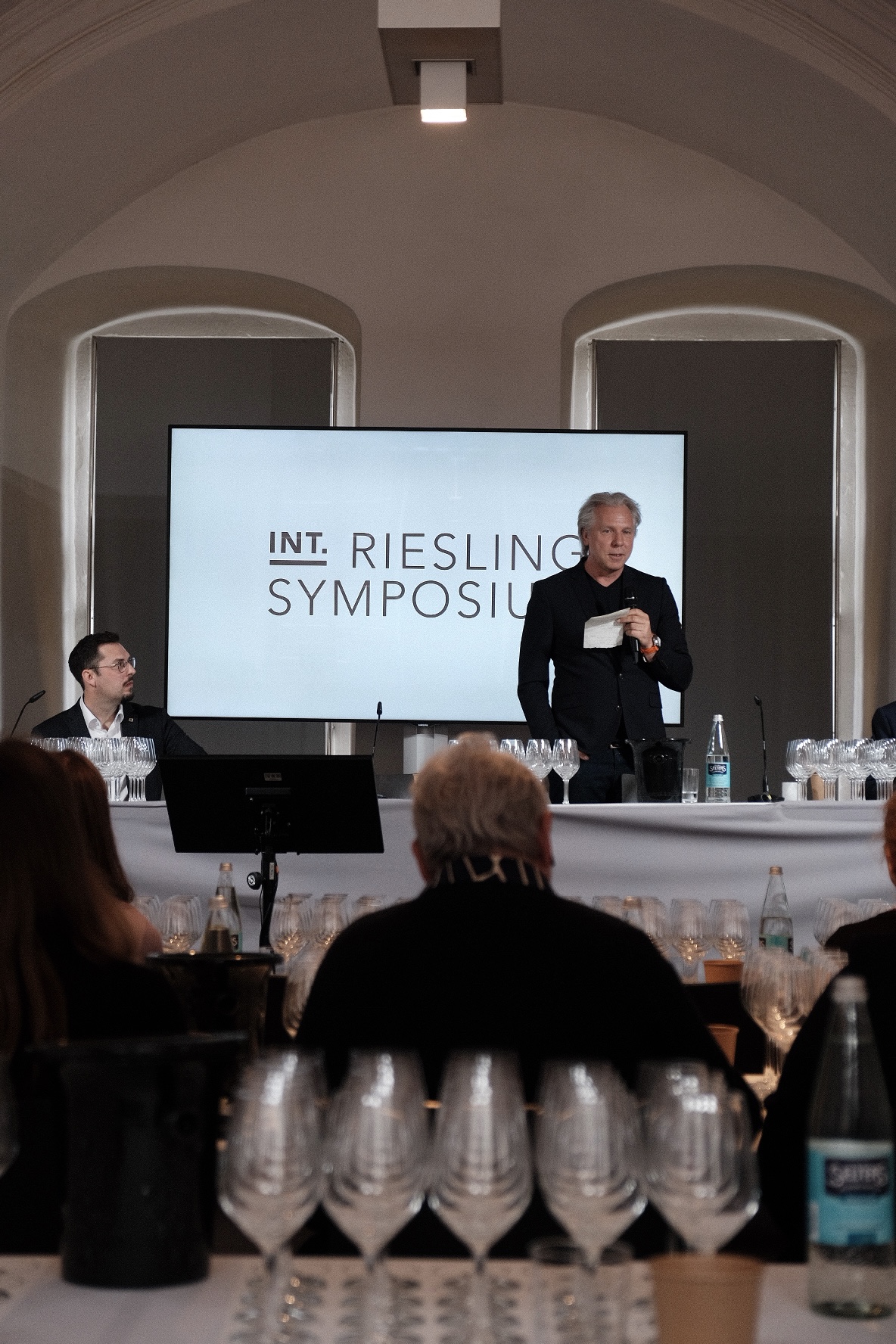
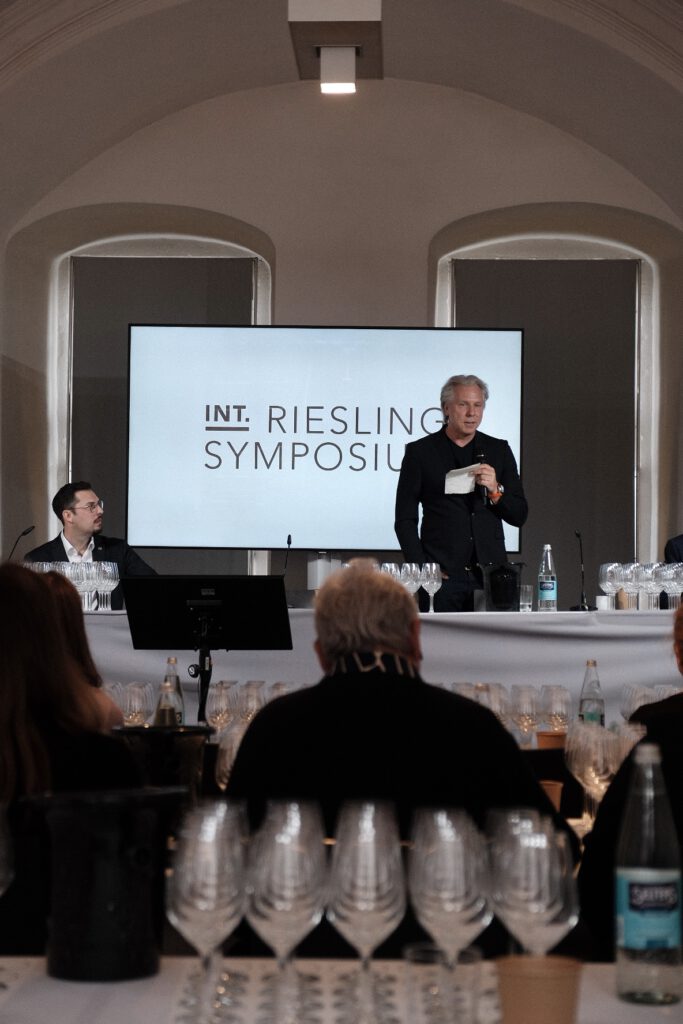
Two days of Riesling at Kloster Eberbach. It is hard to imagine a better setting. Ancient walls, deep history, full glasses. The VDP Rheingau had invited guests to the International Riesling Symposium, and of course I was curious. Not only because, for me, Riesling is the greatest white grape variety in the world. But also because I wanted to test exactly that belief, consciously, over the course of these two days.
Max Kaindl, May 17, 2026
Reading time about 10 minutes
International Riesling Symposium 2026 –
a great grape variety, powerful moments and a few open questions
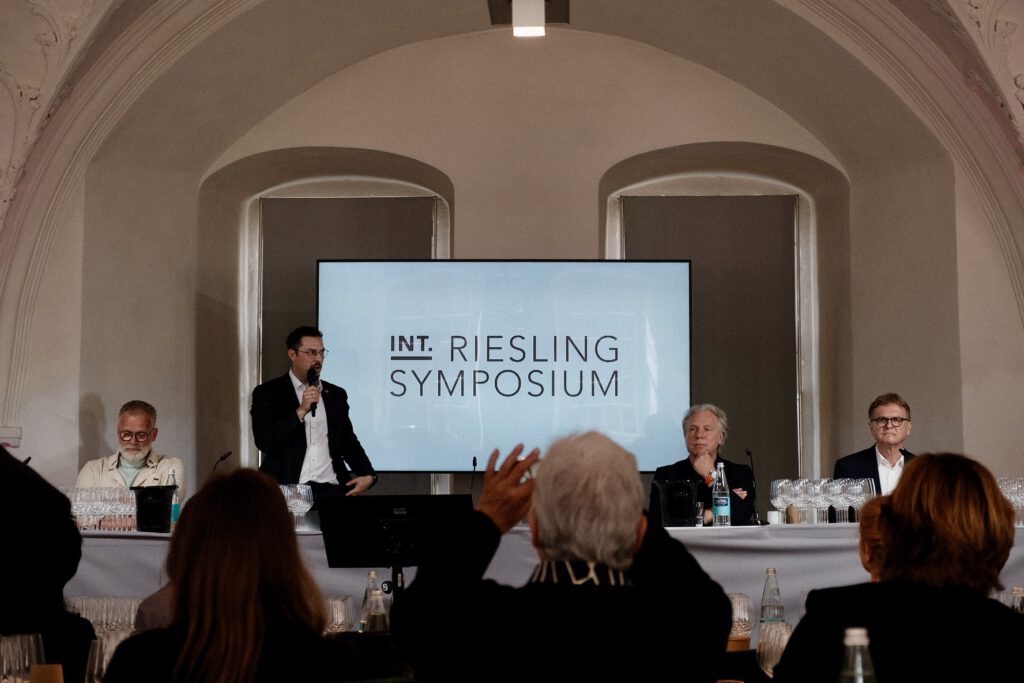
Big stage, mixed feeling
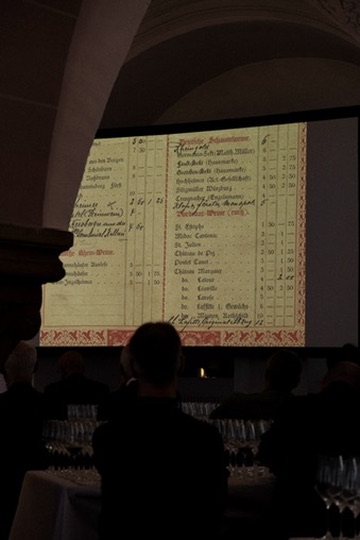
The organisation was strong, the location impressive, the food excellent. Dr Daniel Deckers’ historical perspectives were also real highlights for me: intelligent, engaging, precise, and delivered with that rare mix of depth and lightness. This is how wine history becomes genuinely enjoyable.
And yet, after two days, I was left with mixed feelings. Not disappointed. But thoughtful.
Because when an event calls itself the International Riesling Symposium, Riesling from around the world should really play a larger role. Austria was represented here and there, Alsace almost not at all, Australia and the United States only on the fringes. For me, that was too little. Especially if the aim is to show why Riesling matters globally, then Riesling also needs to be approached globally.
The missed stage for Kabinett, Spätlese and Auslese
What I missed even more were the non-dry wines. Just a handful of Kabinetts, Spätlesen and Auslesen. For me, that was the real missed opportunity. With these Prädikat styles, Germany has something that is almost impossible to replicate anywhere else in the world. Kabinett, Spätlese, Auslese — this is not folklore. It is cultural capital. And if we do not give these wines a stage ourselves, we should not be surprised when they lose visibility in the market.
The first tasting, featuring Rieslings from Baden, Württemberg and Franconia, was a difficult start for me. There were highlights: Heger’s 2019 Vorderer Winklerberg, Wöhrwag’s 2020 Herzogenberg, Weingut am Stein’s 2019 Stettener Stein, Rainer Sauer’s 2017 Am Lumpen 1655 and, above all, Luckert’s 2016 Maustal, which stood beautifully with its cool, delicate, saline character. Overall, though, the tasting felt too technical, not narrative enough, not emotional enough. Many wines were dissected individually, rather than using them to draw out common threads, differences and the larger questions of greatness.
Why greatness must be noticeable from the very first glass
And this, for me, touches on a more fundamental issue in the German way of dealing with great wine.
Why not open an International Riesling Symposium with the greatest German Rieslings of the past decades? Why not put ten or fifteen monumental wines on the table right at the beginning and show, without compromise, what this grape variety is capable of? Great mature Saar Kabinetts. Legendary Mosel Auslesen. Classic Rheingau icons. Iconic dry Rieslings from Rheinhessen, the Pfalz or the Nahe. First impressions matter. Always.
In France, at a comparable event, that is probably exactly what would happen. Guests would be emotionally gripped from the very first glass. Not through obsessive organoleptic detail, but through greatness, self-confidence and pride. That is exactly what we can learn from regions such as Champagne or Burgundy.
Champagne has long since stopped selling only wine. It sells a feeling. Celebration. Success. Style. Luxury. Positive emotion. There, people do not constantly explain why something is great. They simply show it. And they do so with an ease and self-assurance that is genuinely impressive.
In Germany, by contrast, we often tend to talk our own great wines down, overthink them technically, and almost moderate away their emotional power. As a result, Riesling is quickly perceived as intellectual, complicated or cerebral — even though the best examples of this grape are precisely the opposite: vibrating, deep, moving and full of drinkability.
Matured Riesling and German Grand Crus
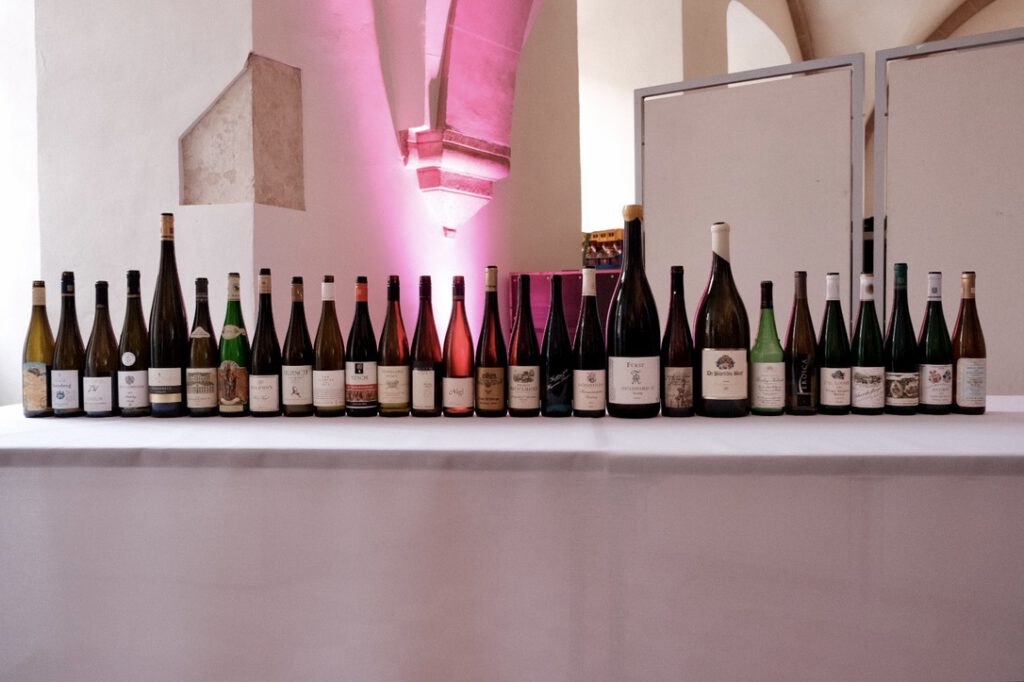
The second tasting, built around the question of whether great Riesling can ever be too old, was significantly more exciting. Here, German Riesling showed its class. Dönnhoff’s 2015 Hermannshöhle was simply great: bright, saline, densely woven, vibrating, a drink fit for the gods. Breuer’s 2002 Berg Schlossberg was, emotionally, the wine of the tasting for me. The final vintage of Bernhard Breuer. Delicately buttery, complex, powerful, fine. A monument. Zilliken’s 2005 Rausch Auslese and Maximin Grünhaus’ 2016 Herrenberg Spätlese also served as reminders of why mature Riesling with sweetness can belong to a league entirely of its own. At the same time, the tasting made one thing very clear: wines under screwcap mature differently. Often, the fruit remains intact, but above it sits a reductive tension that does not always feel harmonious. Fascinating, yes. But not always beautiful.
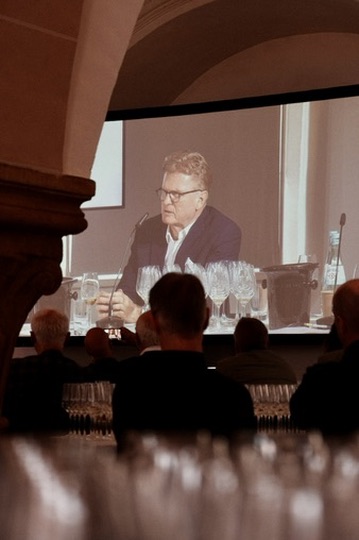
The third tasting was clearly the strongest of the symposium for me. German “Grand Crus” from great Riesling sites, moderated with pace and focus by Moritz Lüke MW. Finally, there was a real sense of comparative flow. The Nahe performed strongly: Dönnhoff’s 2019 Dellchen, Emrich-Schönleber’s 2020 Halenberg and Schäfer-Fröhlich’s 2021 Felseneck all showed at a high level. Rheinhessen displayed breadth and depth, especially Battenfeld-Spanier’s 2021 Frauenberg and Kühling-Gillot’s 2019 Pettenthal. The Rheingau also had good moments, though it more often struggled with ripe, slightly brittle phenolics. This is exactly the kind of tasting we need: focused, comparative and genuinely insightful.
Pinot Noir, a premiere at the IRS
I also found the Pinot Noir tasting on the second day a very worthwhile addition. German Spätburgunder now has enough substance to stand on a stage like this. Fürst’s 2022 Centgrafenberg, Franz Keller’s 2022 Schlossberg, Philipp Kuhn’s 2022 Laumersheimer Kirschgarten, Daniel Twardowski’s 2018 Pinot Noix and Markus Molitor’s 2022 Graacher Himmelreich*** in particular showed just how distinctive and fine German Pinot can be today. Alongside them came some of the great Burgundy highlights of the day, from Marquis d’Angerville’s 2020 Volnay Premier Cru Champans to Méo-Camuzet’s 2018 Vosne-Romanée from magnum and Armand Rousseau’s 2017 Gevrey-Chambertin Clos du Château Monopole.
At the same time, it also became clear that, across the board, there is still room for improvement when it comes to oak handling, tannin finesse and balance. But the direction is right. And thankfully, fewer and fewer estates are blindly copying Burgundy. Instead, they are slowly finding a language of their own.
So what remains?
An important symposium with strong moments. But also with questions that, in my view, should be asked more clearly in the future. How do we position Riesling internationally? How do we tell its story with more emotion, more quality and more confidence? Which markets matter? Which styles speak to the spirit of today and tomorrow? And why do we not show more often the very wines that prove Riesling’s true greatness?
Riesling has everything it needs. Origin. Tension. Longevity. Depth. Emotion.
Perhaps, at times, all we lack is the courage to radiate that without compromise.
Pictures: © The Art of Riesling – Maximilian Kaindl

