
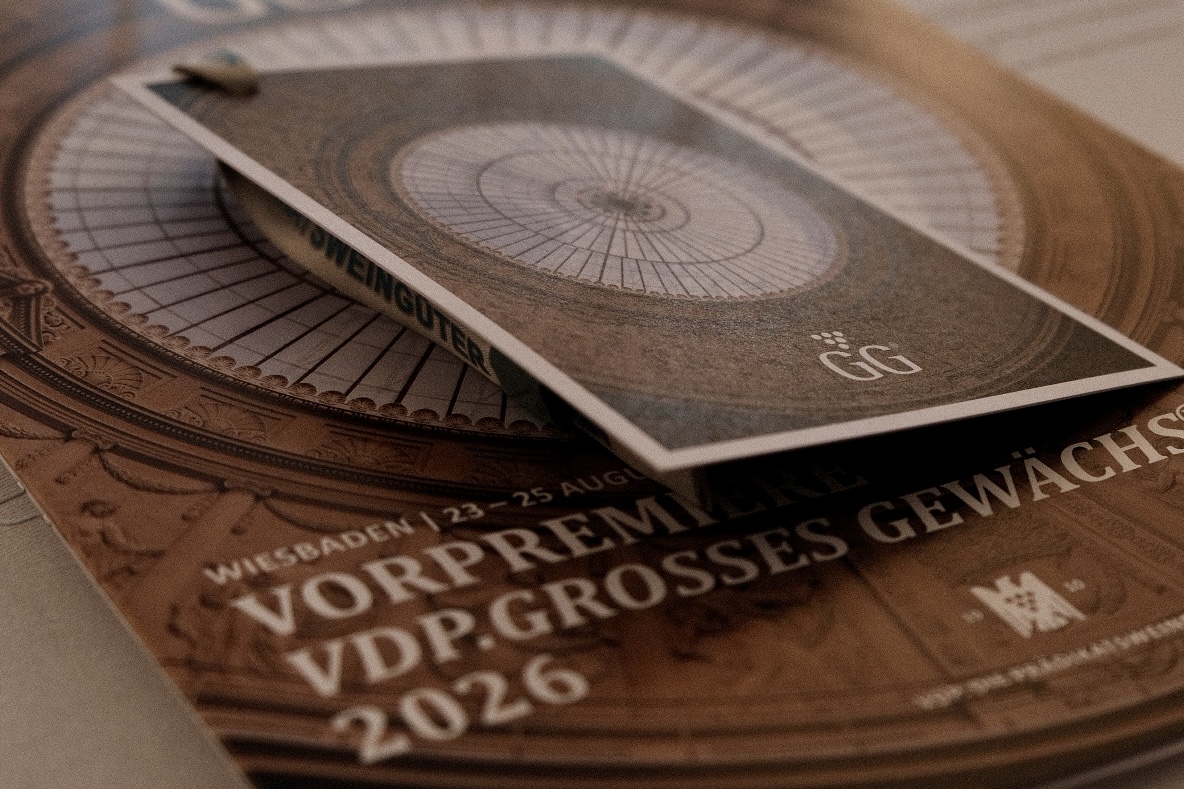
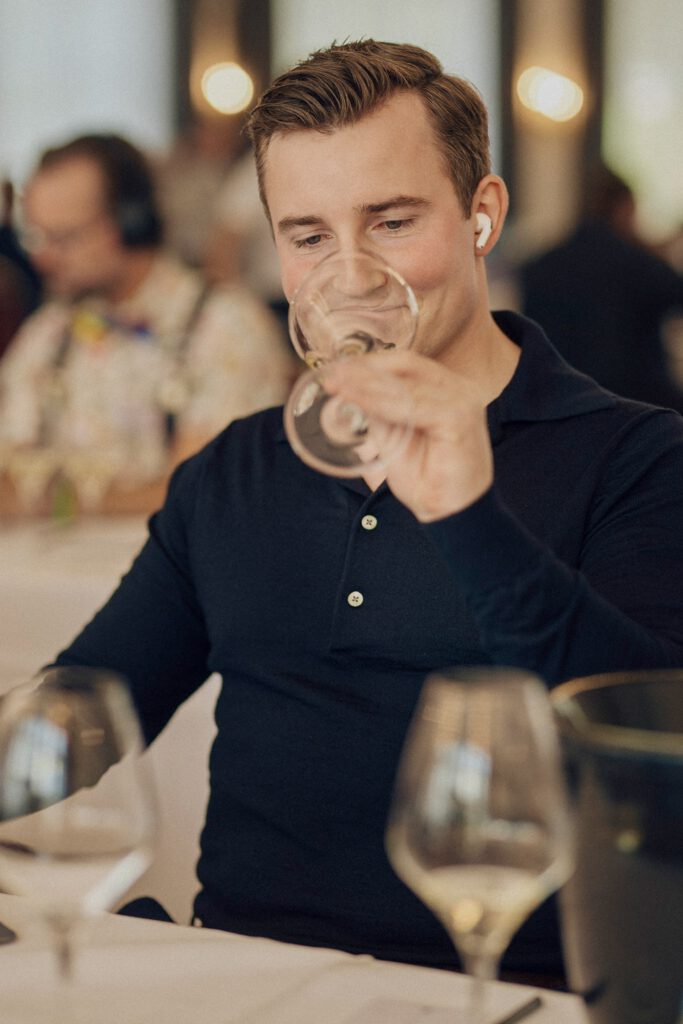
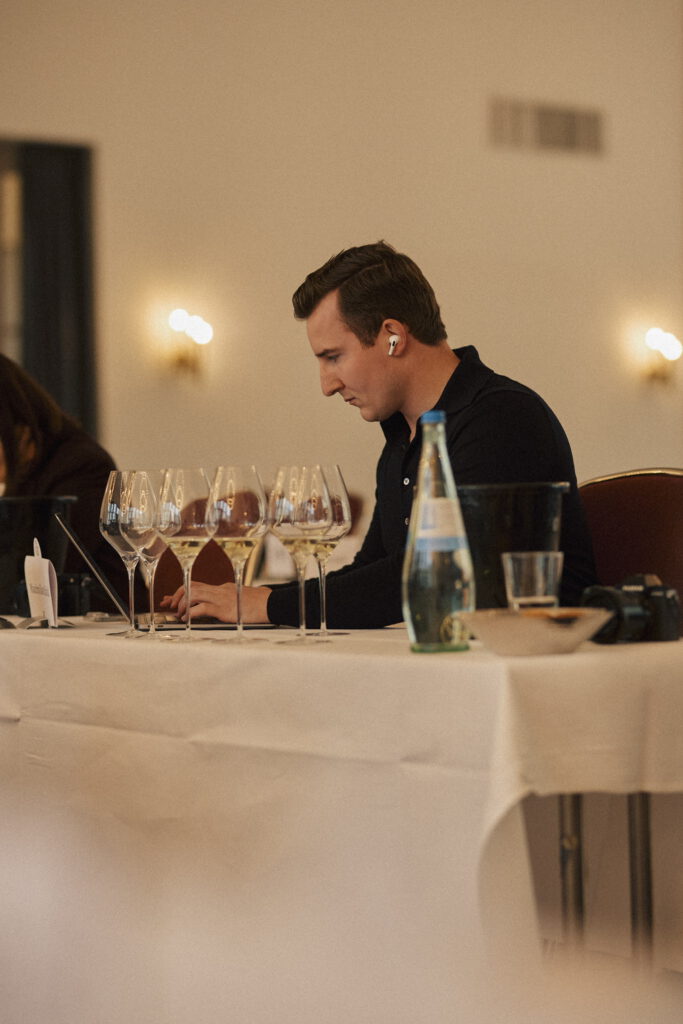
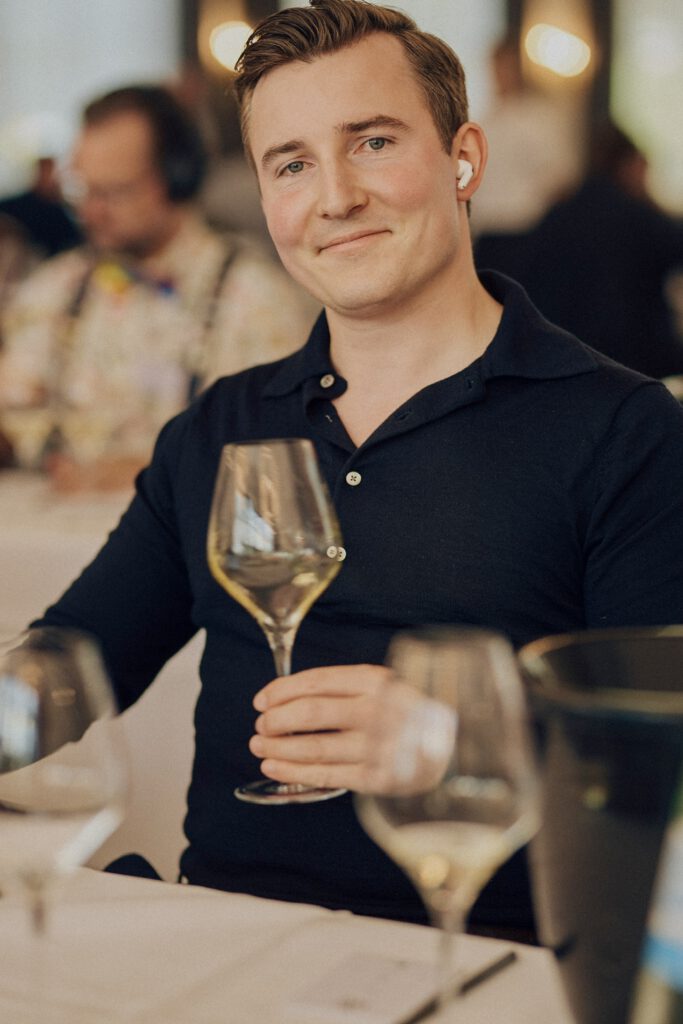
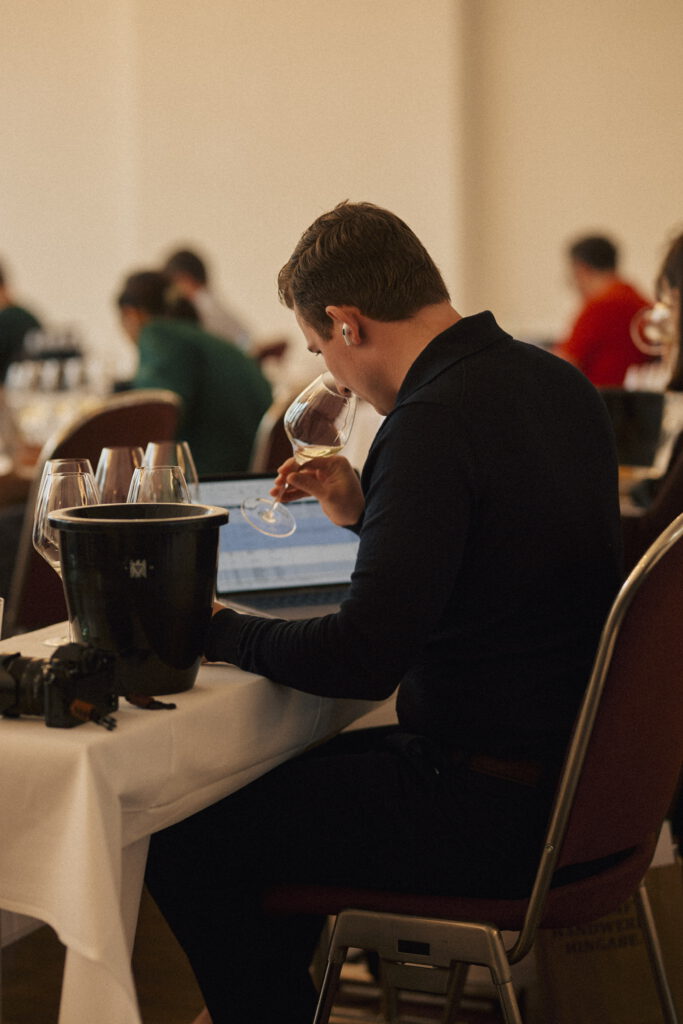
From August 23 to 25, it was that time of year again. The VDP invited around 200 of the world’s leading sommeliers, journalists, and wine experts to Wiesbaden to form an opinion on the new vintage of the Grosse Gewächse (GG). This year, due to a personal commitment, I was only able to taste wines on two days. Of the 397 wines presented, I managed to taste 320. In this post, I’ll share my impressions and assessments of the individual regions, as well as my verdict on the Rieslings presented. You can find my impressions of the Burgundies and Silvaners in my newsletter on Wednesday.
Max Kaindl, August 30, 2026
Reading time: about 15 minutes
VDP.GROSSES GEWÄCHS®
Preview 2026 —
All about Riesling
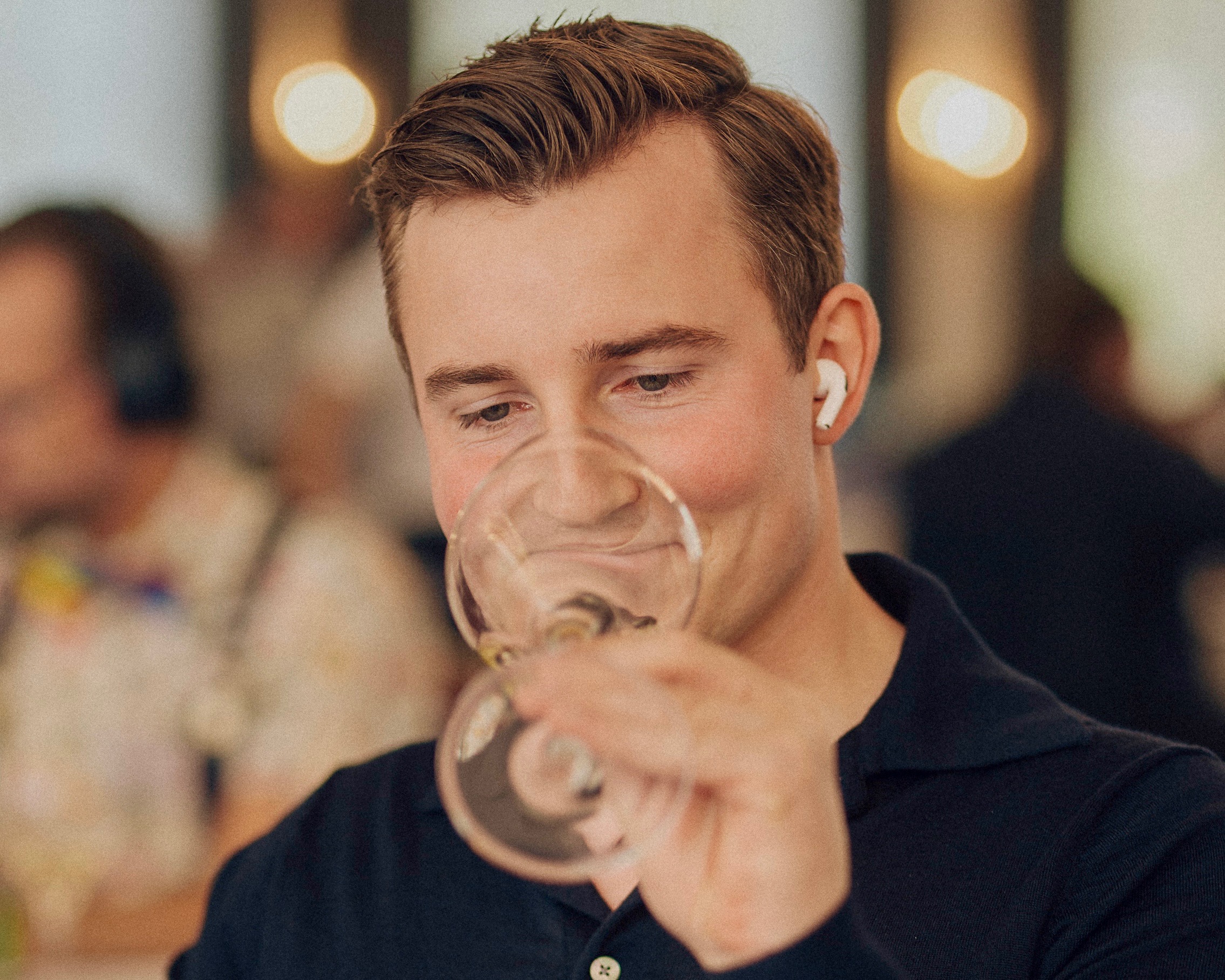
© VDP by Peter Bender
Before we begin, a brief note to put my observations into context. Wherever possible, I tasted blind. I knew only the region, grape variety and flight number—not the individual wines or producers in each flight. The wines discussed below are not necessarily those that received my highest objective scores. What also matters to me is whether a wine moved me on a personal level. Did it give me goosebumps? Conjure up the warmth of a campfire? Or simply deliver pure joy? These are all factors I took into account when selecting my personal highlights.
However, the impressions I’ve recorded here can only serve as snapshots that should be viewed in context. Rather, they come together to form a holistic picture made up of many individual pieces of the puzzle. In my case: the picture of the 2025 vintage for Riesling—and, in a few instances, 2024.
Since a detailed description of all 320 wines tasted would go beyond the scope of this blog, I’ve focused on the highlights of each region as well as my overall impression of them. I’ll make the complete list available to my subscribers on Substack.
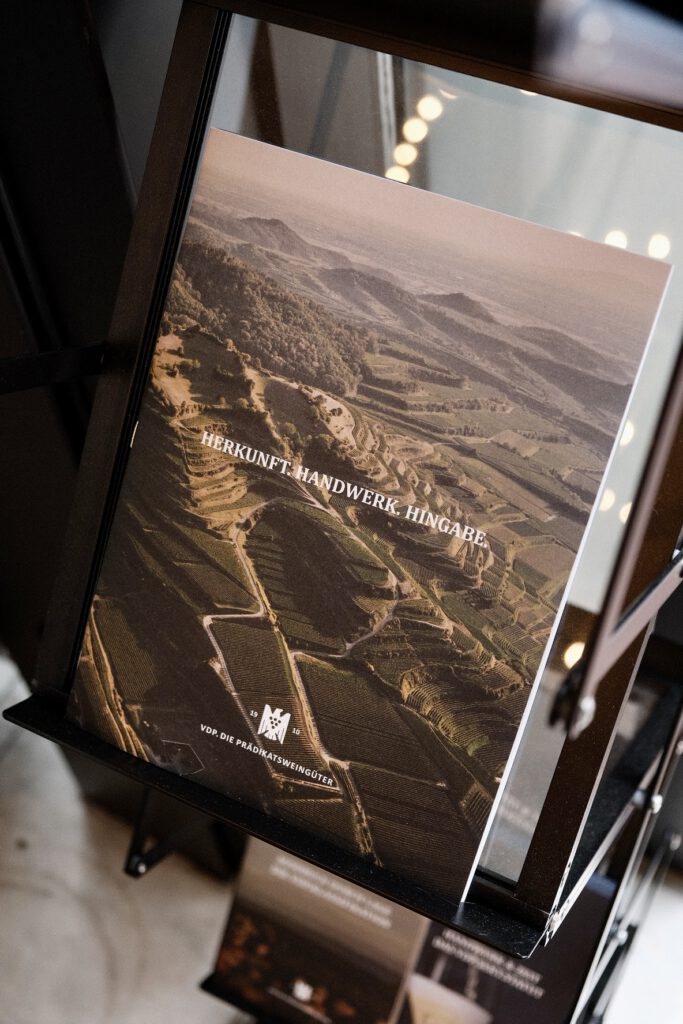
Mosel-Saar-Ruwer
57 Rieslings. 2025, unless otherwise noted.
In the Mosel, 2025 is a pleasingly ripe and, by the region’s standards, unusually concentrated vintage, with a remarkably broad array of convincing GGs. In this instance, the warmth and dry conditions were beneficial to this cool-climate region. In cooler years, some Mosel GGs can strike me as too thin or excessively delicate. In 2025, the wines retained their elegance while gaining substance, structure and fullness.
I can therefore say with complete confidence that at some Mosel estates, it is almost impossible to go wrong with the 2025 GGs. I am all the more delighted for the region because the 2024 growing season brought not only cool temperatures and prolonged periods of rain, but also devastating spring frosts in some areas. This welcome success does not, however, change my fundamental scepticism about Mosel Riesling GGs. I have explained my reasons in detail elsewhere.
Now to the wines that truly thrilled me. Where several wines from the same producer impressed me, I have grouped them together in a short estate profile. You can read more about my scoring system here.
Best Collection – Moselle
The collection that impressed me most this year came from Maximin Grünhaus. Both Abtsberg and Herrenberg possess that distinctive green-spice character which, in this particular form, I associate with nowhere else. Ripe, juicy and playful, yet with a dense, firm core and tremendous drive, these wines combine substance with a remarkable sense of weightlessness. They embody much of what I look for in a Grosses Gewächs.
This year, I placed Abtsberg just ahead of Herrenberg. It seemed slightly riper and juicier, and therefore more structured and complex. A great wine. What pleases me most, however, is that Amelie and Maximin have created such a structured, refined and precise collection after the devastating frost of 2024—one defined by elegance and balance. Impressive.
Essential Mentions
Many producers could be listed here this year. The Mosel showed a gratifying degree of structure and complexity, often accompanied by beguiling juiciness. I would particularly like to focus on the wines of Schloss Lieser and Matthias Knebel.
The Haag family of Schloss Lieser is one of the very few winemaking families in Germany that manages, almost every year, to produce both a magical collection of sweet wines and an equally convincing range of dry wines. The Niederberg Helden GG was the wine that swept me away this time. The nose is dense and playful, yet delicate, pale-fruited and finely spiced—inviting, but with real depth. On the palate, it is racy, firm-cored, taut and compact, with tremendous drive, delicate spice and pale stone fruit. Its vibrant acidity gives the wine a vertical, athletic frame. The finish is long and saline.
Matthias Knebel also deserves an emphatic mention. For years, his estate in the Terrassenmosel has produced exceptionally precise and substantial dry Rieslings that, in my view, deserve far more attention. With his 2025 Uhlen, he has created his masterpiece to date. The nose is bright and initially veiled by a fine layer of yeast, beneath which lie white stone fruit and pale blossoms; quiet, yet deep. The palate is crystalline in structure, showing good ripeness while remaining firmly on the fresh side. Succulent acidity leads into a long, saline finish with only the slightest hint of creaminess. A charmer of the very highest order, although it still needs a little time.
Hidden Gems
Alongside the big, familiar names, I would also like to highlight a few hidden gems. Wiesbaden offers a wonderful opportunity to discover estates that do not permanently occupy the spotlight in the major wine publications. Grans-Fassian is one such producer. Once again this year, Katharina has bottled a collection of racy, spicy and beautifully balanced Rieslings.
My highlight from this remarkably consistent collection was Hofberg. The nose offers an enticing combination of black pepper, herbs and grapefruit. The palate then launches a full-scale attack: taut and fine, with pale fruit and a wealth of herbs. Deep, compact, astringent and gripping, with spicy, zesty freshness and a finish of enormous potential. This is an estate to watch. Its dry wines have become markedly tauter, drier and more incisive in recent years—a development that continues with real consistency in 2025.
What Needs to Be Said
Two points bothered me in Wiesbaden. I am addressing them in the Mosel section because they were particularly noticeable in a number of wines from this region.
First, wines were presented that, to the best of my knowledge, had not yet passed the second approval tasting and therefore could not officially be designated as GGs. I found this puzzling. What purpose does an approval tasting serve if wines are presented at a GG preview before passing it? And what happens if a wine shown there subsequently fails the second assessment, despite having already generated attention or even demand in the market?
My position is clear: a wine becomes a GG only after successfully completing both stages of the VDP approval process. Until then, I do not believe it belongs at a VDP.GG Preview. For that reason, I did not taste these wines. At future events, I would like to see an unambiguous admissions policy. Rather than expanding the field to include wines that have not yet been approved, I believe the VDP should tighten its quality standards elsewhere and assess wines more rigorously during the regional associations’ approval tastings.
The second issue concerns barrel samples—not exclusively, but particularly conspicuously, in the Mosel. Tasting them alongside wines that have already been bottled in a meaningful and reasonably comparable way is exceptionally difficult. In direct comparison, barrel samples are often placed at a disadvantage, even though this does not necessarily say anything about their eventual quality. Why not take as consistent an approach as Matthias Knebel, who chose not to present his wines at all last year because they had not yet been bottled? A preview becomes more meaningful when the samples are at comparable stages of development.
And now for my personal and qualitative highlights
Personal
Abtsberg (Maximin Grünhaus), great
Uhlen (Knebel), great
Rausch (Zilliken), excellent
Hofberg (Grans-Fassian), excellent
Niederberg Helden (Schloss Lieser), great
Marienburg Rothenpfad (Clemens Busch), great
Lambertskirch (Lauer), great
Qualitative
Abtsberg (Maximin Grünhaus), great
Scharzhofberger P (Van Volxem), great
Uhlen (Knebel), great
Niederberg Helden (Schloss Lieser), great
Marienburg Rothenpfad (Clemens Busch), great
Lambertskirch (Lauer), great
Marienburg Falkenlay (Clemens Busch), great
Juffer-Sonnenuhr (Fritz Haag), great
Niederberg Helden (Schloss Lieser), great
Mittelrhein
2 Rieslings. All from 2025.
Just two wines from a single winery. It wouldn’t be fair to say that this gives a representative impression of the region.
Rheingau
34 Rieslings. 2024, unless otherwise noted
The Rheingau has faced a barrage of criticism in recent years—often harsh and occasionally delivered with almost gleeful exaggeration. I can understand the central argument, but much of the criticism strikes me as overly generalised and insufficiently substantiated. One point should be made very clearly: the wines are by no means fundamentally poor. Quite the opposite. Their frequently slightly sweet core gives many of them an immediate charm when tasted. For many wine drinkers, this is actually an advantage: a little extra sweetness can make a wine more appealing and approachable in its youth. What occasionally bothers professional tasters may be precisely what makes these wines especially attractive to a wider audience. Anyone interested in reading my thoughts on this in greater detail should refer to my report from Wiesbaden last year.
Because many Rheingau GGs are not released until two years after the harvest, the 2024 and 2025 vintages were once again shown side by side. This complicates both direct comparisons and any general conclusion about the 2025 vintage in the Rheingau. Nevertheless, the 2025s I tasted suggest that cooler, higher-elevation sites appear to have had the advantage this year. In my perception, 2024 was challenging overall: many wines seemed either diluted or not fully balanced in the interplay between acidity, phenolics and fruit.
Highlights
Peter Jakob Kühn (PJK) and Robert Weil shared first place for me this year. Weil’s 2025 Gräfenberg was surprisingly open and expressive. The nose is bright and white-fleshed, firm, dense and deep, with vibrant citrus, grapefruit and pale blossoms. The palate is juicy and dry, concentrated and electrifying, with gripping tannins and lively acidity. A firm, vertical structure supports the pale stone fruit. Everything is charged with tension, yet the wine also possesses magnificent freshness and balance. The long, juicy, citrus-driven and lightly saline finish is accompanied by the faintest touch of creaminess. For me, this is the finest young Gräfenberg of the 2020s.
PJK presented a strong, albeit heterogeneous, 2024 collection. Overall, the wines were distinctly marked by herbs and green spice, with firm, dense structures and good length. For me, however, many lacked immediate drinking pleasure. Their quality is beyond question, but in some cases, the sheer enjoyment of drinking them fell by the wayside.
Jungfer was a hugely welcome exception. This wine positively shone within the Rheingau line-up. The nose was even denser and deeper than that of Sankt Nikolaus, while the palate was gloriously juicy, gripping, taut and balanced. Vibrant, substantial and intensely saline—a poetic expression of Grosses Gewächs. Berg Schlossberg, by contrast, was a disappointment. After the successful inaugural 2023 vintage, it could not live up to my high expectations this time.
Essential Mention
Prinz also impressed again in 2025. The wines have rediscovered the density and complexity that thrilled me in the outstanding 2023 vintage.
Personal
Gräfenberg (Weil), great
Jungfer (PJK), great
Berg Schlossberg (Prinz), excellent
Berg Schlossberg (Wegeler), excellent
Qualitative
Gräfenberg (Weil), great
Berg Schlossberg (Prinz), excellent
Jungfer (PJK), great
Doosberg (PJK), excellent
Schloss Johannisberg (Schloss Johannisberg), excellent
Nahe
30 Rieslings. 2025, unless otherwise noted.
“Back to its usual strength” is my verdict on the Nahe in 2025. Following the devastating frost of 2024 and the resulting wines, some of which seemed unbalanced and slightly watery, many Nahe Rieslings have returned to the region’s customary high standard.
One particularly striking feature was the unusually pronounced extract sweetness in many wines. Given the growing conditions, this is hardly surprising, yet I had rarely perceived it with such intensity in young Rieslings. To put my observation into better context, I discussed it with experienced colleagues. Over coffee on Tuesday morning, Felix Bodmann of Schnutentunker, Christoph Raffelt of Originalverkorkt and I spoke at length about the Nahe, the clearly perceptible sweetness and the stylistic similarities shared by many of the 2025s.
Felix attributes the impression of sweetness primarily to the high extract rather than residual sugar. Both believe the wines could develop in a way reminiscent of 2012 or 2015. If so, they may initially appear rather soft and plump over the next year or two. Whether that actually happens remains to be seen.
What bothered me most was the unfortunate resurgence of highly dominant reduction at Schäfer-Fröhlich. It shaped the entire collection so strongly that the wines seemed remarkably similar from a sensory perspective. At this stage, I found the differences between the individual vineyards almost impossible to discern. This is emphatically not to say that the wines are lacking in quality—their outstanding standard is beyond dispute. During this tasting, however, it was difficult for me to identify origin in the sense of clearly traceable distinctions between sites.
Best Collection – Nahe
This year’s top Nahe collection came from Emrich-Schönleber. The 2025 Halenberg is a monumental, goosebump-inducing wine. The nose is radiant, fine and elegant, slightly darker and, to me, better balanced than Frühlingsplätzchen. The palate is sublime: saline, vibrant, immensely dense and firm, with beguiling freshness and balance. Every element is woven together with finesse and elegance. The finish is saline, exceptionally firm and irresistibly inviting.
At Dönnhoff, I was particularly pleased by the comeback of Hermannshöhle. While the 2024 had turned out exceptionally delicate, the 2025 won me over with a deep, dark and firm core. It builds impressive momentum on the finish. Anyone willing to look beyond the still-prominent extract sweetness of its youth can already sense the power and grandeur that should sustain this wine for decades.
My insider tip at Dönnhoff this year, however, is Im Mühlenberg. The nose is slightly brighter and more precise than Hermannshöhle. On the palate, it is dense, fine, precise and substantial, yet distinctly bright in character. Delicate pale spice, excellent balance and a saline, enticingly citrus-driven, exceptionally long finish. A gloriously lucid GG. Dönnhoff for those in the know.
Essential Mentions
Joh. Bapt. Schäfer’s Pittermännchen displayed the crystalline, precisely defined fruit that is so typical of the estate. Bright, powerful and juicy, with an exciting, incisive phenolic bite on the palate. I was particularly impressed by the dark, spicy finish. A highly successful wine.
Diel presented its 2024 collection this year. It was thoroughly convincing across the board, with Burgberg leading the way. The nose is dark and spicy; the palate juicy, saline, immensely firm and tightly wound. The long finish is delicate, beautifully balanced, elegant and light on its feet. A gentle giant.
Personal
Halenberg (Emrich-Schönleber), great
Im Mühlenberg (Dönnhoff), great
Burgberg (Diel), great
Pittermännchen (Joh. Bapt. Schäfer), great
Hermannshöhle (Dönnhoff), great
Goldloch (Diel), great
Qualitative
Halenberg (Emrich-Schönleber), great
Dellchen (Dönnhoff), great
Burgberg (Diel), great
Felseneck (Schäfer-Fröhlich), great
Hermannshöhle (Dönnhoff), great
Stromberg (Schäfer-Fröhlich), great
Pittermnännchen (Joh. Bapt. Schäfer), great
Burgberg (Kurger-Rumpf), great
Rheinhessen
29 Rieslings. 2024, unless otherwise noted.
For me, Rheinhessen takes the lead as the strongest Riesling region this year. The wines are extraordinarily concentrated, dense, complex and substantial, without slipping into opulence or excessive breadth. In ten to fifteen years, some may well be regarded among the finest German Rieslings of the current century. At the established top estates, it is almost impossible to go wrong. Encouragingly, there were also several positive surprises among GG sites that are generally considered second tier.
One of them was Wittmann’s Kirchspiel. The nose is bright, with generous white-fleshed fruit; stony, precise and densely woven. The palate is fresh, lightly saline and radiant, with an abundance of powdered rock. Everything is bright and lucid. Magnificent. It possesses a brilliance I otherwise associate with Wechsler’s interpretation of Kirchspiel. Naturally, Morstein also shines this year with its typically darker spice and substance—but by now, that hardly comes as a surprise.
The Best Collection in Rheinhessen—and in Germany
The finest collection not only in Rheinhessen but in all of Germany, in my view, was created by Carolin and Oliver Spanier. The Battenfeld-Spanier wines from the Zellertal, in particular, dazzled with a monumental depth, vibrancy, density and balance that I have rarely encountered in young dry Rieslings.
With his 2025 Frauenberg, Oliver has created a personal monument. I hardly know what to write about this wine other than this: an absolute goosebump moment. It moved me so deeply that I needed a fifteen-minute break after tasting it.
An attempt at an adequate description: the nose is dense and concentrated, with an enormous amount of powdered rock, pale herbs and white blossoms. It is almost devoid of fruit, yet tremendously noble, deep and firm. On the palate, ripe apple returns alongside more powdered rock. Deep, firm and immensely juicy; noble, dense and tightly woven; staggeringly saline, gripping and compact. The saline, succulent finish seems endless. Goosebumps—perilously close to perfection.
Essential Mentions
The Knewitz wines also deserve an explicit mention. Since last year, they have not only sported a new design but undergone a noticeable stylistic transformation: greater finesse, more expression, less opulence and—to my delight—significantly less perceptible reduction, if any at all. I tasted the entire collection with enormous pleasure.
Honigberg led the way. The nose is initially very quiet, revealing ripe apple and a little powdered rock beneath; juicy and deep. The palate delivers an immensely precise, refined expression with clearly defined red apple. There is outstanding balance between acidity, substance and precise fruit. Elegant, compact, firm and dense, yet also deep and noble. A ripe, beguiling wine with an exceptionally long echo.
Generally speaking, sites with a balanced proportion of clay or loam and limestone had a slight edge over the Roter Hang for me this year.
It should be noted, however, that several Rheinhessen estates did not present their wines. As a result, I was unable to form a fully conclusive picture of the region in Wiesbaden. Since this was not limited to Rheinhessen, I will return to the subject separately in my overall conclusion.
Personal
Frauenberg (Battenfeld-Spanier), great
Zellerweg am Schwarzen Herrgott
(Battenfeld-Spanier), great
Kirchspiel (Wittmann), great
Hipping (Kühling-Gillot), great
Herrkretz (Wagner-Stempel), great
Honigberg (Knewitz), great
Morstein (Gutzler), excellent
Qualitative
Frauenberg (Battenfeld-Spanier), great
Kreuzberg (Battenfeld-Spanier), great
Zellerweg am Schwarzen Herrgott
(Battenfeld-Spanier), great
Brunnenhäuschen (Wittmann), great
Morstein (Wittmann), great
Kirchspiel (Wittmann), great
Honigberg (Knewitz), great
Hundertgulden (Knewitz), great
Rothenberg (Kühling-Gillot), great
Pettenthal (Kühling-Gillot), great
Hipping (Kühling-Gillot), great
Herrkretz (Wagner-Stempel), great
Scharlachberg (Bischel), great
Palatinate
63 Rieslings. 2025, unless otherwise noted.
The Pfalz resonated with me less this year than I have come to expect. Perhaps it faced an uphill battle after Rheinhessen’s consistently powerful Rieslings. Or perhaps the region has simply spoiled me with exceptionally strong wines in recent years. My assessment should therefore always be read in the context of the generally very high standard of dry Riesling in the Pfalz.
Best Collection – Palatinate
On the Mittelhaardt, Christmann was the clear leader for me this time. Attentive readers will know that I have often found the estate’s Rieslings too thin and delicate in recent years. Despite their consistently high quality, they occasionally lacked the concentration required to produce truly expressive and age-worthy GGs.
In 2025, things were different. Perhaps the warm, dry vintage generated enough extract and fullness—despite Christmann’s characteristically early harvest—to give substance to the estate’s delicate style. The result is an impressively high standard throughout the entire collection. My notes read: “Back to the roots.” This time, I placed Meerspinne slightly ahead of Idig. It was more citrus-driven, firmer, denser, more compact and more structured, with greater salinity and tension on the exceptionally long finish. Extremely good.
I had more difficulty with much of the Bürklin-Wolf range this year. Pechstein, Hohenmorgen and Ungeheuer, in particular, struck me as diffuse, unbalanced and lacking definition. I had first sampled the vintage in spring and found the wines magnificent at the time. That makes an honest assessment all the more important: in Wiesbaden, they showed so uncharacteristically that I deliberately chose not to score or discuss them in greater detail. This snapshot should be regarded as nothing more than that.
Bürklin-Wolf’s Gaisböhl, however, completely blew me away. It is wonderful to see Nicola Libelli and his team succeed in bottling this present-day monopole with greater precision and expression year after year, moving ever closer to the character of this truly great site. The nose is radiant, bright, lucid and precise; considerably finer and denser than the other Bürklin wines, with delicate spice and white pepper. The palate is juicy, structured, dense and balanced; graceful and fine, with bright fruit and a delicate creaminess. The wine becomes increasingly firm across its long, precise and high-toned finish. One of the finest 2025s from both the Pfalz and Germany.
Essential Mentions
At the risk of repeating myself, I would once again like to draw attention to the compelling wines of Acham-Magin in Forst—especially Jesuitengarten—as well as the Rieslings of Kranz in the Südpfalz.
At Kranz, Kalmit clearly had the edge over Kirchberg this year; the latter struck me as slightly green and underripe. Kalmit was considerably more balanced, riper and finer, with magnificent juiciness. This is what great Riesling from the Südpfalz should taste like.
Acham-Magin once again shines with a collection that, to me, embodies classic Pfalz Riesling at its best. A genuine Mittelhaardt underdog that delivers reliably year after year, yet still receives far too little attention.
Personal
Meerspinne (Christmann), great
Gaisböhl (Bürklin-Wolf), great
Idig (Christmann), great
Kastanienbusch (Rebholz), great
Jeusitengarten (Acham-Magin), excellent
Kalmit (Kranz), great
Annaberg (Rings), great
Qualitative
Pechstein (Bürklin-Wolf), great
Gaisböhl (Bürklin-Wolf), great
Annaberg (Rings), great
Weilberg (Rings), great
Kirchenstück (Acham-Magin), great
Kalmit (Kranz), great
Meerspinne (Christmann), great
Idig (Christmann), great
Kastanienbusch (Rebholz), great
Franconia
12 Rieslings. 2025, unless otherwise noted.
Franken has produced another solid vintage, with a consistently good baseline and a pleasingly strong top tier. As in Rheinhessen and the Pfalz, the wines are substantial, rich in extract and deep, yet generally well balanced. Many are already surprisingly approachable—provided that the pronounced extract sweetness is not an issue for you.
Here and there, one still encounters the somewhat ornamental and, for my taste, insufficiently focused style favoured by certain long-established estates. Yet even there, some positive surprises emerged. The best example is Stein-Berg from Bürgerspital zum Heiligen Geist: lucid, elegant and considerably more focused than I had expected.
At the top of Franken’s Rieslings in 2025, following the absence of Paul Weltner’s wines, is once again the familiar pairing of Fürst and Luckert. Close behind comes Weingut am Stein, whose Riesling from Stettener Stein gains in precision and finesse year after year. Max Müller I and Bürgerspital also deserve particular mention, producing outstanding Rieslings that perform on the same level as the region’s leaders.
Once again, Franken has delivered a collection that makes me want to explore the region even more deeply.
Personal
Maustal (Luckert), great
Centfragenberg (Fürst), great
Stettener Stein 2024 (Weingut am Stein), great
Ratsherr (Max Müller I), excellent
Qualitative
Maustal (Luckert), great
Centfragenberg (Fürst), great
Stein-Berg (Bürgerspital zum Hl. Geist), excellent
Ratsherr (Max Müller I), excellent
Stettener Stein 2024 (Weingut am Stein), great
Württemberg / Baden
16 Rieslings
Unfortunately, I had to omit Württemberg and the Mittelrhein this year due to time constraints.
Overall Conclusion
Hallelujah to 2025!
What remains as the essence of three long, intense and instructive days? First, another reminder: my impressions are snapshots and should be viewed accordingly. They are individual pieces of a puzzle that only come together to form a broader picture.
I had already tasted some of the Rieslings presented in Wiesbaden as barrel samples during visits to the estates in early summer. In many cases, my initial impression was confirmed or even reinforced.
The 2025 Vintage
The 2025 vintage has produced extraordinary concentration in many Rieslings and is markedly more consistent across the regions than the preceding vintages. Defining characteristics include high extract and the correspondingly pronounced impression of sweetness, ripe phenolics, firm structure and encouragingly vibrant acidity that is generally well integrated. Wherever producers managed to balance these forces, the result is monumental wine. Where the necessary counterweight of acidity and phenolic tension is missing, however, sweetness becomes the dominant feature. Such Rieslings may develop into rather soft, plump wines offering limited drinking pleasure over the coming years.
It is precisely this unusually pronounced extract sweetness that makes a reliable forecast so difficult for me. I have never encountered it at this intensity in young, dry Rieslings—perhaps partly because my own experience does not extend far enough into the past. I am therefore deliberately cautious when discussing ageing cycles and historical parallels. At this stage, anything more definitive would amount to assertion rather than a sound assessment.
Older records and the recollections of experienced winemakers nevertheless provide some clues. The vintages most frequently mentioned are 2012 and 2015, with 2009 occasionally cited as a more distant comparison. Since I did not taste those wines in their youth across a similarly broad range, I deliberately sought out people in Wiesbaden who had been able to follow their development from the outset. It was striking how often 2012 and 2015 were independently named as reference points. This by no means suggests that 2025 must follow the same trajectory. For the moment, however, these comparisons seem a more plausible tentative guide than any precise prediction. Only time in bottle will reveal whether the high extract integrates harmoniously and lends the wines additional depth or sends some of them into an initially plump phase.
For me, 2025 is above all a vintage defined by structure. The finest Rieslings possess almost everything that distinguishes great dry expressions of the variety: concentration and substance, but also tension, balance and freshness. Anyone looking for precisely this kind of wine will find enormous pleasure in the vintage. Some of its leading wines may even develop to a point where, ten years from now, we find ourselves saying: that was the finest wine from this vineyard in the first quarter of the twenty-first century.
In this way, 2025 offers a compelling demonstration of why Riesling rightly occupies the leading position among Germany’s native grape varieties. More than that, the finest wines underline Riesling’s ability to stand alongside the world’s great grape varieties—and Germany’s capacity to compete with the most important wine regions on the planet.
What Needs to Be Said
Unfortunately, a trend is becoming increasingly apparent in Wiesbaden: more producers are presenting only part of their collections or staying away from the event altogether. This is regrettable, because it makes it increasingly difficult to form a reliable overall impression of individual regions—and ultimately of Germany as a whole.
It would be easy to demand that the VDP simply require its members to participate. That, however, would be too simplistic and would ignore the possible reasons behind their absence. My impression is that some producers have the entirely understandable feeling that their wines have received too little attention in Wiesbaden in recent years.
Of course, no estate is automatically entitled to a mention simply because it submits its wines. At the same time, it is equally understandable for a producer to wonder why they should go to the considerable expense and effort of sending their finest bottles to Wiesbaden if a large proportion of the tasters rarely, if ever, put them in their glasses.
If the VDP wants more estates to present their complete collections at the preview again in the medium term, it will therefore also need to examine the composition and working practices of its tasting panel. Like the guys at Prädikatsmemes, I have a few ideas on the subject. @VDP: Feel free to get in touch if you are interested.
Merci
In closing, I’d like to extend a big thank you to the VDP and the entire organizing team led by Theresa Olkus and Hilke Nagel in Wiesbaden. Thank you for inviting me to this extraordinary and perfectly organized event. It was a true pleasure and honor to be there!
One more note: Just because a wine didn’t make it into my detailed descriptions doesn’t mean it was of poor quality. I tasted all the Rieslings and tried both to evaluate them objectively and to record my own personal impressions.
You can read my thoughts on the Burgundies and Silvaners in my newsletter on Wednesday.
That’s a wrap on my impressions from this year’s VDP GG preview in Wiesbaden. Over and out.
VDP GG 2026, VDP GG 2026, VDP GG 2026, VDP GG 2026, VDP GG 2026, VDP GG 2026, VDP GG 2026, VDP GG 2026, VDP GG 2026, VDP GG 2026, VDP GG 2026, VDP GG 2026, VDP GG 2026, VDP GG 2026, VDP GG 2026
© VDP by Peter Bender

