

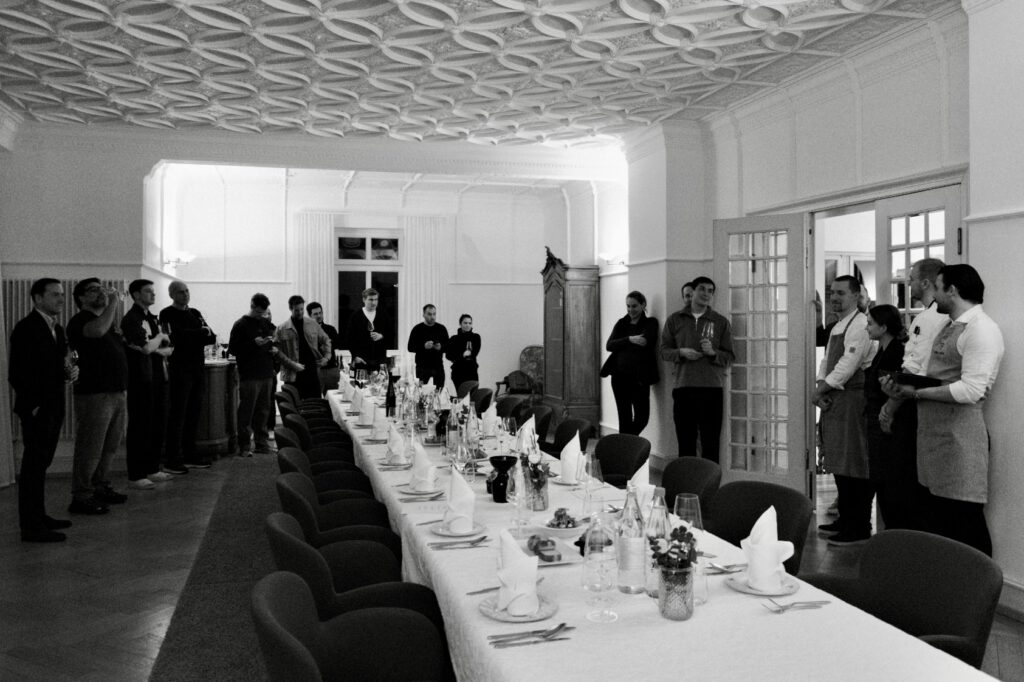
In January, we’re sitting at Villa Raumland. Jan sets WongAmat and WongSiri 2024 on the table. Wines that have long since outgrown the “side project” label. I’ve followed them since the very first vintage, and I still had the 2024s from last year’s barrel samples vividly in my mind. That’s exactly why I was curious to see how they’d show in bottle now. How precise are they? How coherent? And most of all: do they carry the idea forward with the same quiet confidence as the vintages before?
Max Kaindl, February 22, 2026
Reading time about 7 minutes
WongAmat & WongSiri 2024
When finesse is no longer a promise, but a signature
Jan’s philosophy
Hardly anyone in Germany manages to fuse finesse, high extract, and real density as effortlessly as Jan Raumland. That’s not luck. It’s the result of an extremely fine instinct for vines, fruit, and timing.
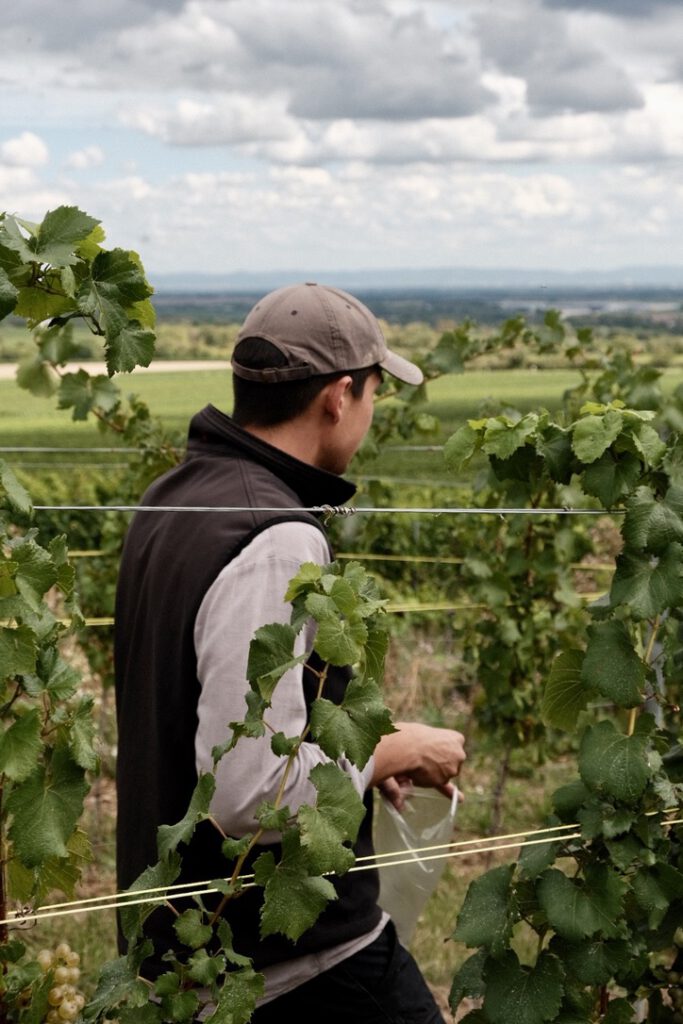
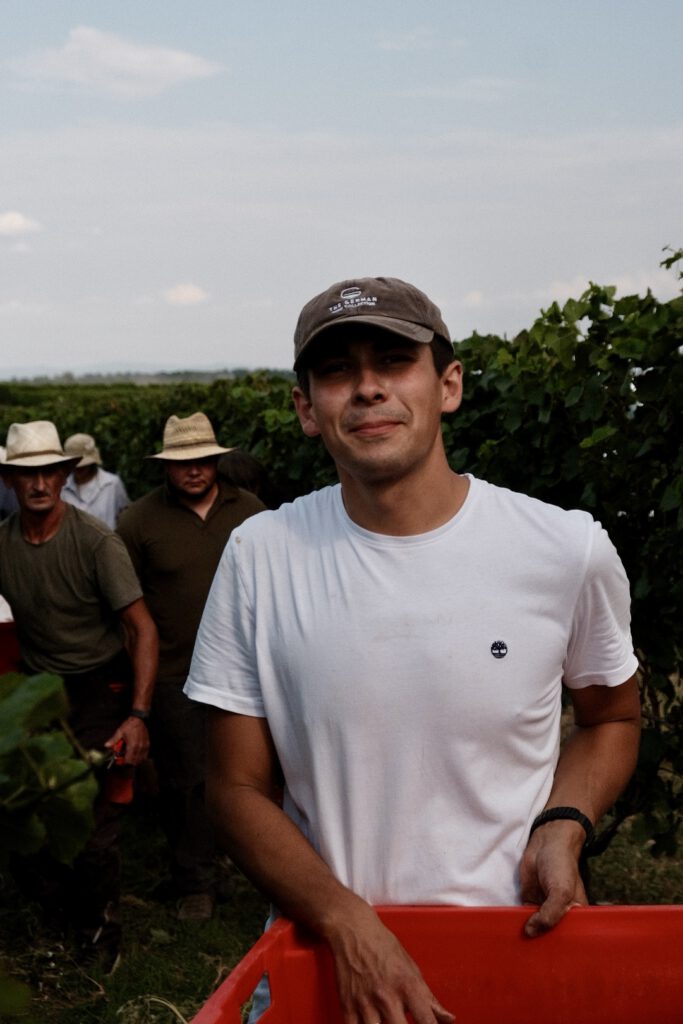
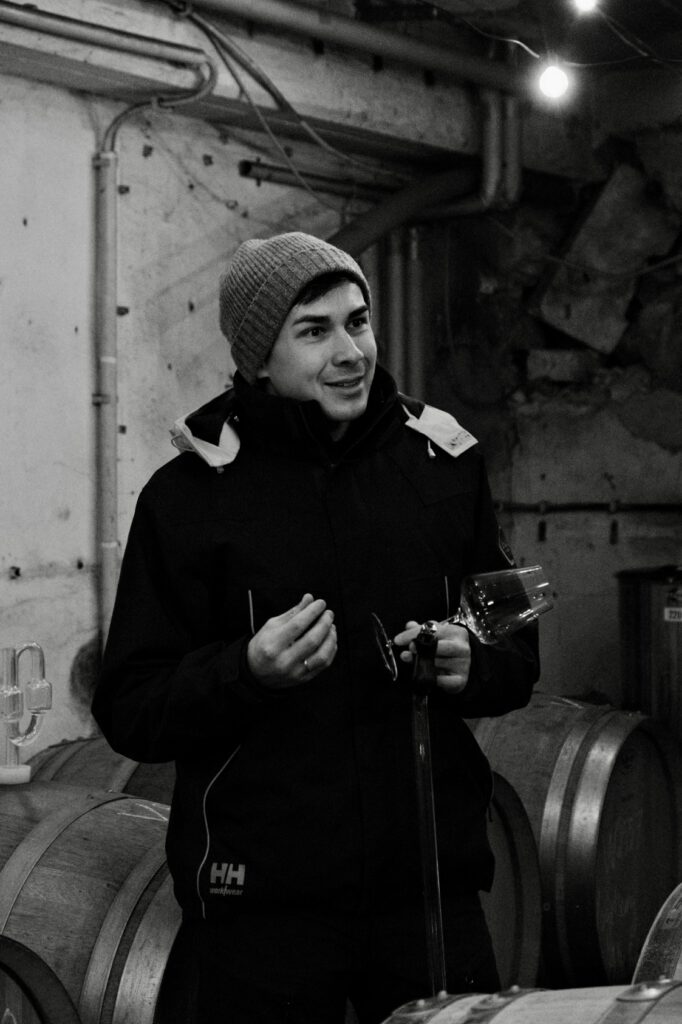
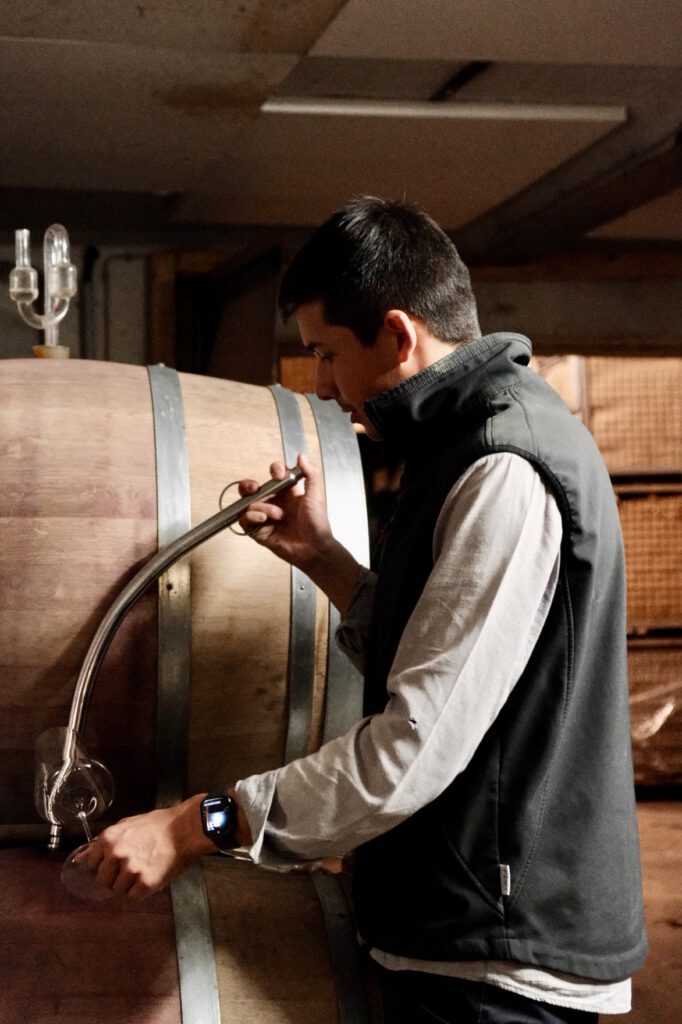
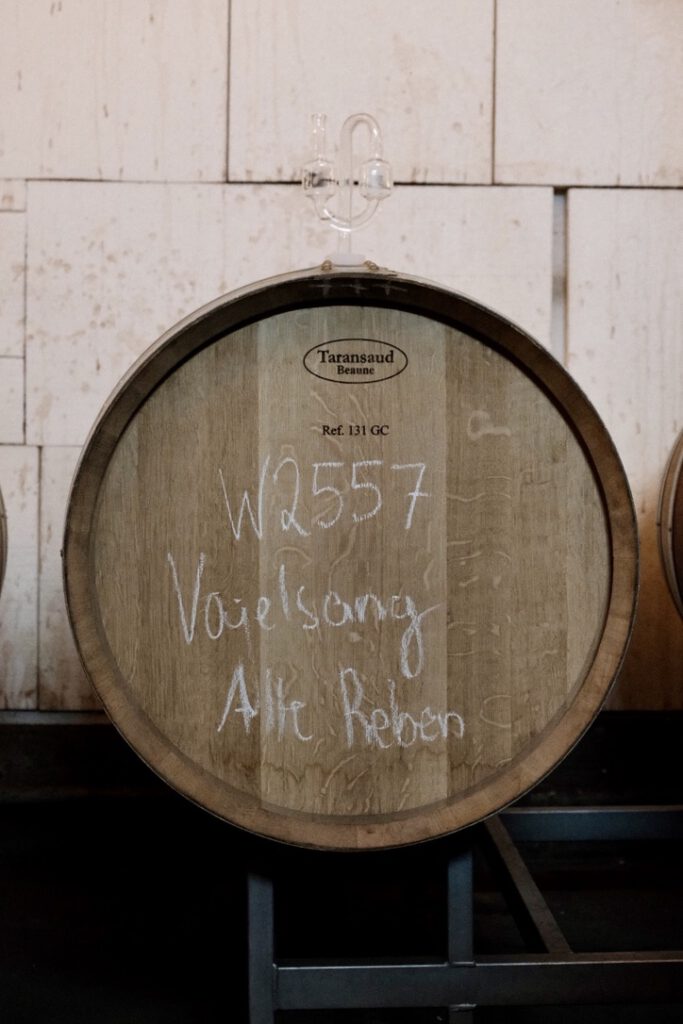
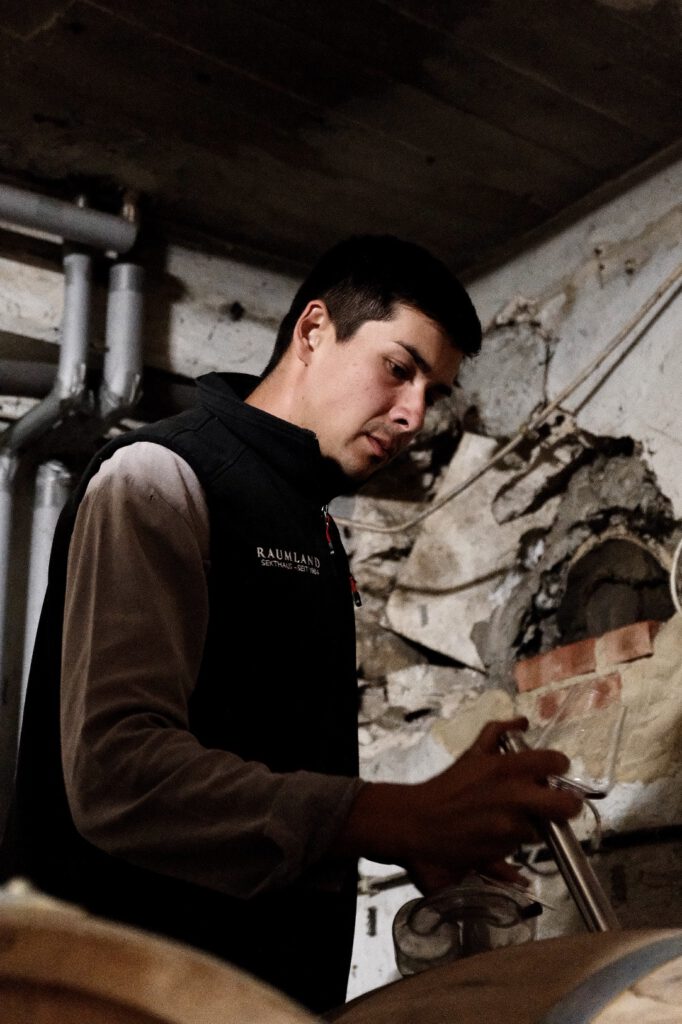
I’ve been with Jan regularly through harvest for five years now, often in his cellar, out in the vineyards, tasting from barrel. I know a lot of winemakers well. But very few feel wine the way he does. Jan knows what a grape needs and what it doesn’t. He intervenes when it’s necessary, and he steps back when it makes sense. That kind of instinct is rare. And with him, it gets sharper every year.
Jan doesn’t work from the playbook of “I make Pinot like Burgundy” or “I make Riesling like XY.” He’s building his own language. That might be the most impressive thing about WongAmat and WongSiri: these wines don’t want to imitate anyone. They only want to be themselves. And they pull it off.
That takes an unusually conscious approach to vine and fruit. With the reds, he doesn’t want to chaptalise or acidify. In 2024, those choices led, among other things, to strikingly low alcohol levels, in some cases just 10.5%. And still, I don’t miss tension, depth, density, or complexity. With the whites, acidification is an option, but only where it serves balance.
Jan consistently works right at the limit, but never beyond it. He’s chasing the tension between ripeness and freshness, between extract and lightness. That tightrope act is what makes these wines feel so alive and, in my view, genuinely singular in the German wine landscape.
What many people underestimate: this kind of balance is brutally hard to achieve. It doesn’t come from sanding down edges. It comes from making the right calls early enough. In the vineyard. In the picking window. In extraction. In the choice of vessels. And then in the cellar—through a lot of patience and very little ego.
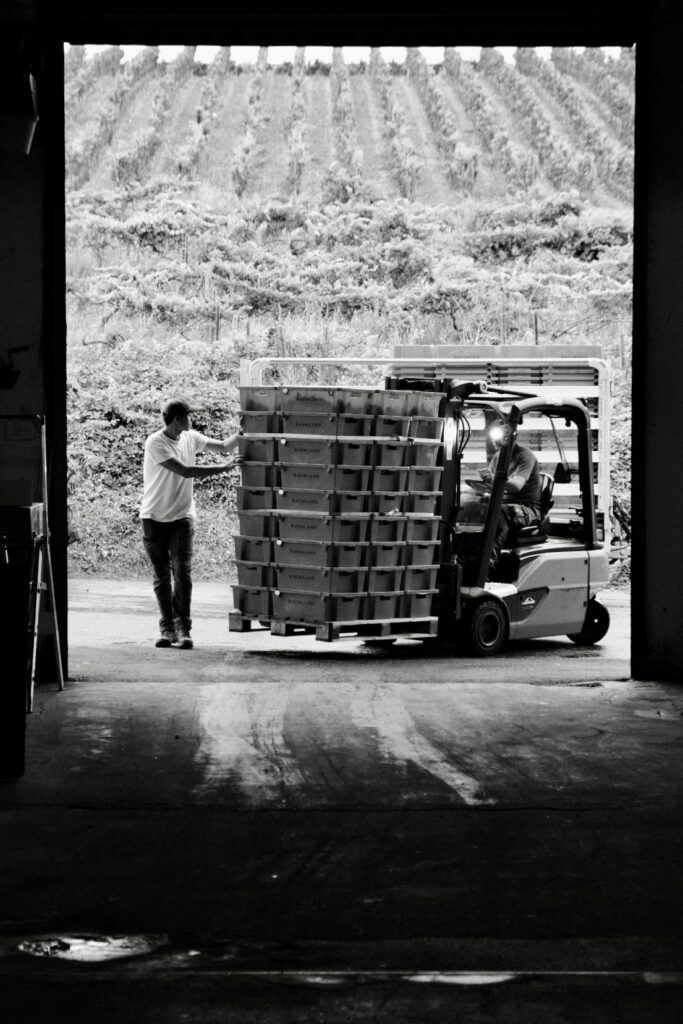
The tasting
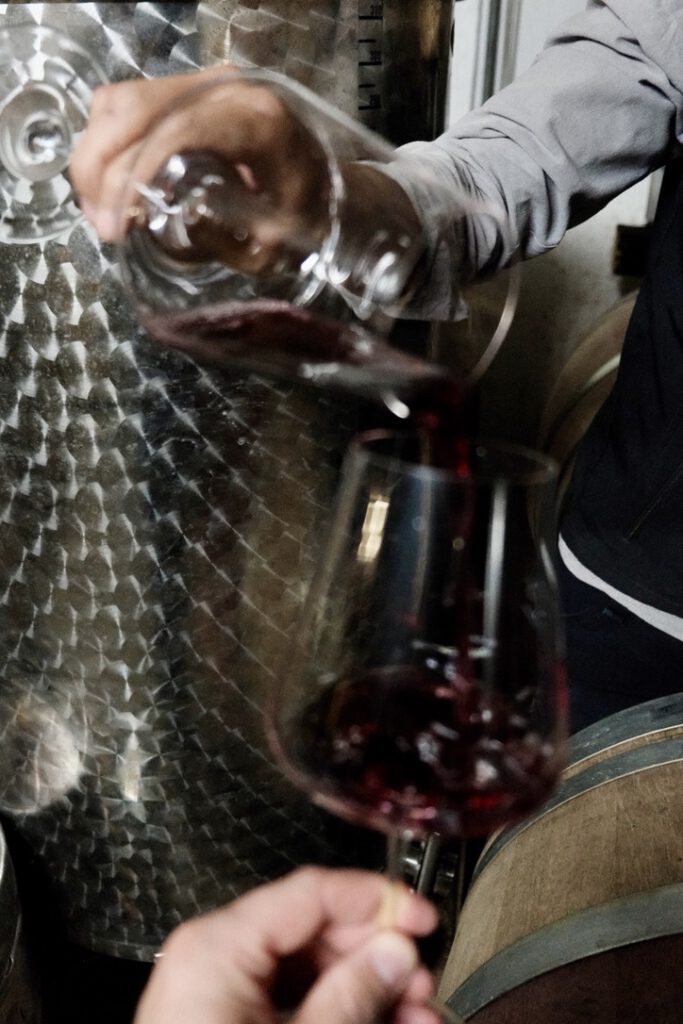
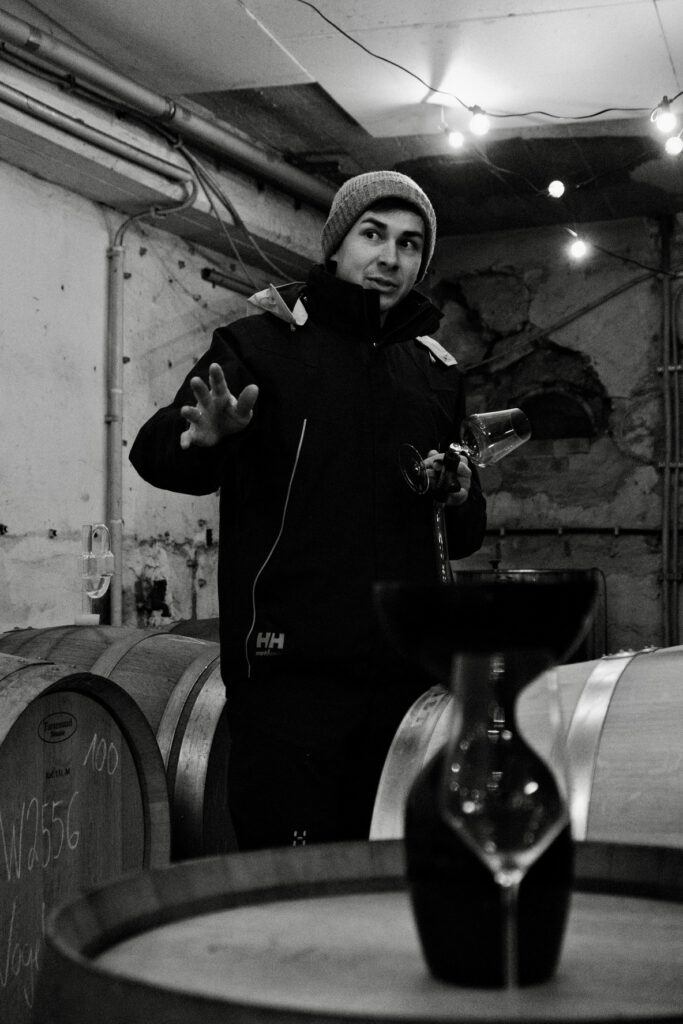
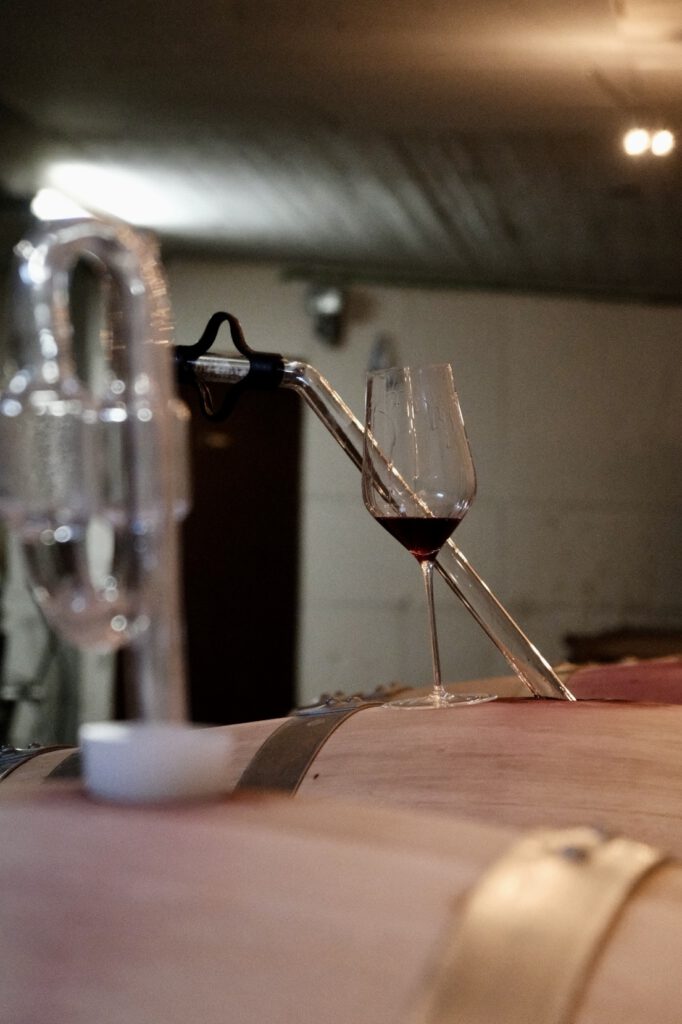
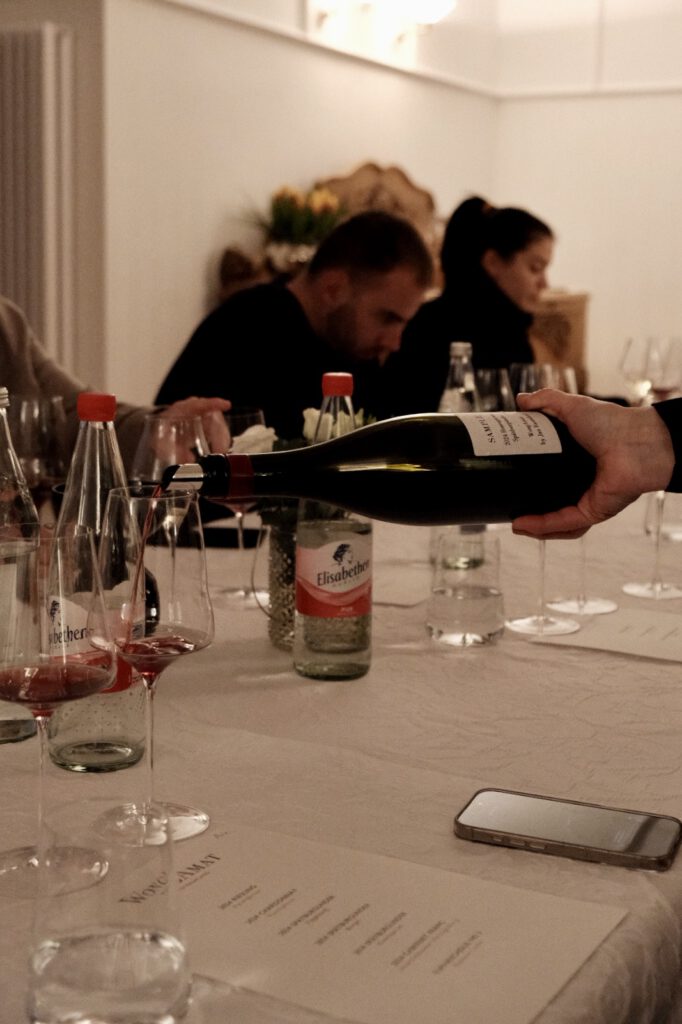
The presentation itself was pure Jan. No big speeches, no “you have to celebrate this now.” More like: “Taste it. Tell me what you think.” And then this quiet, very precise layering of context: why he did it that way, why he waited longer here, why he didn’t want more extraction there, why the wood was chosen exactly like this.
I love that. Because it shows Jan doesn’t hide behind storytelling. He stands behind decisions.
My tasting notes
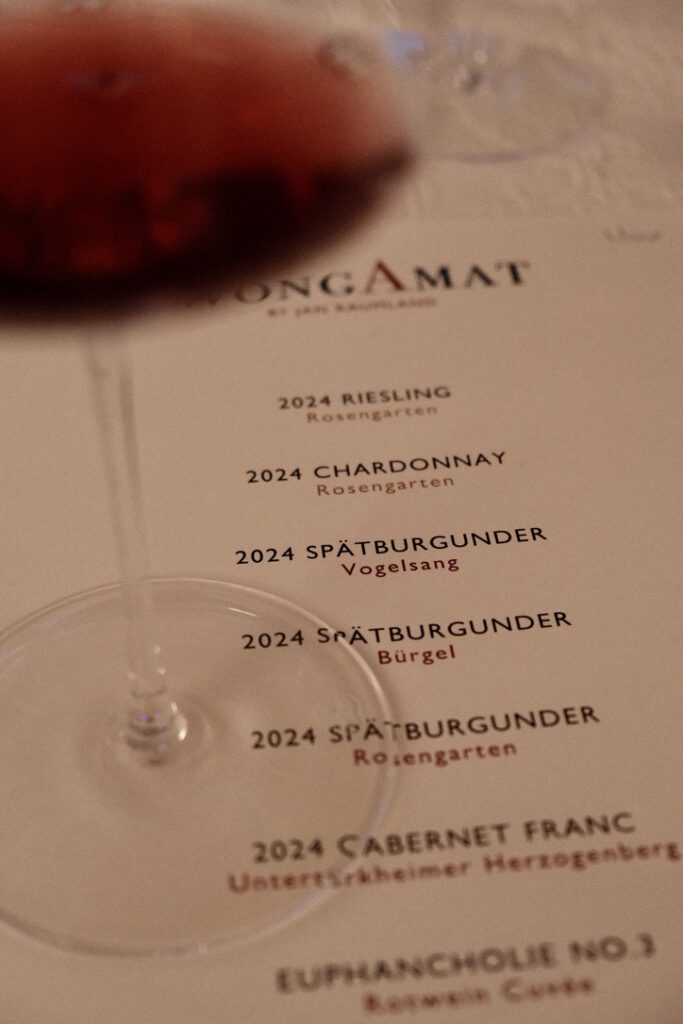
The Whites – WongSiri 2024
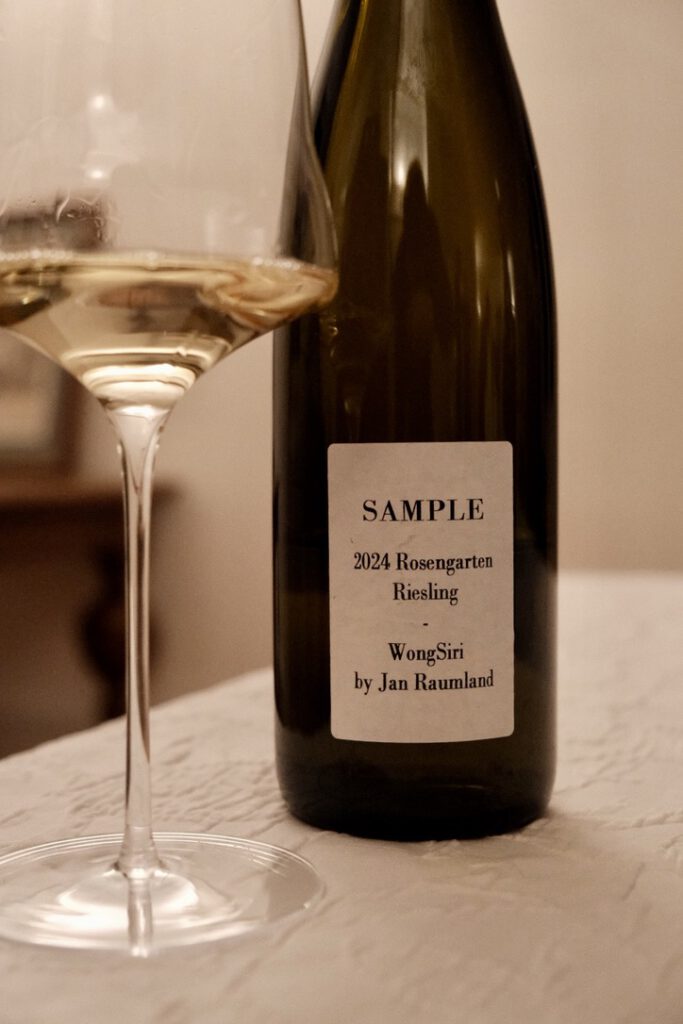
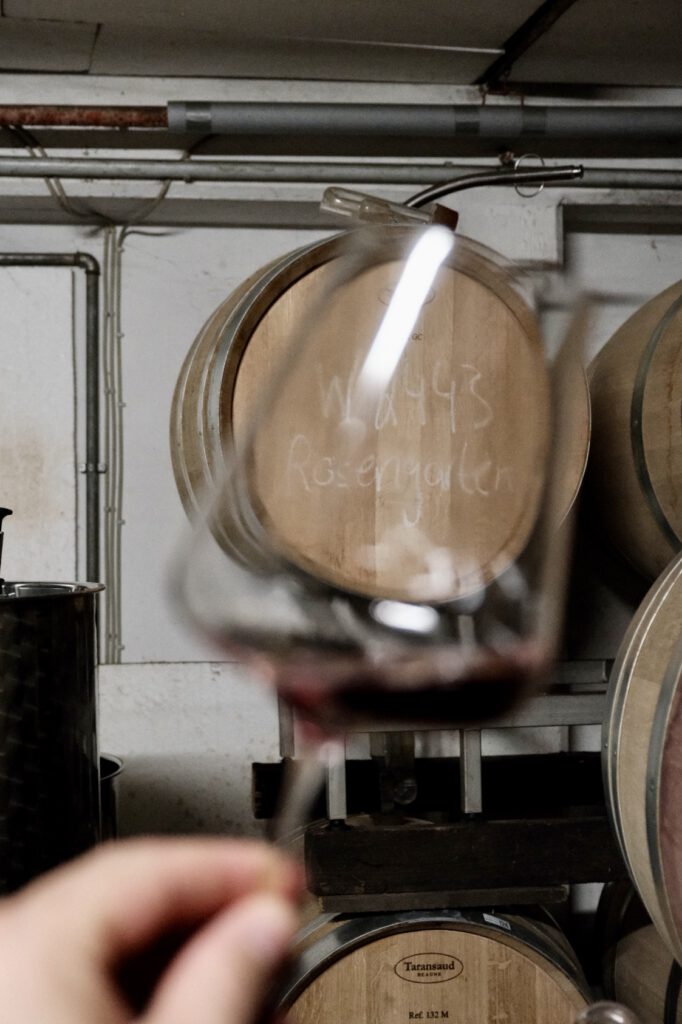
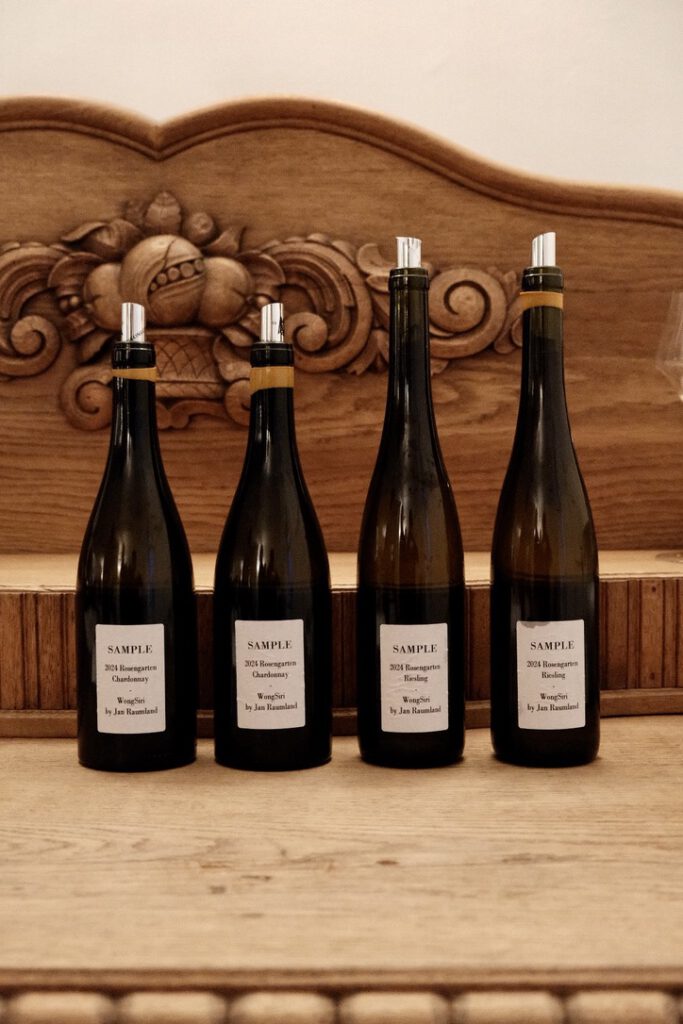
WongSiri Rosengarten Riesling 2024
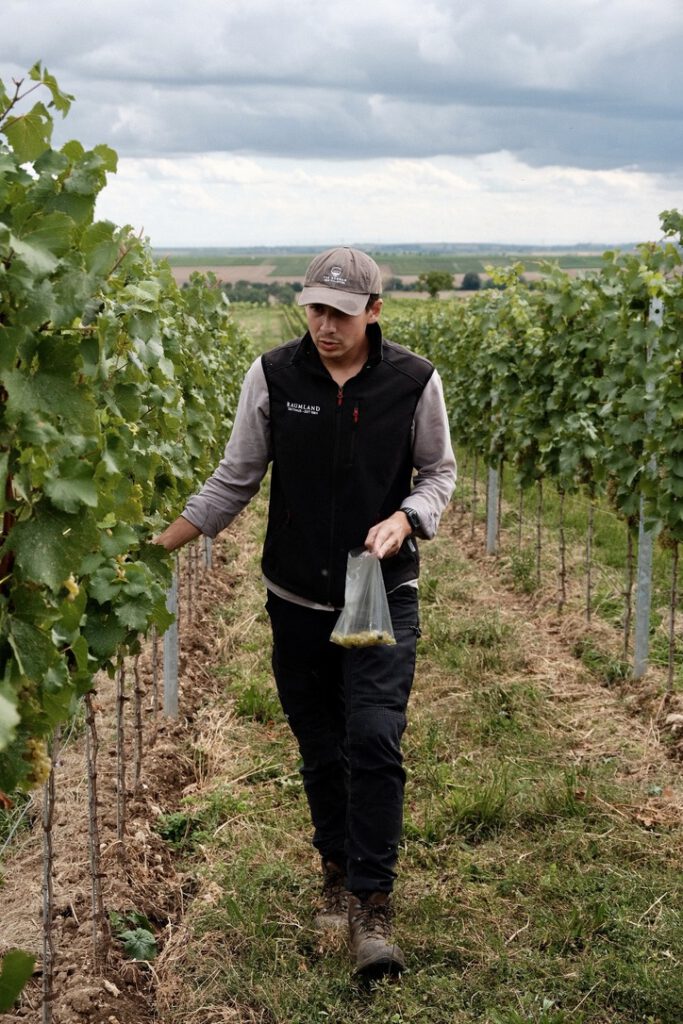
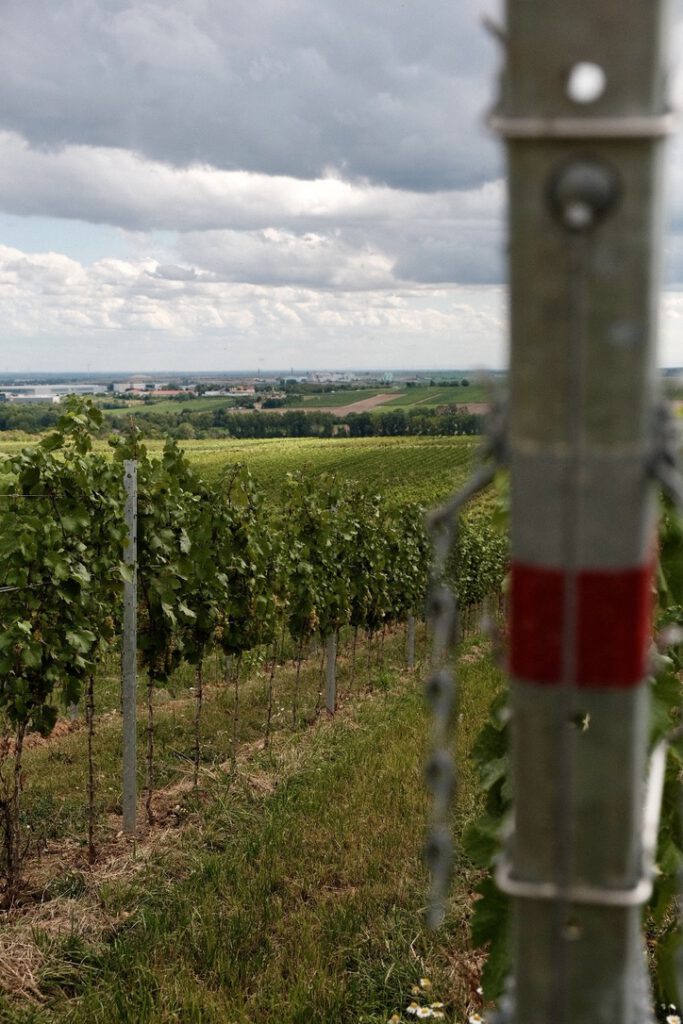
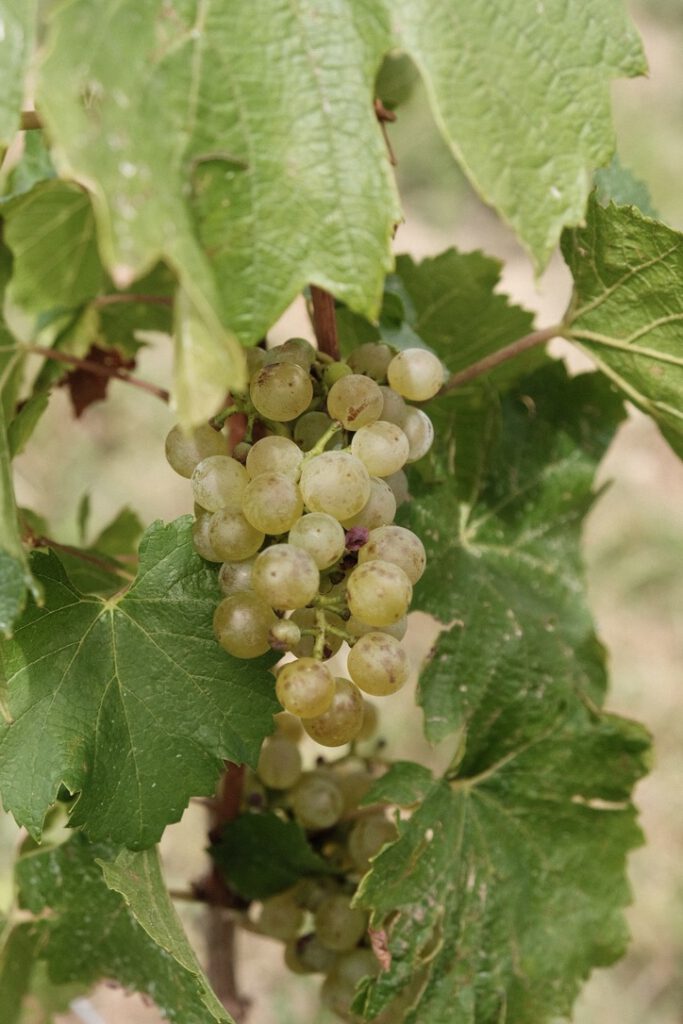
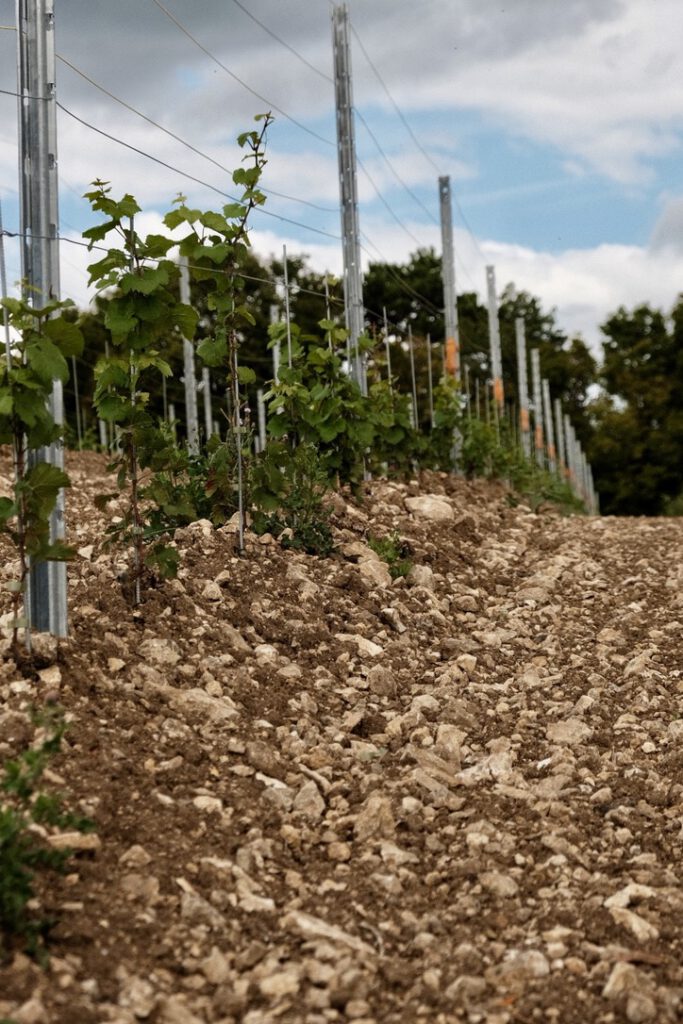
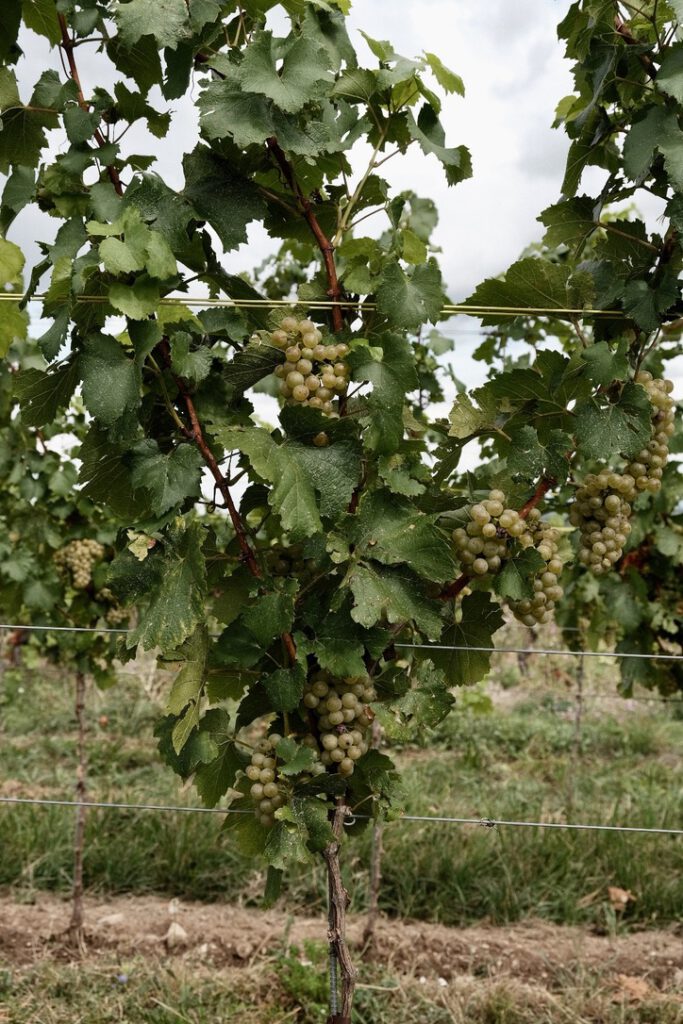
A one-off project. The vines were grubbed up right after harvest. And you can tell Jan didn’t make this wine just to “do Riesling as well.” I was standing in the vineyard a few days before picking and tasted the grapes. Rarely have I had fruit that aromatic, that perfectly ripe, that on point.
Right now, the wine shows reductive, tight, racy. Iodine, intensely salty, fresh. It has that pull, that vertical tension—almost more like bare rock than classic Riesling aromatics. Elegant, filigreed, very long, with a faintly green-tinged finish. For the moment, more promise than narrative. But that’s exactly why it’s great. This Riesling needs time, and it will gain with time.
Note: it has already evolved enormously in bottle over the past six months.
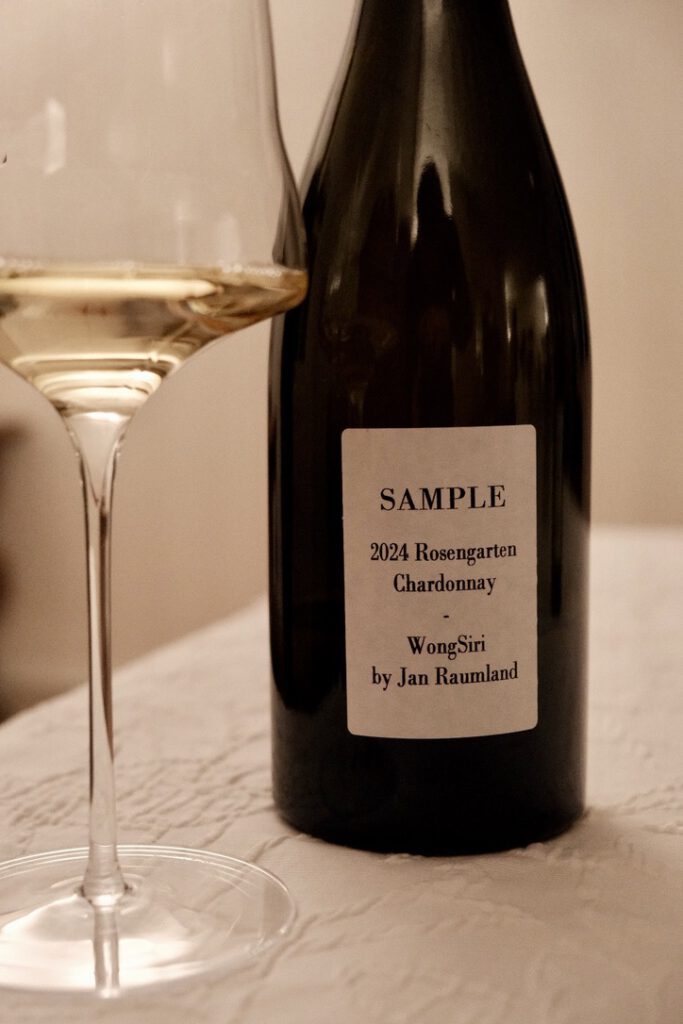
WongSiri Rosengarten Chardonnay 2024
On the nose: powerful, taut, ultra-salty. And yes—annoying, in the best way. That “sour green apple ring” vibe nails it. Tension down to the fingertips. New oak is there, but it wears it like a tailored suit. Aromatically, it leans more into white fruit. On the palate: deep, dense, extremely long and complex. Without air, it’s too much like a locked safe. With air: a statement for German Chardonnay.
The Reds – WongAmat 2024
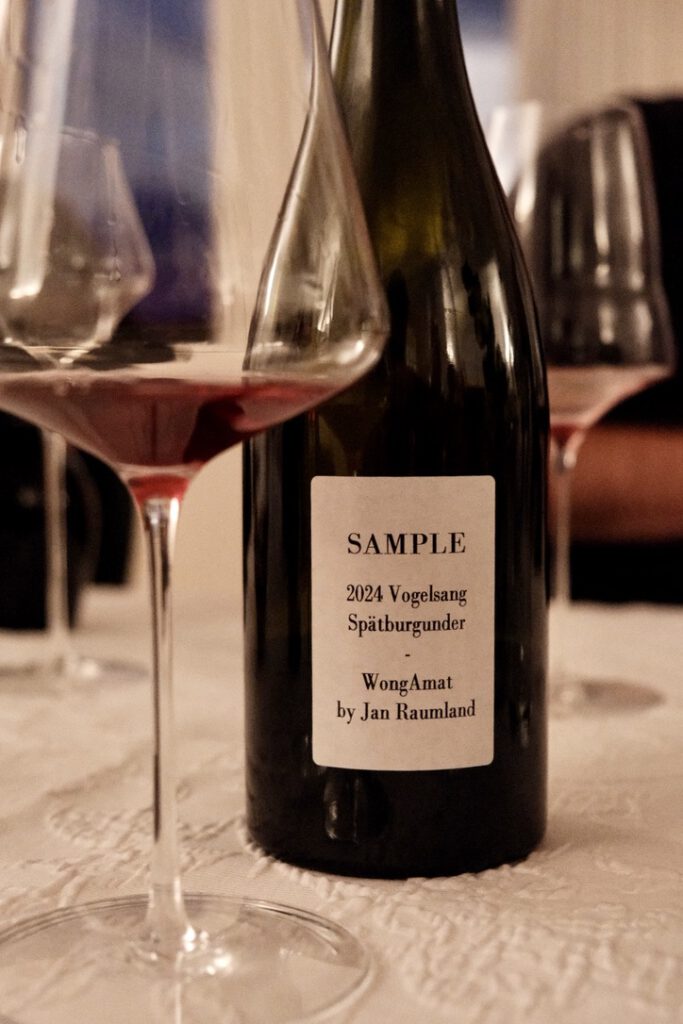
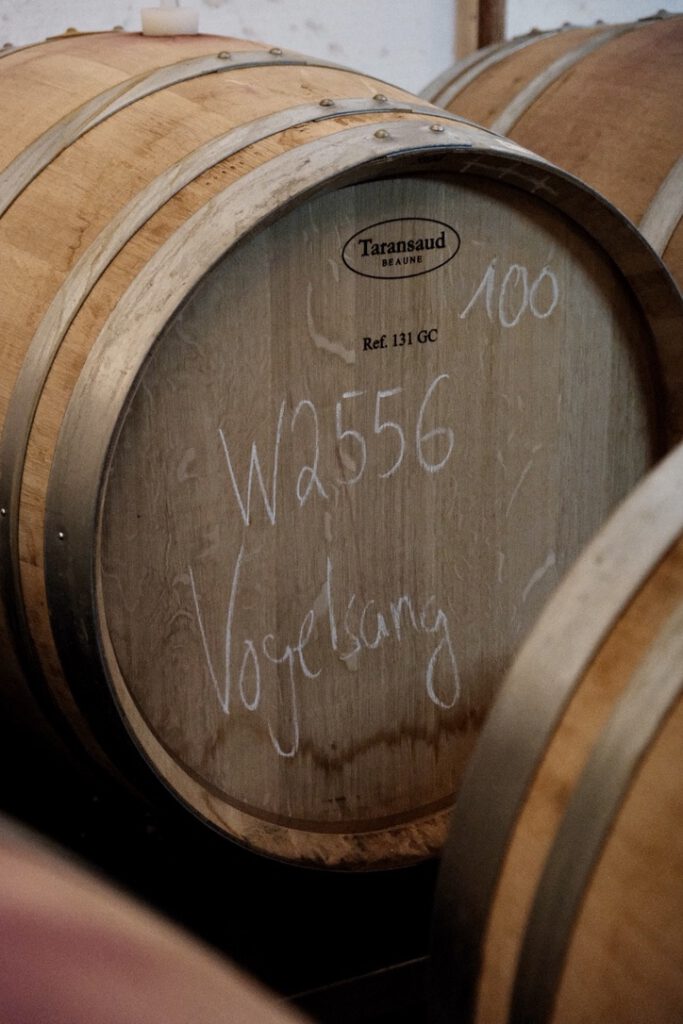
WongAmat Vogelsang Spätburgunder 2024
Clear, precise, red berries. Very fine on the nose, almost delicate. With air it turns fleshier, deeper. On the palate: slightly reductive, juicy, berry-driven, high acidity, a lean, firm frame. Gentle tannins, rougher than Bürgel. 10.5% alcohol, old German Ritter clones, lots of extract and presence. This is Jan’s signature in full: lightness without emptiness. With air it goes darker, a touch rougher, more fruit-forward. Pure drinkability. Dangerously good.
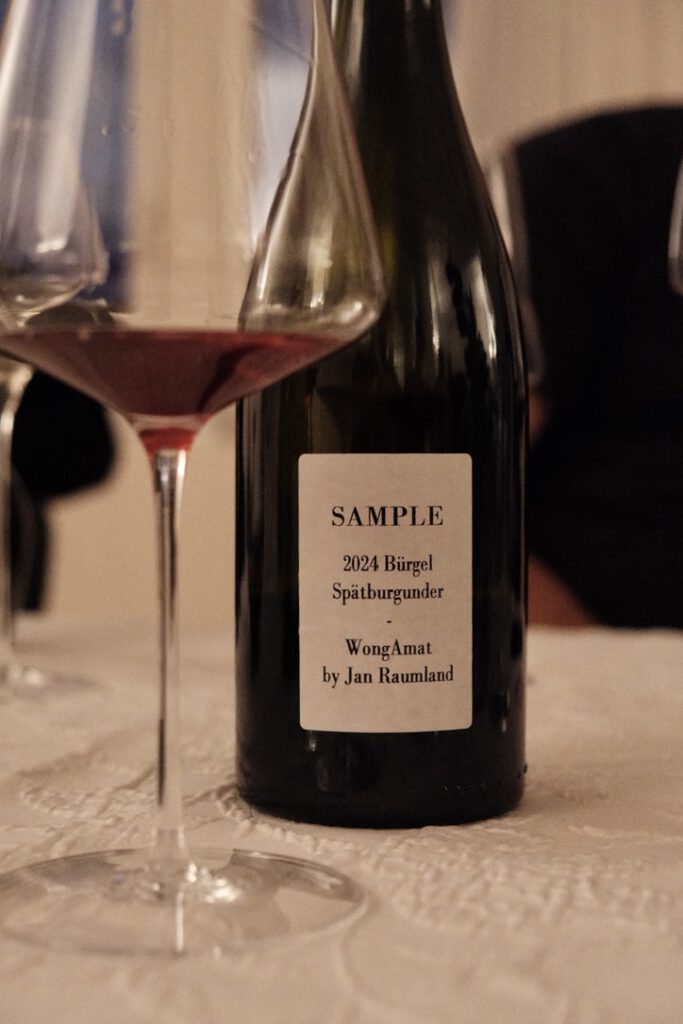
WongAmat Bürgel Spätburgunder 2024
Closed, quiet, delicate. A whisper—soft and fine as a feather. The incarnation of finesse and lightness. Then that beguiling red-berry fruit, slightly sweet-seeming (likely the high extract), though bone dry. Dark, complex, racy, with vivid acidity. Filigreed and light, yet with a dense core that carries everything. Incredibly fine. This is one of those wines where at some point you stop taking notes because it feels ridiculous. Bürgel leaves you speechless.
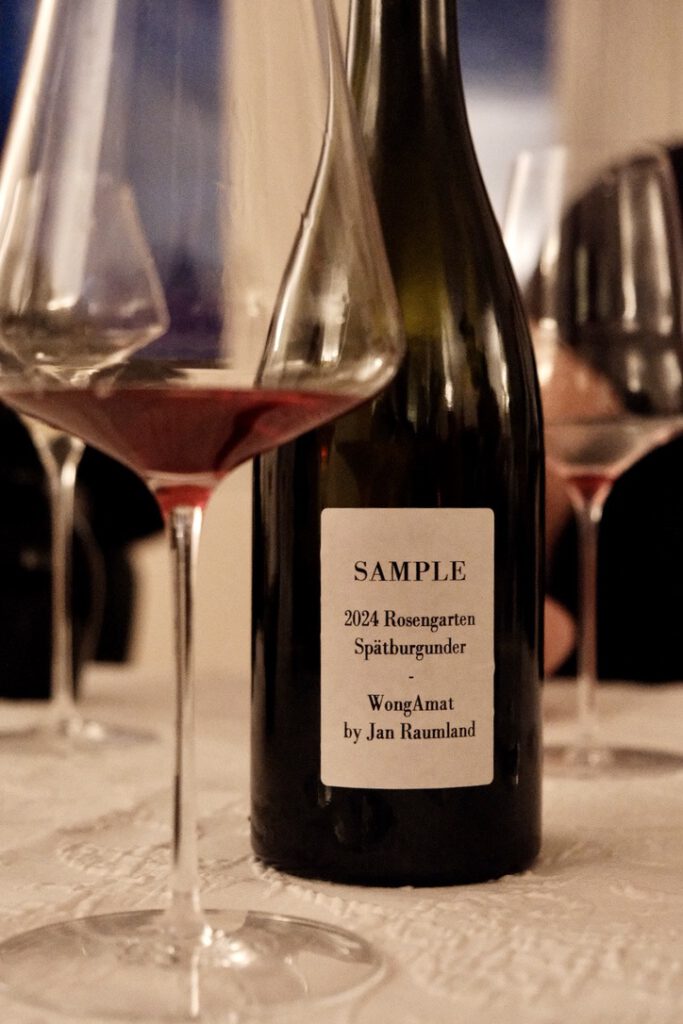
WongAmat Rosengarten Spätburgunder 2024
More present in fruit than Bürgel, more intense, more spicy. Not quite as fine, built a touch broader, but still at a very high level. Fine tannins, slightly meaty, salty. More accessible now, less complex than Bürgel. A wine that already delivers a lot of joy.
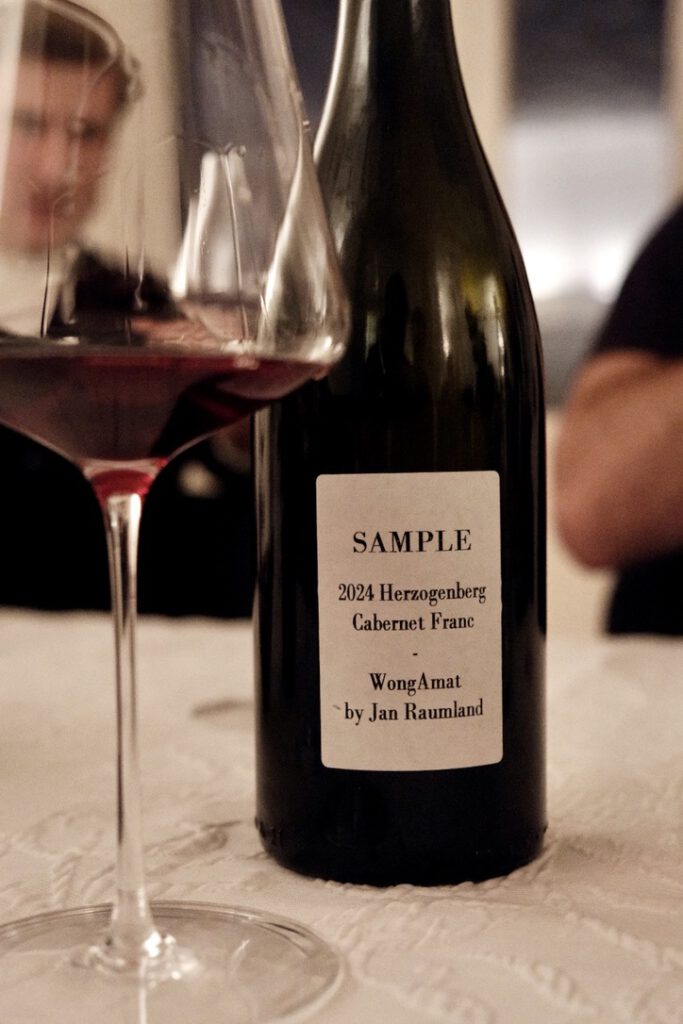
WongAmat Herzogenberg Cabernet Franc 2024
Spicy, green bell pepper—very classic Cabernet Franc. Green phenolics, clear and precise. Juicy, well-structured, polished yet present tannin. Long, fine, with good density. Cabernet Franc done seriously.
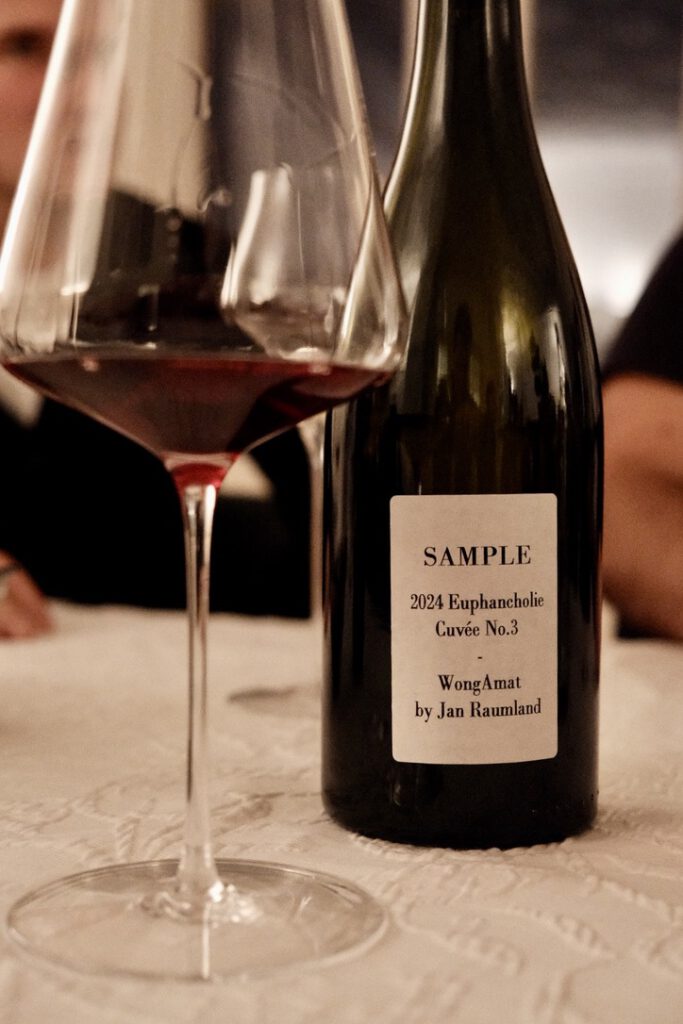
WongAmat Euphancholie No. 3 (Solera Cuvée)
Dense, juicy, earthy. Dark, compact berry fruit, spicy, raw, slightly bloody, meaty. Complex, with faintly drying tannins. Superb balance, but it needs time. This is a wine that doesn’t play for charm, it plays for depth. Euphancholie practically demands food.
Putting the 2024 vintage into context
The reds show remarkable finesse and elegance in 2024. Slimmer than the benchmark vintage 2022, but never thin. Lightness without blandness. And still, WongAmat’s identity shines through with total clarity.
The whites need to be read differently. The Riesling is the first—and for now the only—wine under WongSiri. I’ll be honest: I was sceptical of the idea at first. But with every glass, the wine becomes clearer, brighter, more self-assured. It needs time, no question. But it already shows where this is headed. Jan had already vinified Chardonnay in 2022. He actually wanted to focus exclusively on Pinot Noir. It didn’t happen that way. Thankfully.


My conclusion
With this fourth officially released vintage, Jan proves once and for all that WongAmat has become a Spätburgunder style that is genuinely unique in Germany. Cabernet Franc and Euphancholie slot in seamlessly. Perfect ripeness. The subtlest, perfectly integrated oak. Wines without rough edges, yet full of expression. Drinkability worthy of the gods. Quiet. Precise. Ambitious.
Jan Raumland’s 2024s confirm more than ever that he has one of the most convincing, most independent, and stylistically clearest signatures in German wine today.
Pictures: © The Art of Riesling – Maximilian Kaindl

