

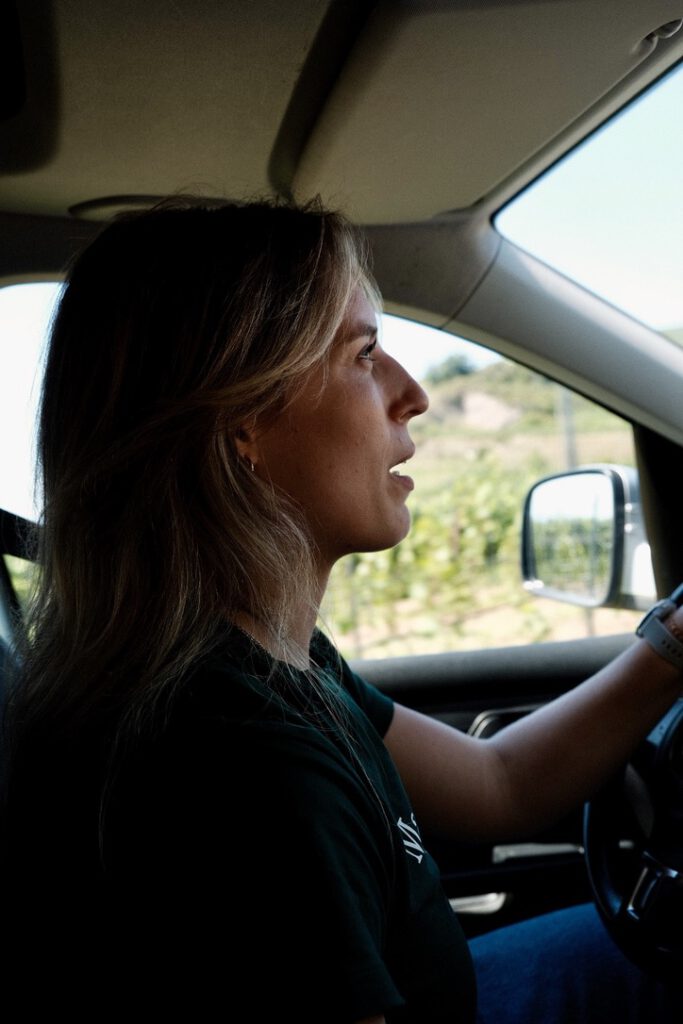
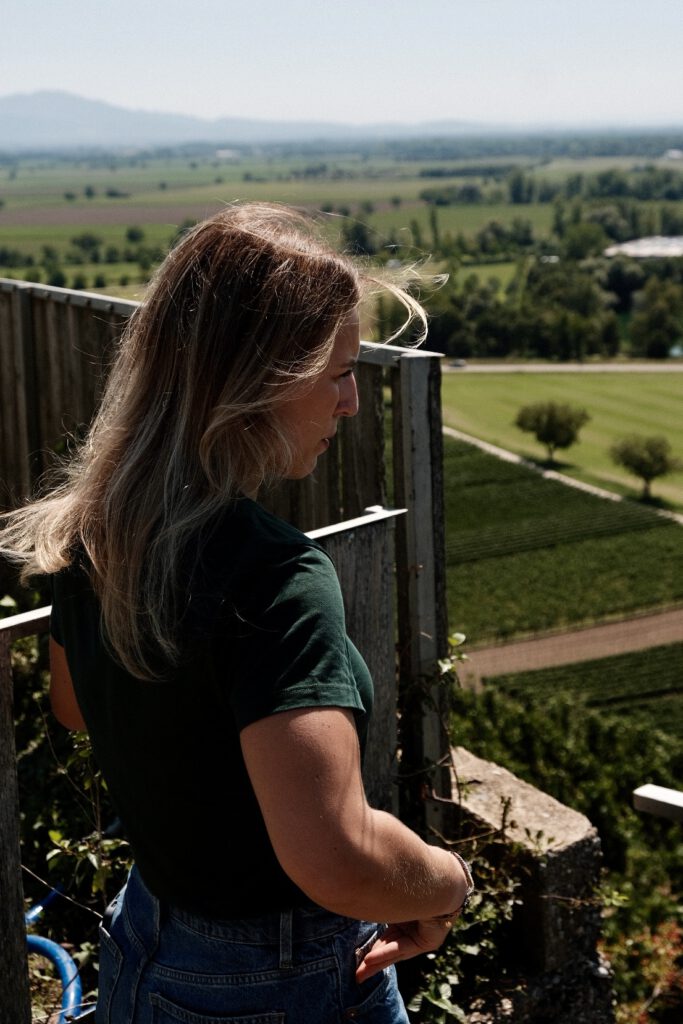
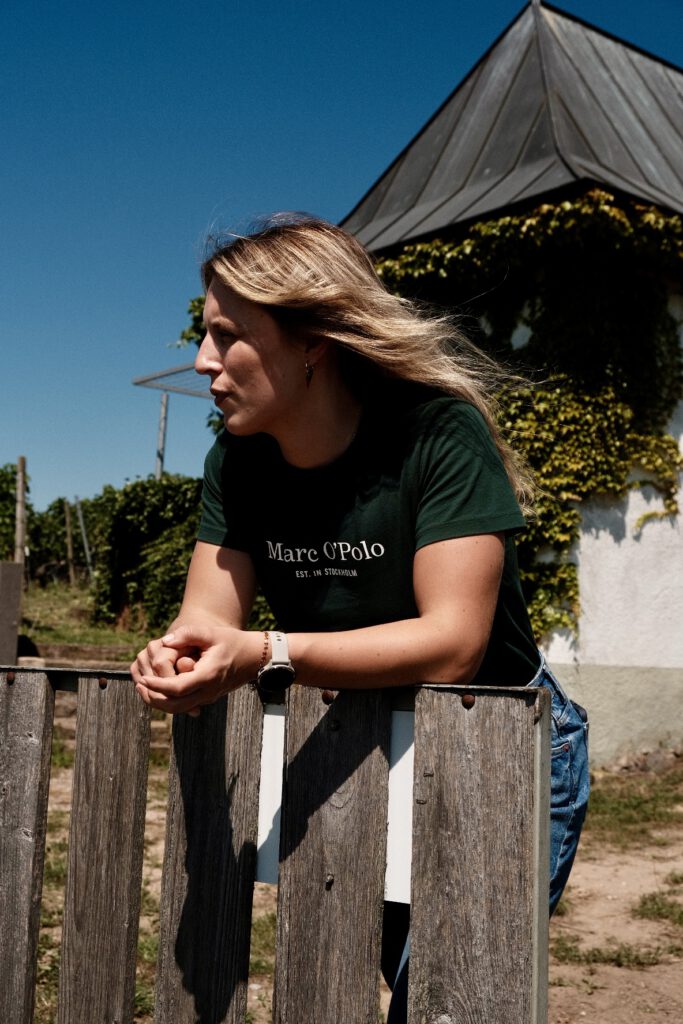
I didn’t have a clear picture in mind when I drove to Ihringen that summer’s day. Kaiserstuhl, sure – heat, terraces, a bit of drama on the slopes. But what I actually expected was simple: a vineyard tour, a few wines, the usual kind of visit. And then Rebecca Heger was suddenly standing in front of me. Not “the winemaker,” not “the next generation,” just Rebecca. Calm, attentive, curious – but without that winemaker hustle you sometimes get. She didn’t walk me through the sites to prove anything, but to show me how she sees the Kaiserstuhl. And that changed everything. I arrived with a fixed idea of Heger’s wines and left with a completely different understanding.
Max Kaindl, December 08, 2025
Reading time about 5 minutes
Dr. Heger – Change at the Kaiserstuhl

My first visit to the Kaiserstuhl
We started walking. No big speeches, no “we are this and that estate.” More like small observations: how the wind shifts, which stone wall heats up earlier in the afternoon, why a parcel five meters further reacts completely differently. I quickly realized: this is someone who doesn’t “master” the Kaiserstuhl, but lives with it. It sounds banal, but that was the moment I understood why the style of Heger’s wines is currently moving so noticeably.
The Kaiserstuhl – not what people always say it is
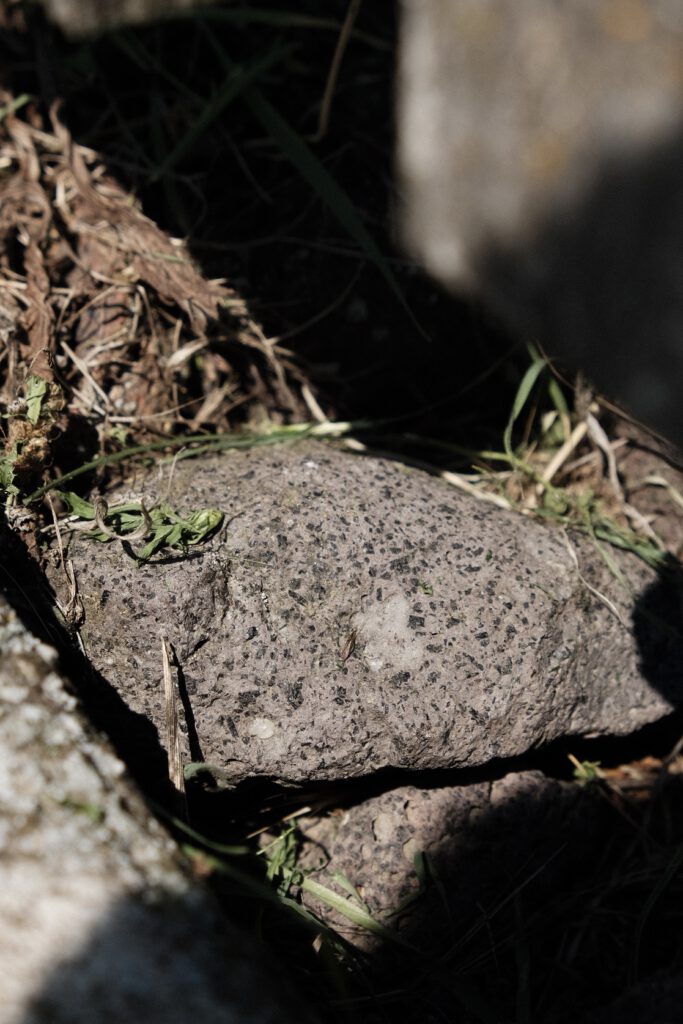
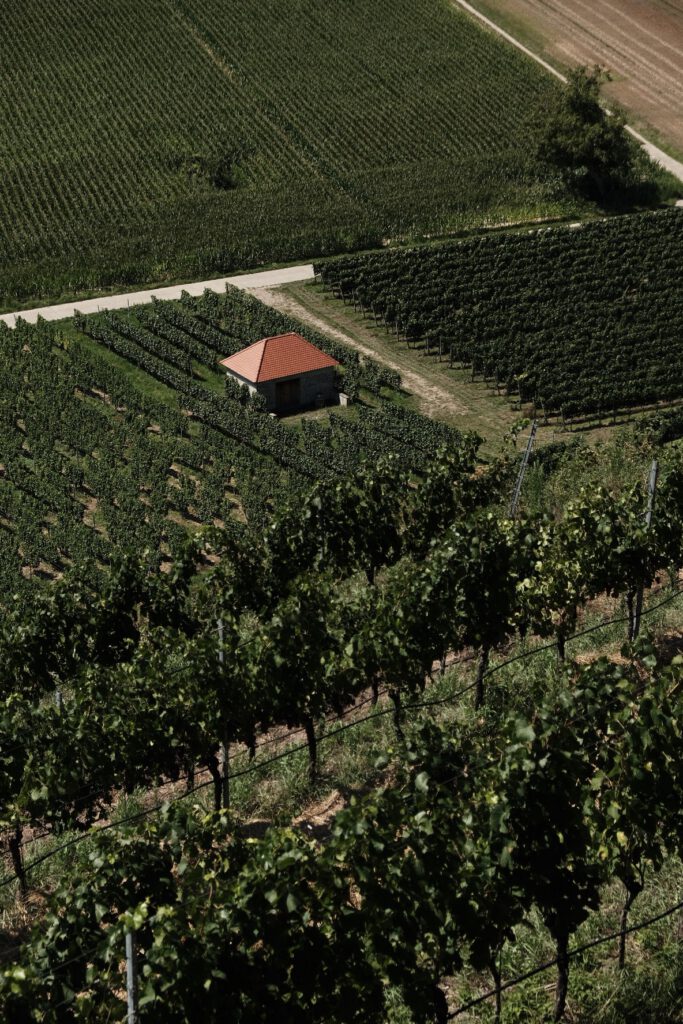
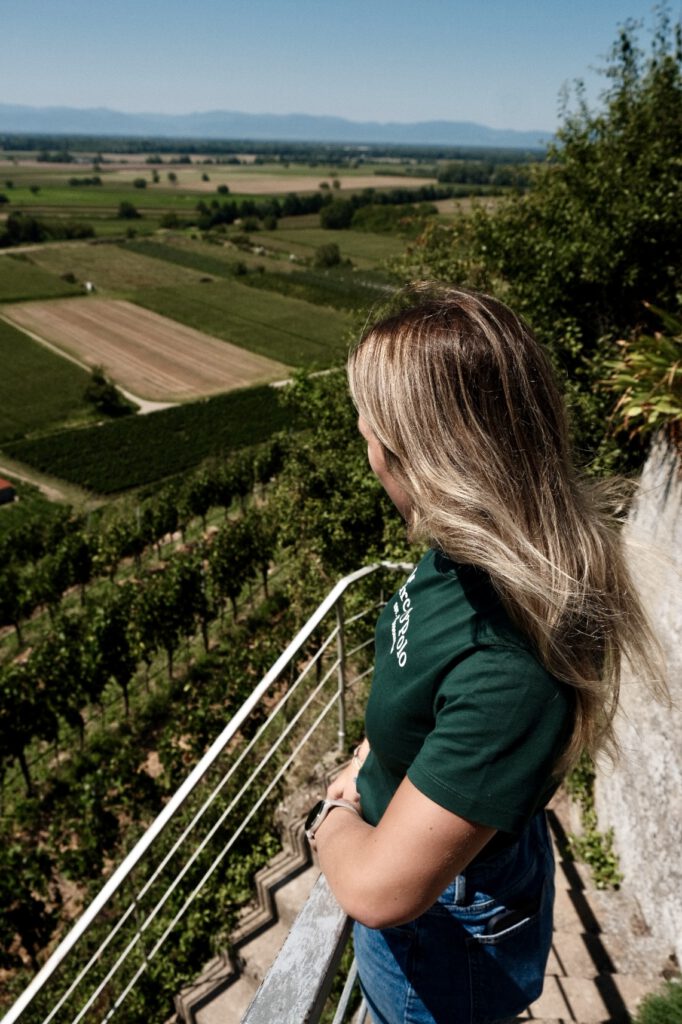
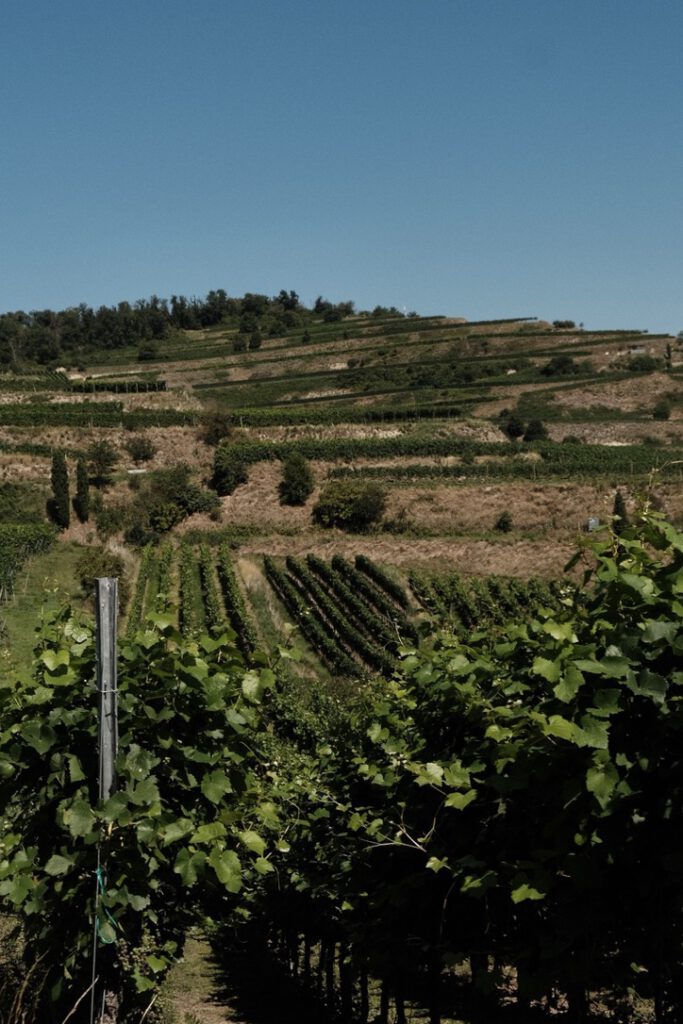
From the outside, it’s easy to reduce the Kaiserstuhl to volcanic rock and heat. But when you’re standing there with someone who knows every stone, you suddenly see how many tiny differences shape this hill. What impressed me was how unspectacular it all was. No big climate storytelling, no buzzwords. For Rebecca and her sister Katharina it’s not about forcing something out of the Kaiserstuhl. It’s about turning down the loud spots and bringing the quiet ones into focus.
The two sisters – quiet change, clear direction
What stayed with me most that day was the way Rebecca talked about herself, about working with her sister Katharina and with their parents. There’s no “old vs. new” drama, no urge to distance themselves. Instead, a deep respect for what Joachim and Silvia Heger have built – and at the same time a very clear sense that today, some decisions need to be different.
They want to make the wines finer. That’s easy to say, but in a place like the Kaiserstuhl it’s actually a pretty big statement. And yet she said it without any big gesture. Not as a vision, but as everyday work.
- Finer in the tannins.
- Finer in aroma.
- Finer in handling wood.
- Finer in the timing of the harvest.
- Finer in the time the wines are given.
My impression was that she’s not looking for a revolution – she wants to carry a thought forward that might have always been there, but only now truly makes sense because of climate and timing.

The winery
One thing you can’t forget in all of this: Dr. Heger is not a young project that started from scratch. The estate has history – and you feel it the moment you stand in the courtyard.
In 1935, local doctor Dr. Max Heger founded the estate. From today’s point of view, almost romantic: a physician who falls in love with the best sites of the village and starts making serious wine. His son Wolfgang took things in the 60s to where the Heger name is today: the top of the region.
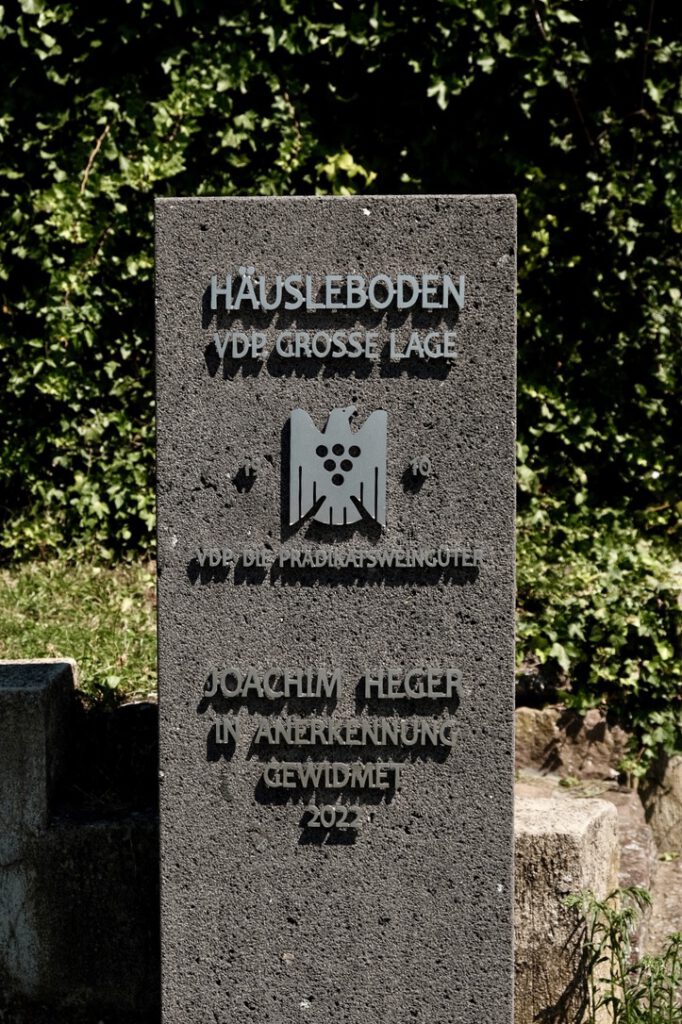
Silvia and Joachim, both Geisenheim graduates, Joachim for many years head of VDP Baden, shaped what most people know today: a benchmark estate for Pinot Noir and Burgundian varieties on the Kaiserstuhl. What struck me that day: you don’t feel that Joachim and Silvia “have to” hand over. They’re consciously making space. Not because they’re tired, but because they know the next steps require different decisions.
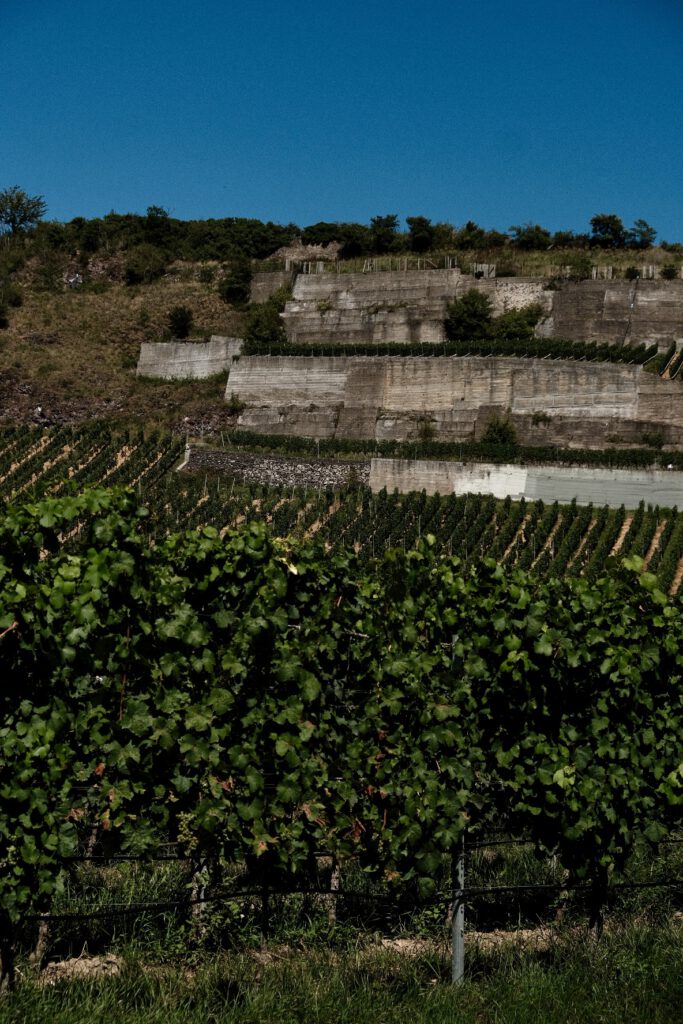
Rebecca joined in 2020, Katharina in 2021. And since then, things have been shifting. (Not yet) in the logo, not in the branding, but on the inside: in the style, in the fine details of vineyard work, in how they treat their sites. The vines stand almost exclusively in great vineyards, even if the names sound a bit intricate: Ihringer Winklerberg, Achkarrer Schlossberg, including little niches like Gras im Ofen. Weathered volcanic rock topped with loess or loess-loam, terraces, steep slopes, all handworked. On paper, it reads like a textbook. When you’re there, you sense: this is an estate that doesn’t see its top sites as trophies, but as a responsibility.
What I liked
There is no cult of ego here. No stories about how hard everything is just to evoke sympathy. More a quiet sense of responsibility for what these great sites demand. People often say: “A winemaker can only be as great as their vineyard.” For me, the reverse is also true. A great site is only great because there are winemakers who turn that raw potential into great wine. The Hegers are, for me, exactly those kinds of winemakers – and they’ve proven it with decades of consistency. An estate that dares to evolve without denying where it comes from.
The vineyards
I could now describe each site in detail – slopes, soils, exposition. But honestly: for that, I’d recommend the VDP “VDP.Weinberge” pages. The association has done an excellent job of explaining the great vineyards of each region in depth. And anyway, that wasn’t really the point that day. The point was how Rebecca spoke about the sites.
That day, the Kaiserstuhl felt less like a spectacular volcanic hill – and more like a living system you have to listen to if you want to make truly characterful wines.
The wines – this is how I understood them that day
We only managed the reds, but that was enough to see how far the two sisters have already come. One thing upfront: to be honest, I never particularly liked the “old” Heger style. Often it felt too oak-driven for me, a bit dried out in the tannins, a touch cooked in the fruit. I could always respect the quality, but the style simply wasn’t mine. I had to (thankfully) revise that impression quite significantly after this day.
Note: I’m deliberately not describing the wines purely in organoleptic terms here. You can read Parker & co. for that. I’d rather share my spontaneous thoughts on each wine.
My tasting notes
Ihringer Spätburgunder 2020
A look back. Darker, spicier, a bit rough around the edges. But honest. A wine that shows where they’re coming from.


Mimus 2019
Denser, more classical. More tannin, more ripeness. A vintage that clearly embodies the old style – but well executed.
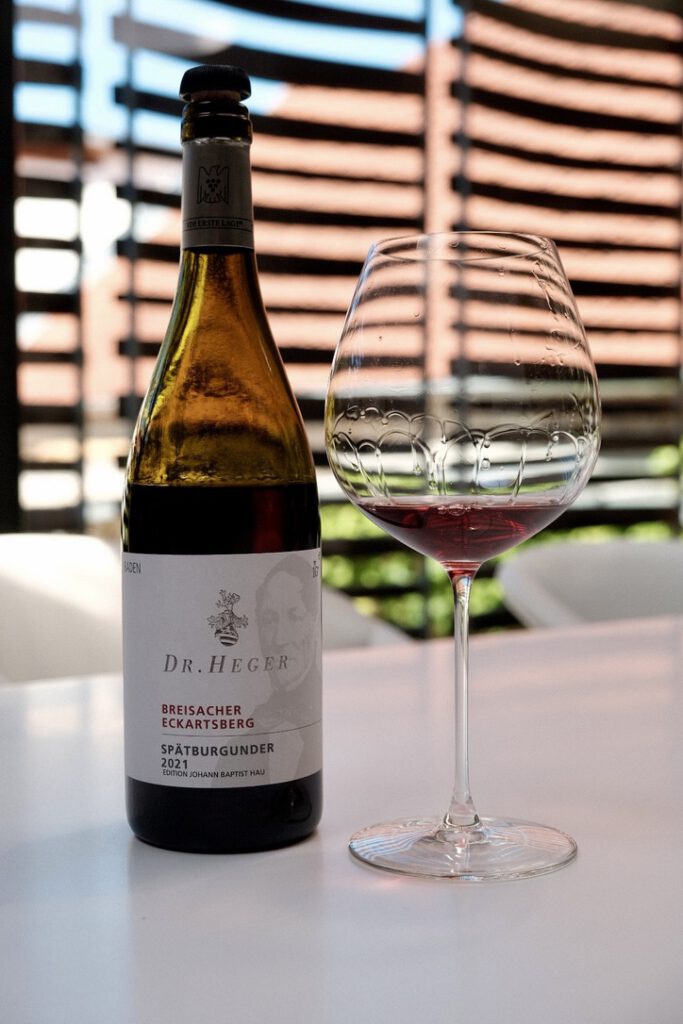
Breisacher Eckartsberg 1G 2021
Cool, quiet, precise. Certainly not the densest – that’s probably down to the wet, tricky vintage. One of those wines that doesn’t push itself forward, but stays with you.

Vorderer Winklerberg GG 2023
Fine, bright fruit, great balance, dense without being heavy. A wine that shows the new direction is working.
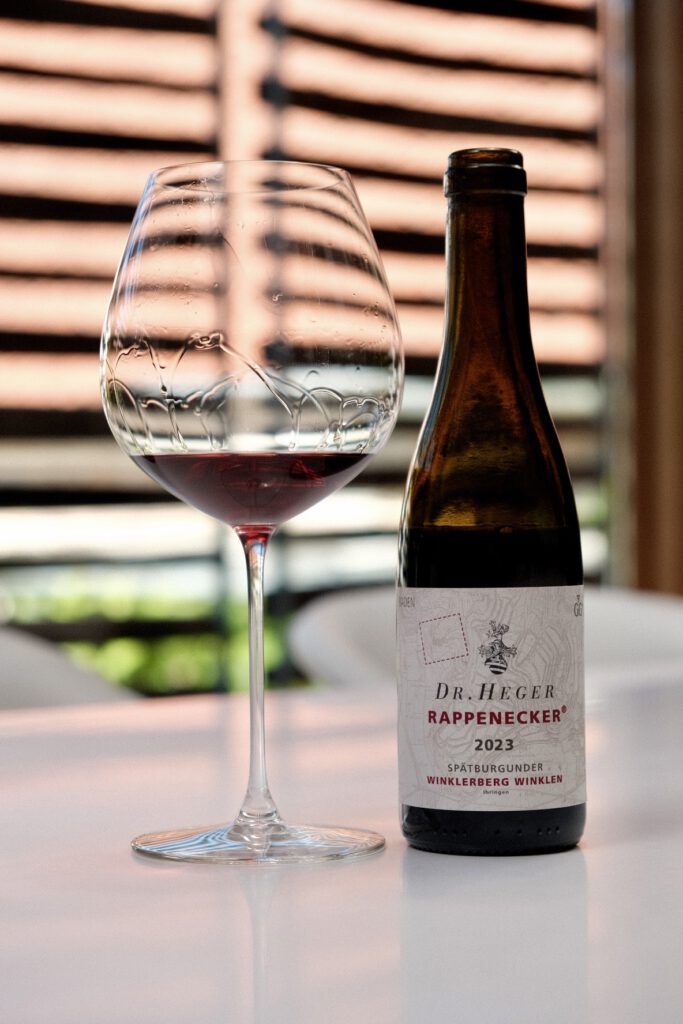
Rappenecker GG 2023
A bit more drive, a bit more spice than the Vorderer Winklerberg GG. Very harmonious, very precise.
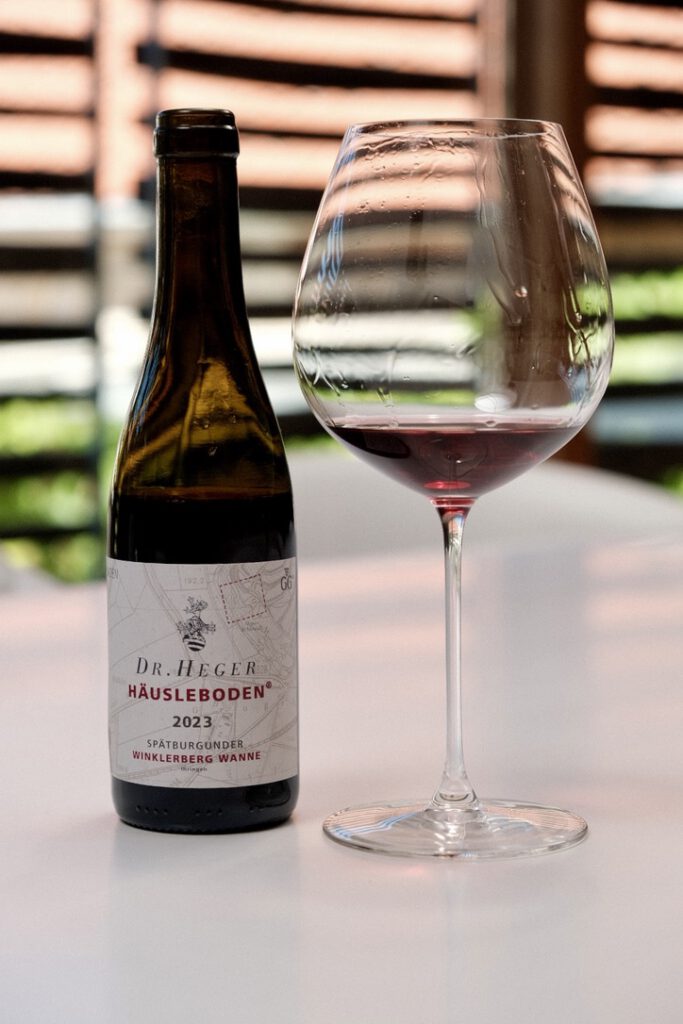
Häusleboden GG 2023
My moment of the day. Cool, very precise, finely knit structure, vibrant. A wine that captures everything Rebecca had shown me beforehand.
Schlossberg GG 2023
More oak, more depth. Needs time. But the core is clean and well balanced.

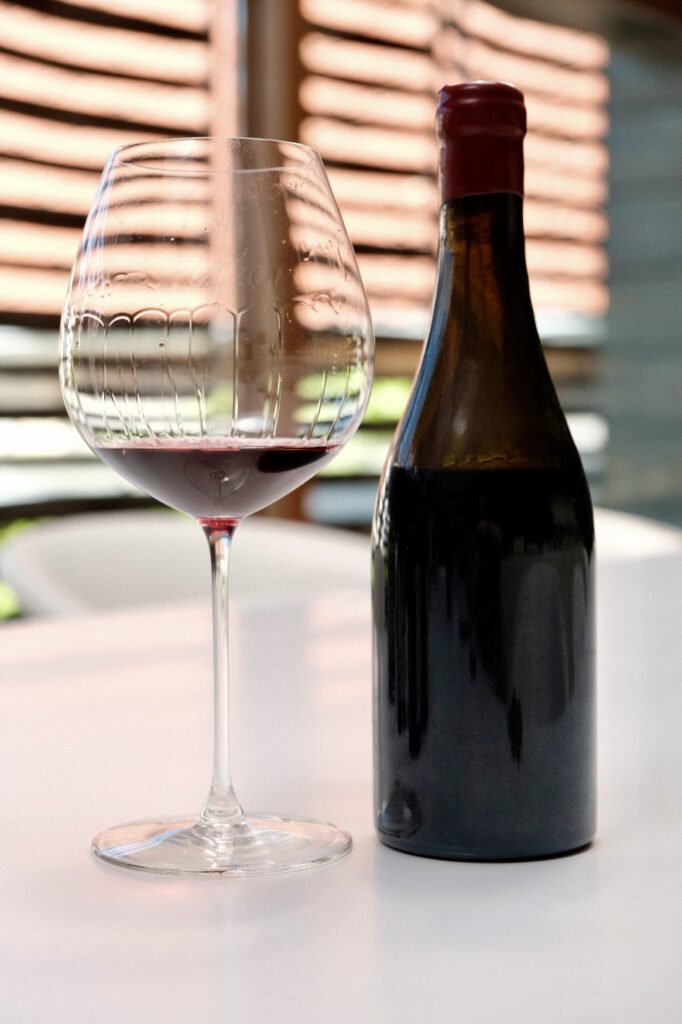
Syrah 2018
Warm, spicy, smoky. A wine that shows Syrah can do more here than you’d think. Impressive. I honestly didn’t expect you could make Syrah this serious in Germany. It doesn’t need to hide from Côte-Rôtie.
What I took away
That change doesn’t have to be loud. That the Kaiserstuhl is far more complex than you’d think if you only talk about sunshine hours. That two sisters can rethink a big estate without pushing their parents aside. And, very simply: that I need to go back – if only because I completely missed the whites. And because I learned one thing that day: my idea of Heger’s wines is definitely outdated.


Pictures: © The Art of Riesling – Maximilian Kaindl

