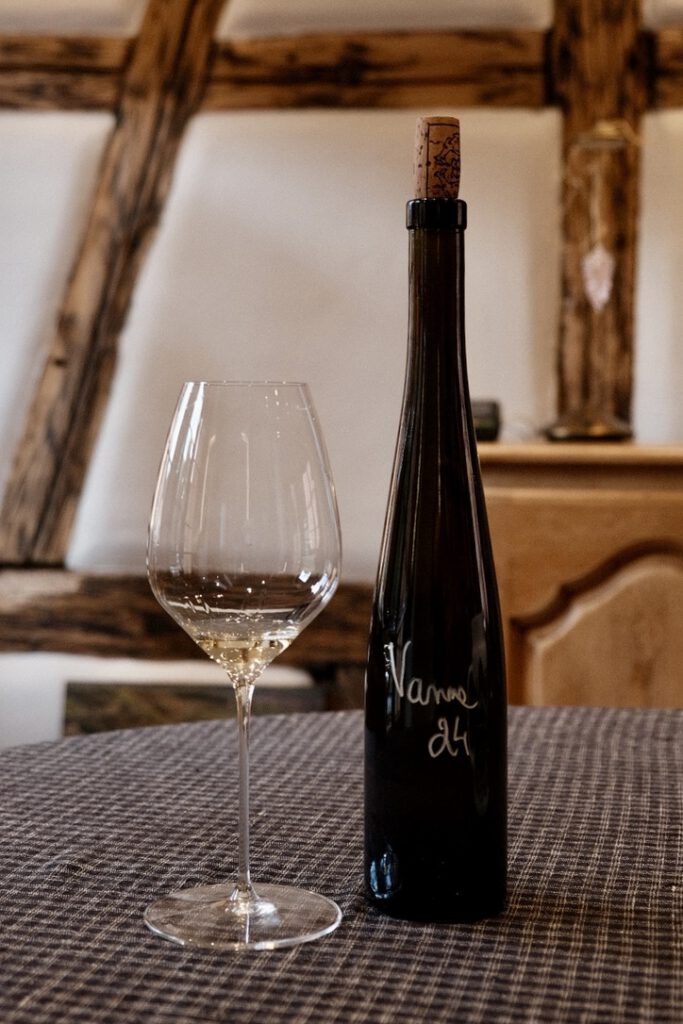

There are estates you do not need to inflate with grand rhetoric. Albert Boxler is one of them. Anyone who knows the wines already knows exactly what they are about. Anyone who does not usually understands after the first serious glass why this name has, for years, been mentioned in the same breath as the finest white wines of France. Not out of politeness, not because of history alone, and certainly not because international critics like handing out superlatives. But because the wines made here do not pander, do not come across as polished or prettified, and above all do one thing with real consistency: they speak with precision of where they come from.
Max Kaindl, April 05, 2026
Reading time about 7 minutes
Albert Boxler:
Alsace Without Makeup
Why Boxler?
Until recently, my knowledge of Boxler’s wines had been fairly rudimentary. A glass here, a glass there in a blind tasting, but never in a systematic way, never with the focus they deserved. Most recently, the 2020 Pinot Noir had completely floored me. It was not some easygoing Burgundian substitute from Alsace, but a wine with real profile, drive, and that rare combination of finesse and seriousness. From that point on, it was clear to me: if I was already going to be in Alsace at the end of March, I wanted to stop by and see Jean Boxler.
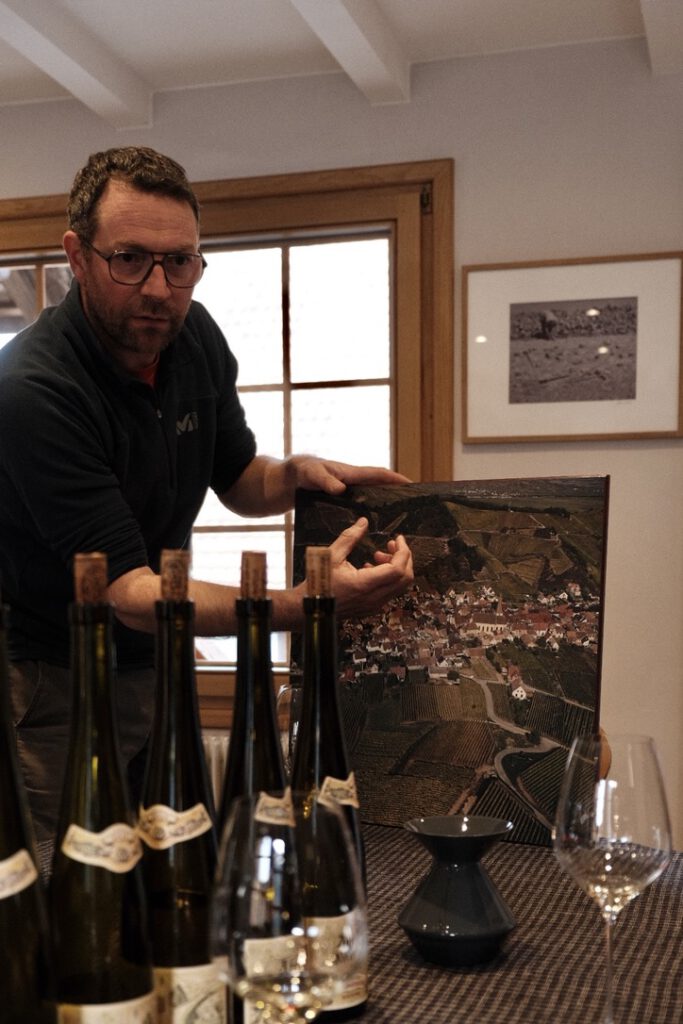
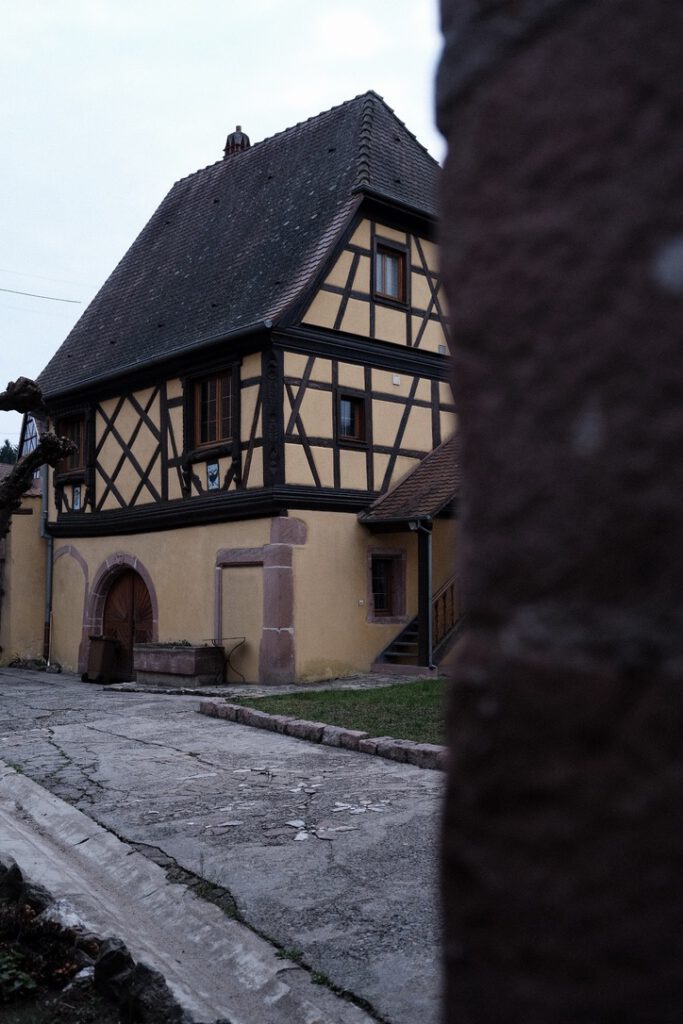
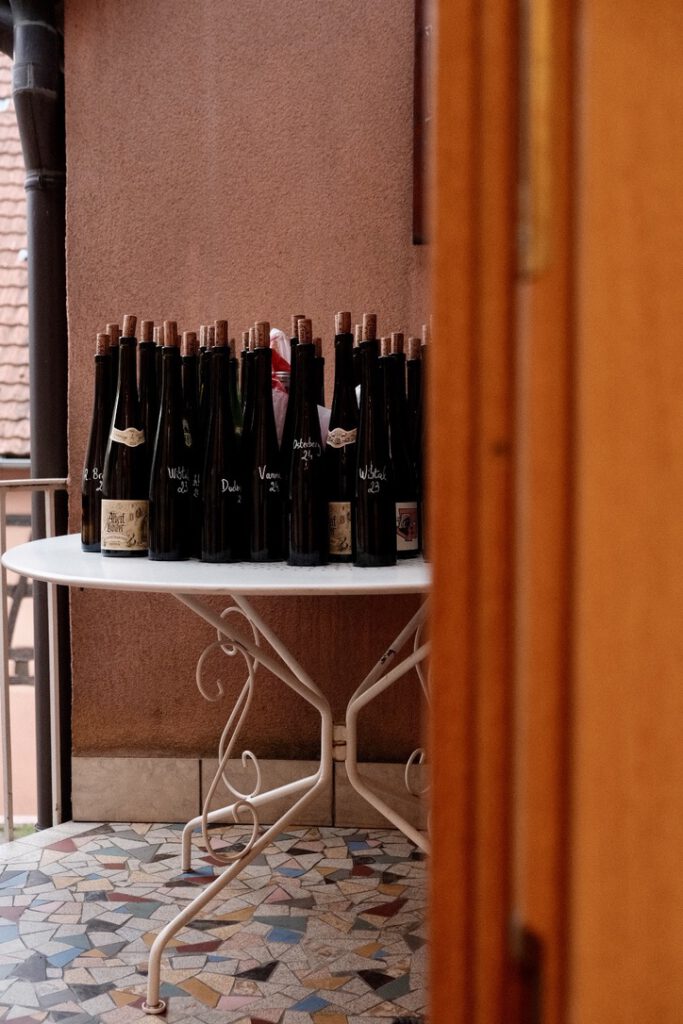
Luckily, Jean had time for us over the weekend. So on a Saturday afternoon I found myself sitting with him and four wine friends from Germany and France in his tasting room. Outside the door stood a table absolutely loaded with tasting bottles. It was clear right away: this was not going to be a polite half-hour tasting. This was going to be work. Good work. Exactly the kind of work worth driving to Niedermorschwihr for.
A visit to Niedermorschwihr
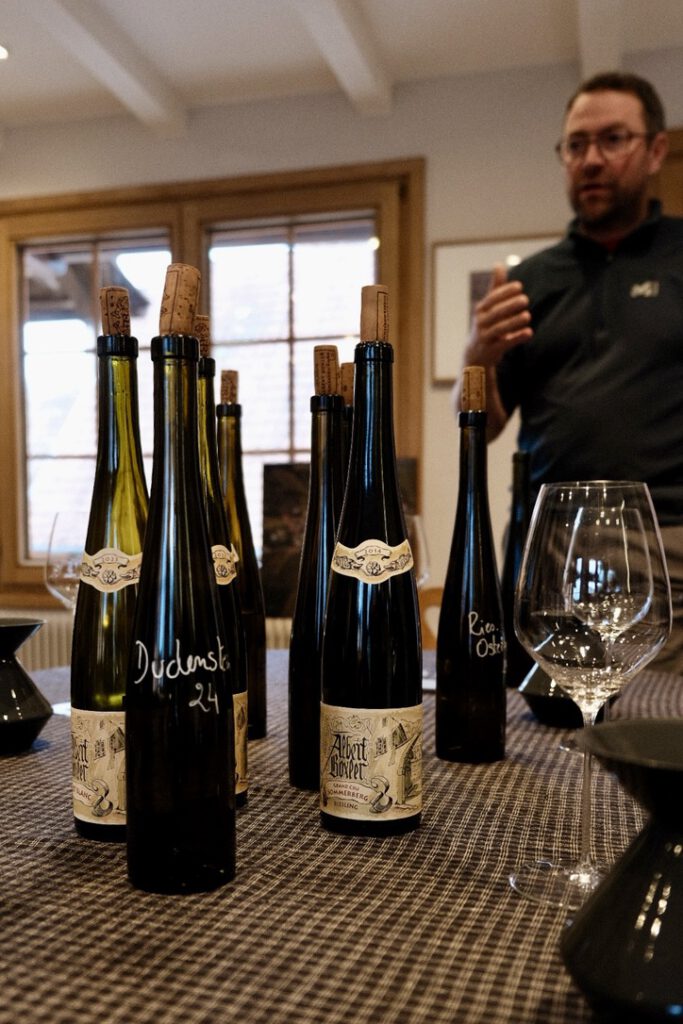
Jean showed us an impressive cross-section of the range. Dry Pinot Blanc to start, young and mature Rieslings, Pinot Gris, Pinot Noir, off-dry Gewürztraminer, and at the end even a great noble-sweet Pinot Gris. In between, he spoke about the Sommerberg, about his parcel-by-parcel bottlings, about his idea of a grand vin, and about what great Riesling means to him. We discussed, tasted, questioned, and philosophised. The afternoon disappeared with that particular speed only possible when both the wines and the atmosphere are exactly right.
That, by the way, is already part of the secret behind Boxler. This is not some glossy, polished flagship estate of Alsace. It is a family domaine with real depth. The Boxler family has been rooted in the region and connected to winegrowing since 1673. That alone is more than charming folklore. It explains why so much here does not feel shaped by fashion — just look at the labels — but by experience sharpened over generations. One key figure in that story is Albert Boxler, Jean’s grandfather. He was one of the first growers in Alsace to bottle his own wines. At the time, that was a statement. His son Jean-Marc carried the estate forward for decades before Jean took over in 1996. And what he inherited was no small legacy. Not just vineyards, but prime vineyards. Roughly 80 percent Grand Cru.
Numbers like that can quickly start sounding like brochure copy. For Jean, though, they mean responsibility more than anything else. Great sites do not automatically make great wines. Certainly not in Alsace, where for decades plenty of mediocrity was bottled under big names. Boxler chose a different path. The family never tried to chase the market. They did not follow the sweeter wave of the 1980s, when so much in Alsace was softened and shaped toward easy residual sugar. They kept working by hand in the vineyards, fermenting spontaneously with native yeasts, and ageing the wines slowly and gently in large old oak. Today that sounds like the standard playbook for ambitious top estates. At Boxler, it is not some reinvention. It has simply been normal for generations.
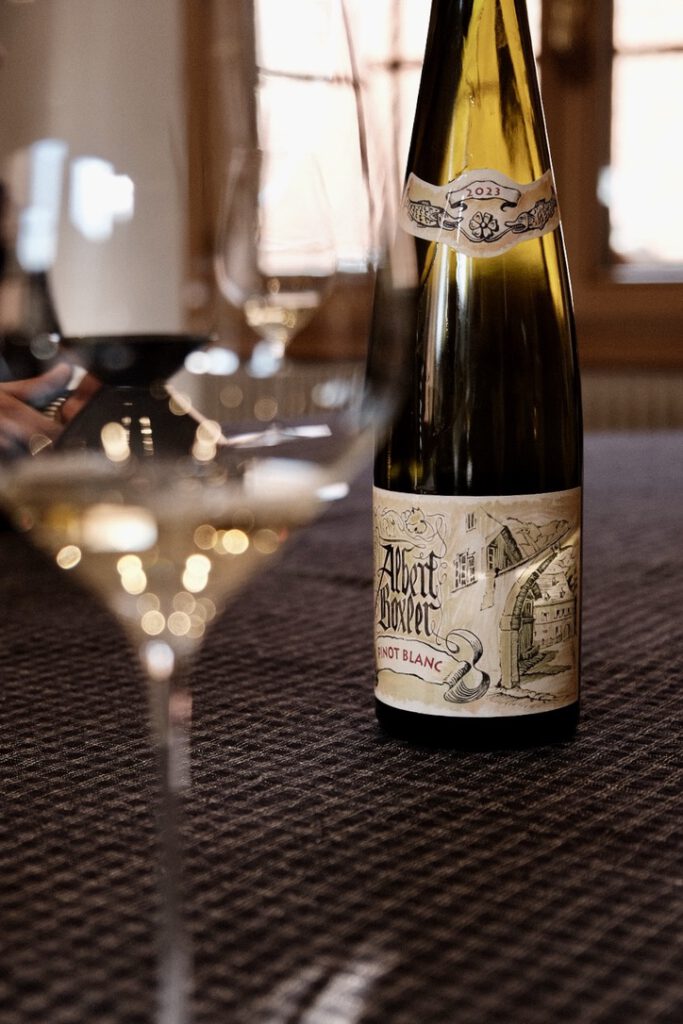
A table full of wine
Jean showed us an impressive cross-section of the range. Dry Pinot Blanc to start, young and mature Rieslings, Pinot Gris, Pinot Noir, off-dry Gewürztraminer, and at the end even a great noble-sweet Pinot Gris. In between, he spoke about the Sommerberg, about his parcel-by-parcel bottlings, about his idea of a grand vin, and about what great Riesling means to him. We discussed, tasted, questioned, and philosophised. The afternoon disappeared with that particular speed only possible when both the wines and the atmosphere are exactly right.
That, by the way, is already part of the secret behind Boxler. This is not some glossy, polished flagship estate of Alsace. It is a family domaine with real depth. The Boxler family has been rooted in the region and connected to winegrowing since 1673. That alone is more than charming folklore. It explains why so much here does not feel shaped by fashion — just look at the labels — but by experience sharpened over generations. One key figure in that story is Albert Boxler, Jean’s grandfather. He was one of the first growers in Alsace to bottle his own wines. At the time, that was a statement. His son Jean-Marc carried the estate forward for decades before Jean took over in 1996. And what he inherited was no small legacy. Not just vineyards, but prime vineyards. Roughly 80 percent Grand Cru.
Numbers like that can quickly start sounding like brochure copy. For Jean, though, they mean responsibility more than anything else. Great sites do not automatically make great wines. Certainly not in Alsace, where for decades plenty of mediocrity was bottled under big names. Boxler chose a different path. The family never tried to chase the market. They did not follow the sweeter wave of the 1980s, when so much in Alsace was softened and shaped toward easy residual sugar. They kept working by hand in the vineyards, fermenting spontaneously with native yeasts, and ageing the wines slowly and gently in large old oak. Today that sounds like the standard playbook for ambitious top estates. At Boxler, it is not some reinvention. It has simply been normal for generations.
The secret of Boxler
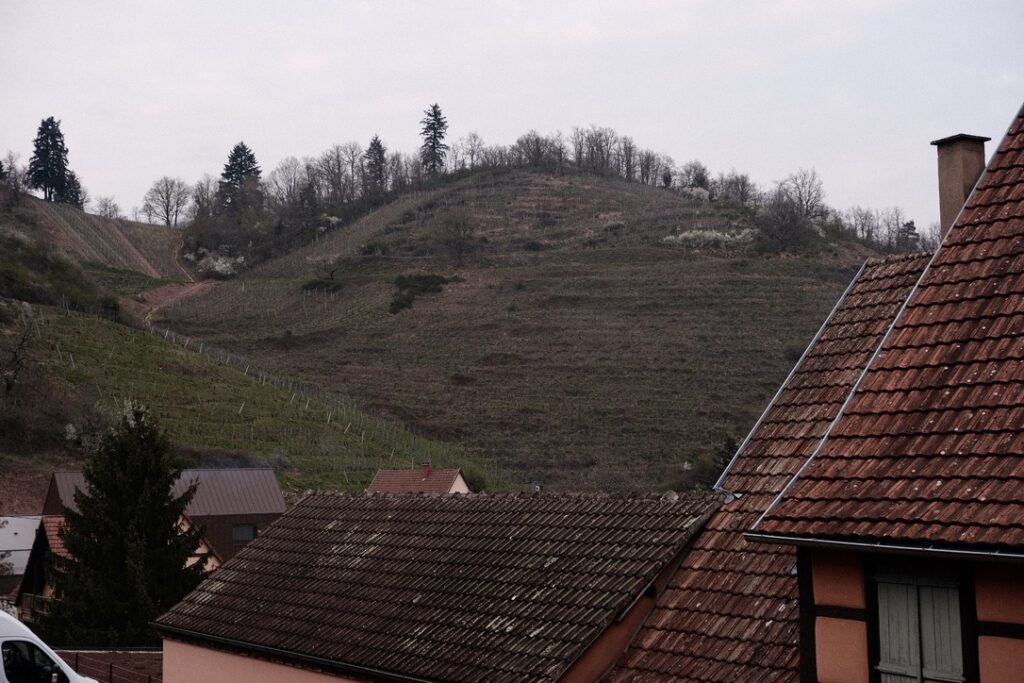
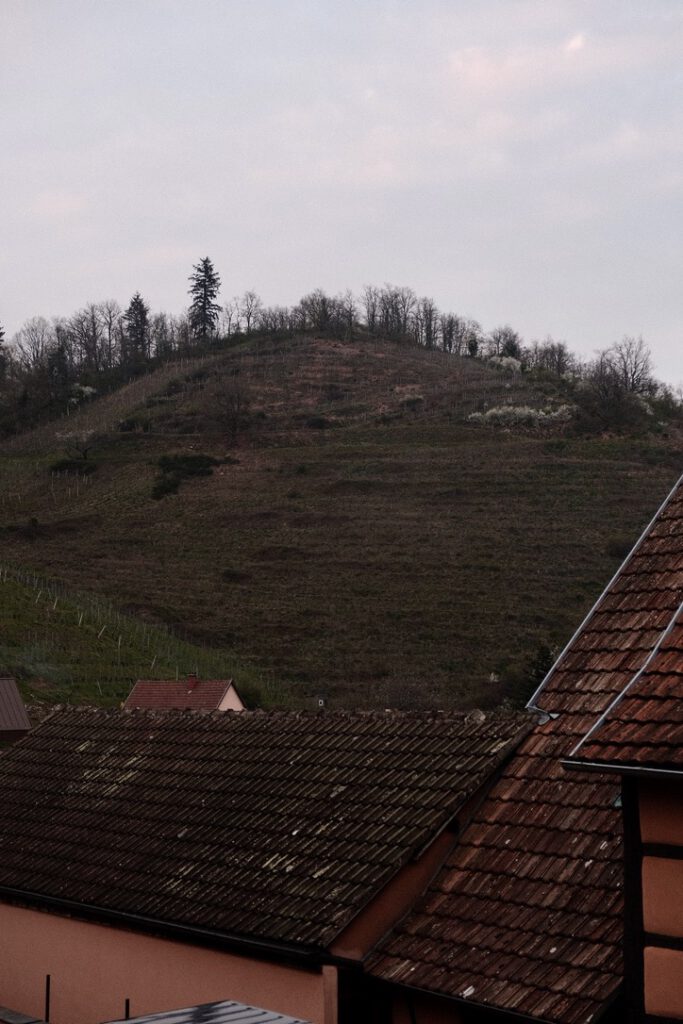
And that is precisely why these wines are so distinctive. They never feel like products of an oenological concept, but like the result of experience, consistency, and a very clear internal compass. You notice it most of all with the Rieslings. Their spiritual home is the Sommerberg, that Grand Cru above Niedermorschwihr, broken into tiny steep terraces, facing south to south-east, defined by pure decomposed granite. Riesling on granite in Alsace is not for those looking for breadth and immediate charm. These are taut, purist wines, often almost austere in youth. They do not give everything away at once. Anyone primarily looking for open fruit in their youth will come up short here. But if you read texture, extract, salt, stony tension, and length, you are exactly where you need to be.
Jean said that his great Rieslings often only really start to bloom after five to ten years. After this tasting, I would say that is not understatement. It is simply the truth. In youth, these wines are still very much contained within themselves. Not closed in a negative sense, but collected. The fruit does not leap from the glass in the way it so often does with many German Rieslings. But something else happens here, and it may be even more exciting: a mouthfeel built from stone, juice, salt, fine phenolic grip, cool fruit, and ripe extract. That is exactly what sets these wines so clearly apart from many of their German counterparts. They define themselves less through aroma and primary fruit than through pressure, structure, and inner tension.
My tasting notes
Rieslings
Riesling Sommerberg Grand Cru 2024 JV (jeune vignes)
The 2024 Riesling Sommerberg Grand Cru from young vines was, in that sense, an almost ideal opening act. Tremendous extract, juicy, enormous drive, with crystal-clear stone fruit, racy definition, stony spice, pure granite. Then that rough, assertive tannic grip, the salt, and a huge sense of tension that pulled the wine endlessly across the palate. This was not charming in any conventional sense. It was serious, taut, and at the same time full of juice. A wine that immediately makes clear that Sommerberg is not scenery, but a precise statement of origin.
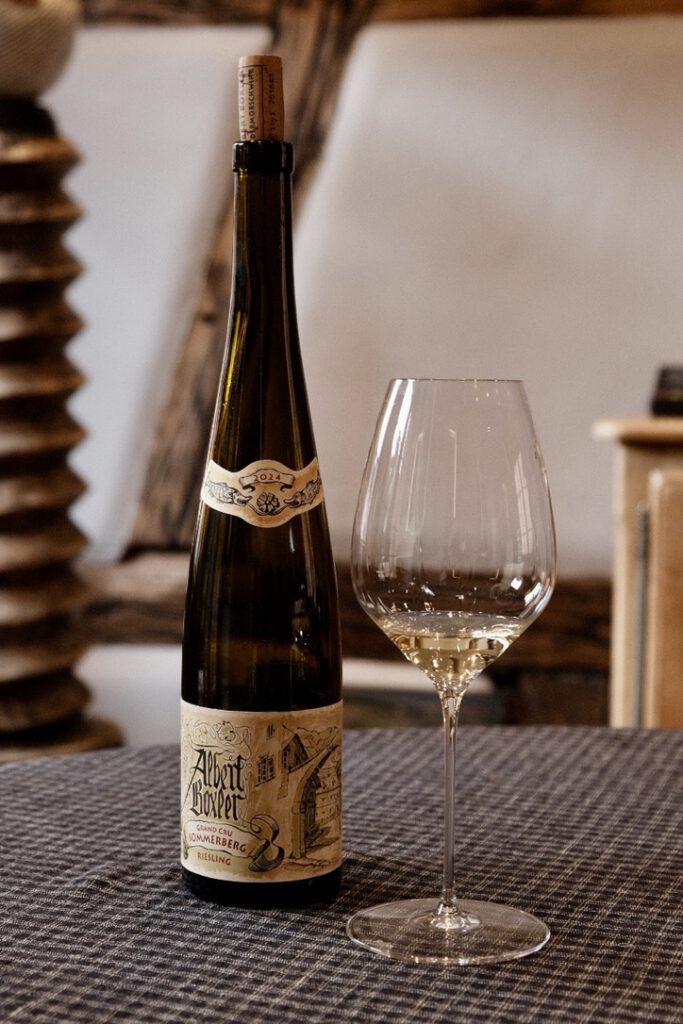
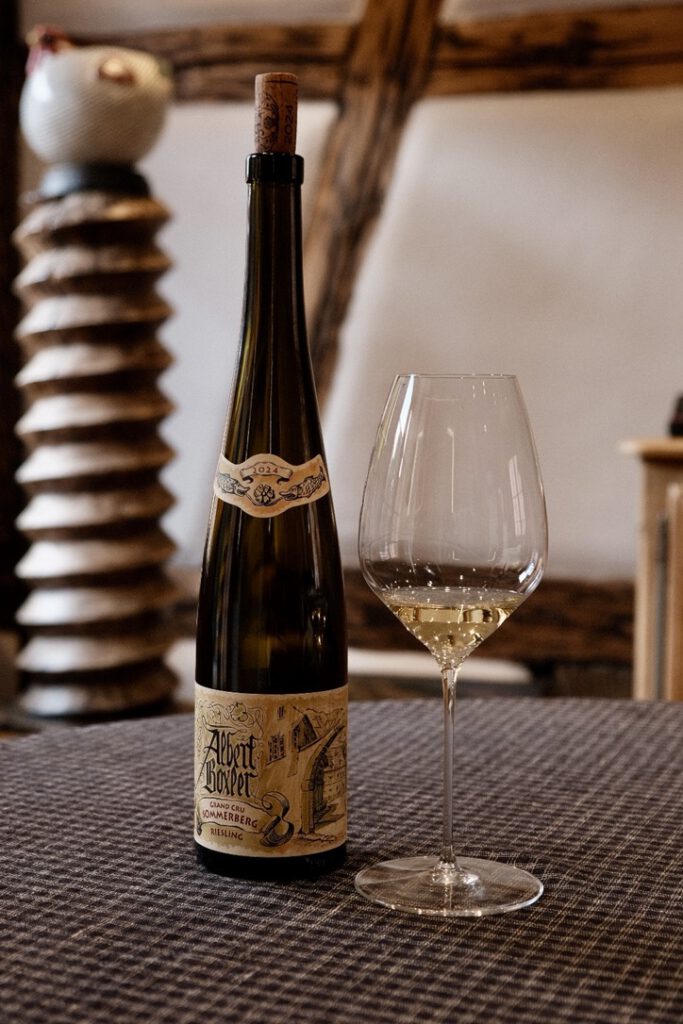
Riesling Sommerberg Grand Cru 2024
The “regular” Sommerberg Grand Cru 2024 came across as a little more open, spicier, and more reductive, but just as driven. Again, the salt, the length, and that core inner pull that makes Boxler’s Rieslings so unmistakable.
Riesling Vanne 2024 and Echberg 2024
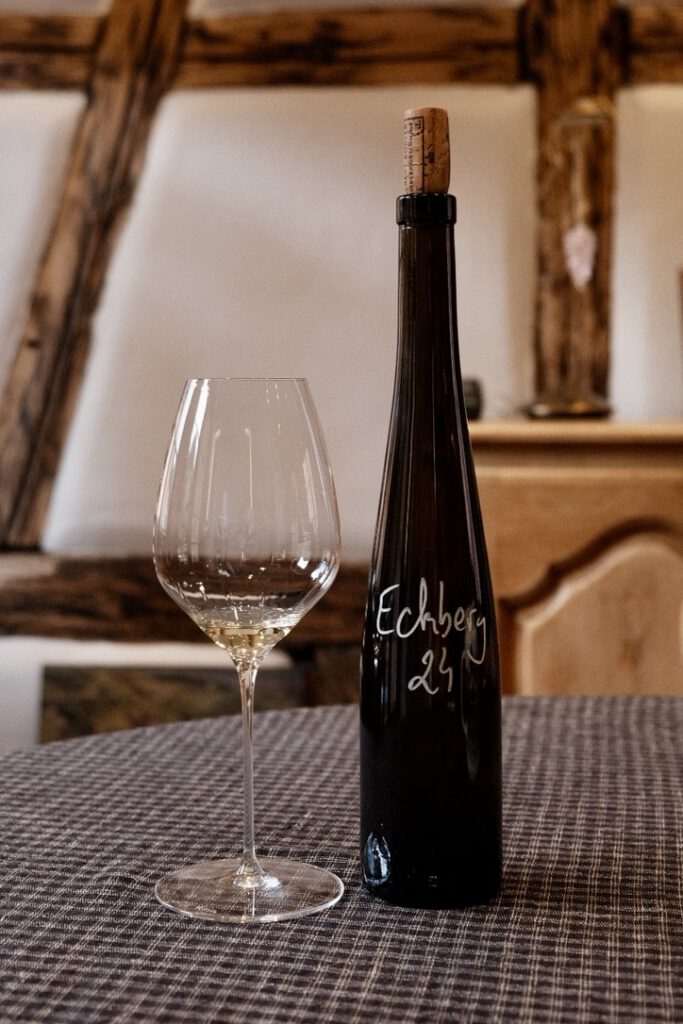
Things became even more interesting with the parcel bottlings. La Vanne 2024 showed more texture, more power, a little more yellow fruit, a little more fullness in the extract. A wine with more flesh, without losing its tension. Echberg 2024, by contrast, was smokier, calmer, intensely citrus-driven, firm, gripping, salty, with racy acidity. Less charm, more edge, more bite.
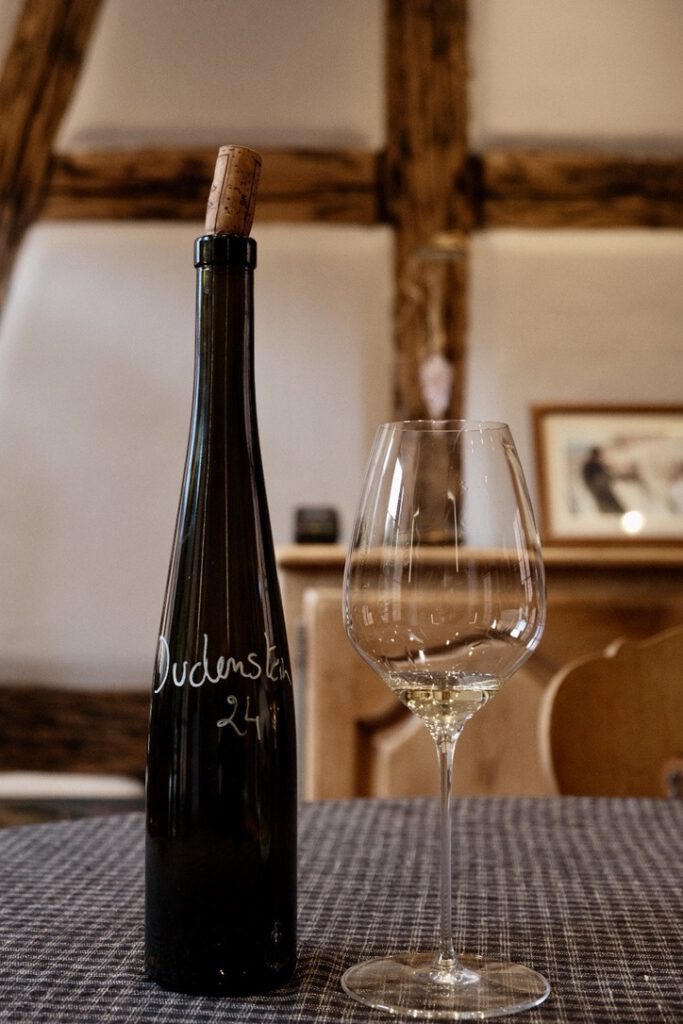
Riesling Dudenstein 2024
One of the strongest wines for me was Dudenstein 2024. Even stonier, even more vertical, a little rougher, electrifying in its tension, with salt, balance, and exactly that vibrating energy you do not need to explain when it is right there in the glass.
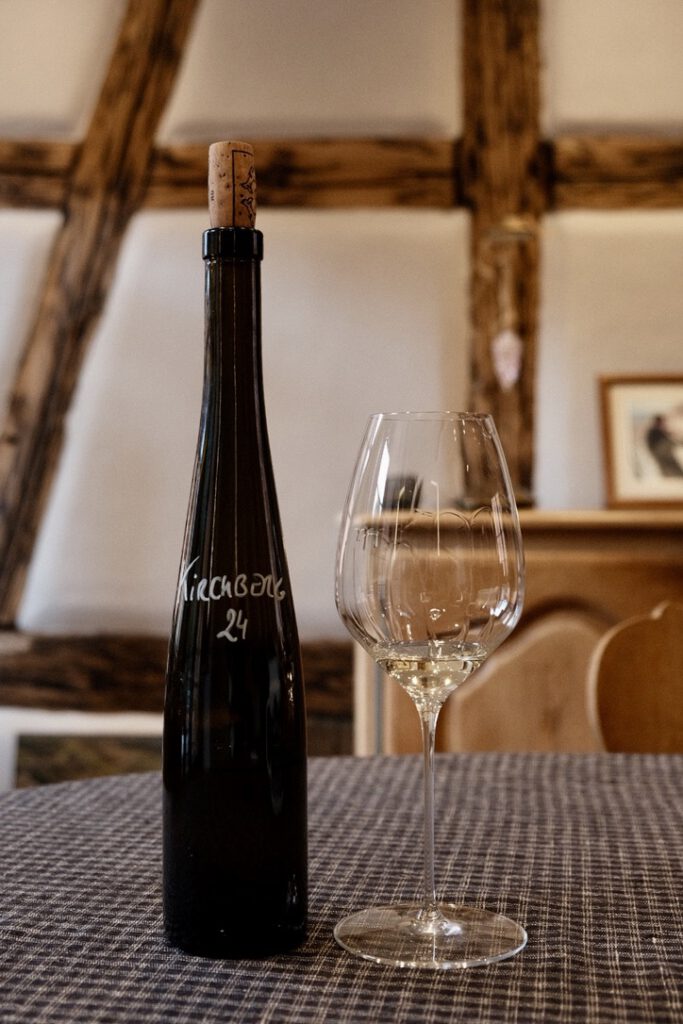
Riesling Kirchberg 2024
Kirchberg 2024 struck a different note. More delicate, more filigreed, extremely elegant, bright and radiant, yet with a firm, vibrating core. A wine with plenty of salt and enormous length, one that does not mistake finesse for weakness.
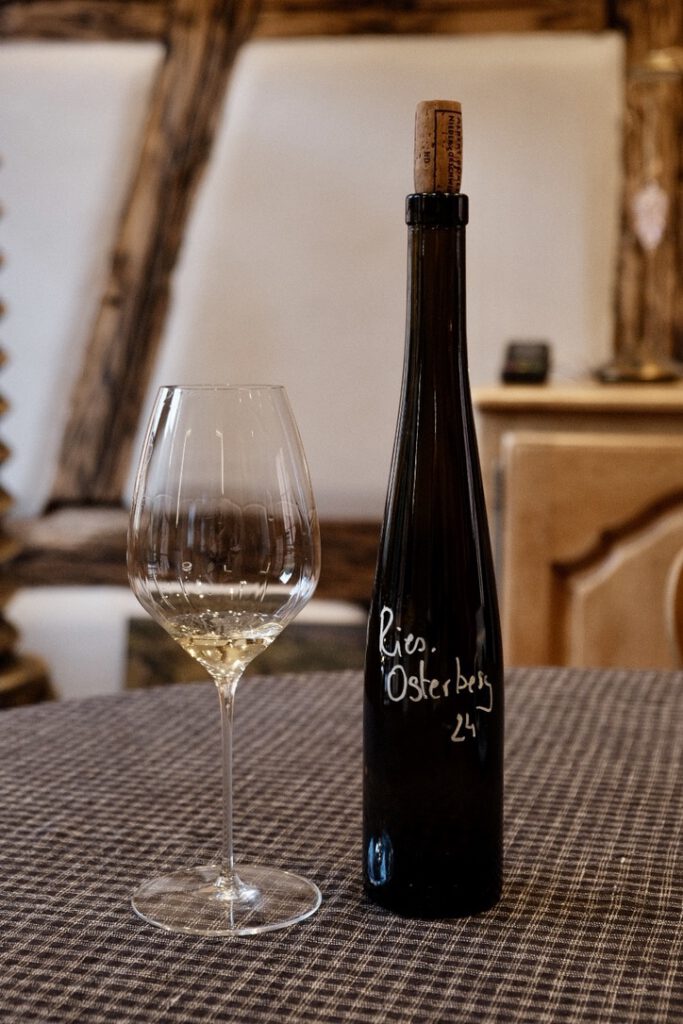
Riesling Osterberg 2024
Osterberg 2024 was the one wine that fell a little short in direct comparison. Slightly more opulent, slightly more yellow, slightly riper, a little broader, with riper acidity and not quite the balance of the others. That does not make it a bad wine, quite the opposite. But when you have that many strong Boxler Rieslings in the glass in one afternoon, the bar becomes brutally high very quickly.
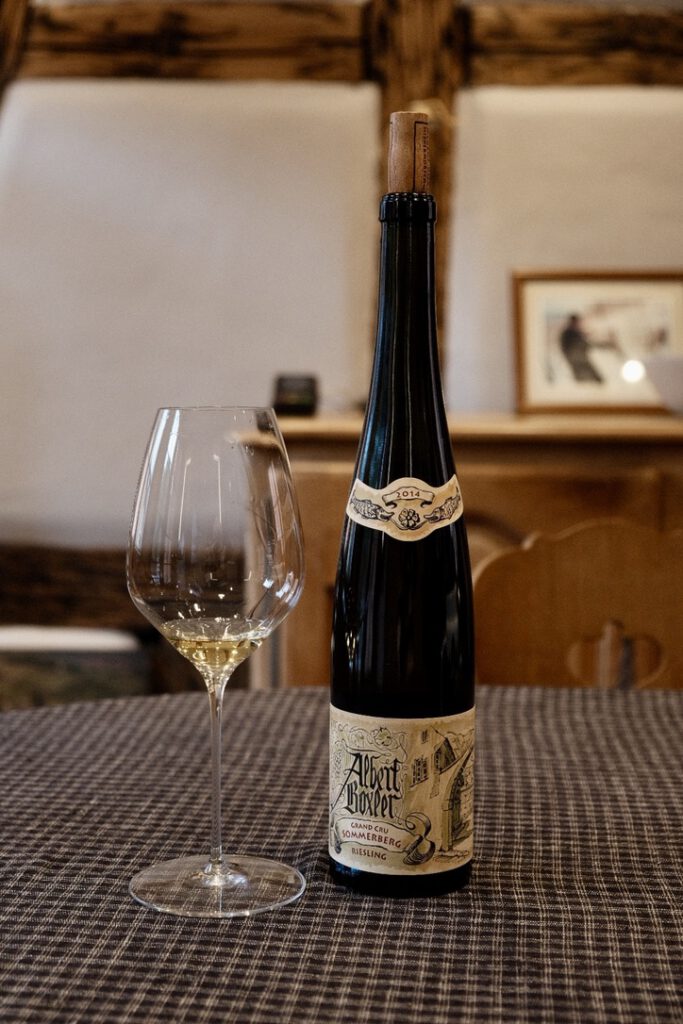
Riesling Echberg 2014
Then came the really fascinating part: Riesling Echberg 2014. For me, this was a lesson in how differently Alsace matures compared with German Riesling. The acidity was alive, the fruit astonishingly youthful, and at the core there was this fine inner creaminess, enormous juiciness, density, and length, but also something I find especially compelling in mature Alsace: a very slight crumbly phenolic touch that gives the wine extra complexity. This Riesling was vertical, balanced, and quietly brilliant in its inner calm.
Pinot Gris, Pinot Noir and Gewürztraminer
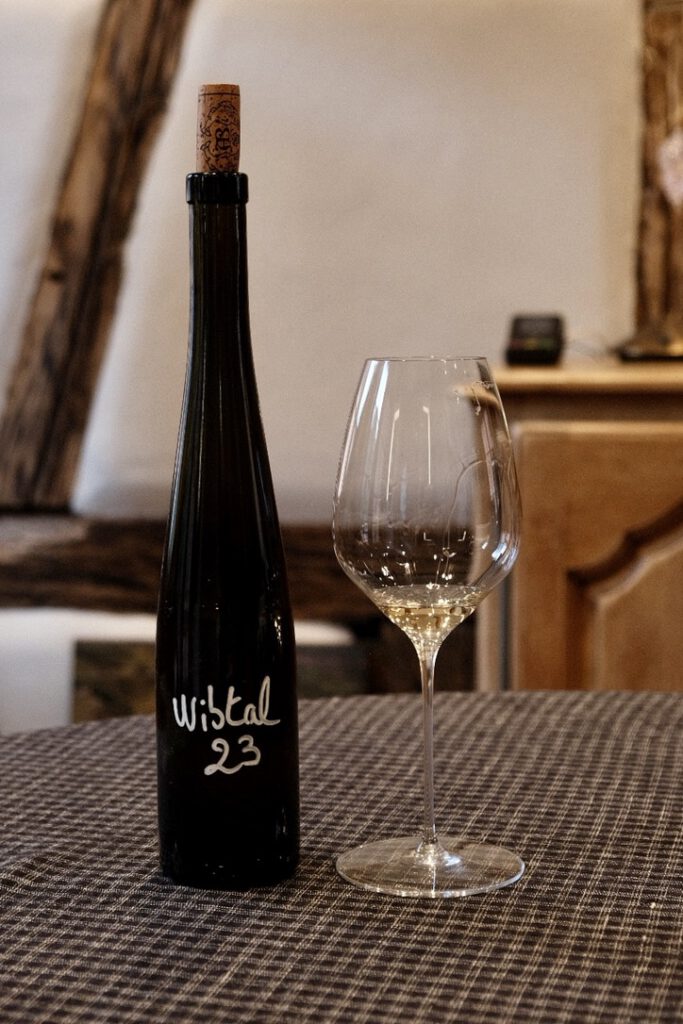
Pinot Gris Sommerberg Wibtal 2023
The Pinot Gris wines also showed how seriously Boxler takes the variety. Pinot Gris Sommerberg Wibtal 2023 was a massive wine, but in the best possible way. Ripe stone fruit, huge extract, dense, almost oily, stony, yet with racy acidity, electric tension, and great length. Not an aperitif wine. Not a wine for casual sipping. This is Pinot Gris that calls for rich food, for sauce, for texture, for cooking with substance.
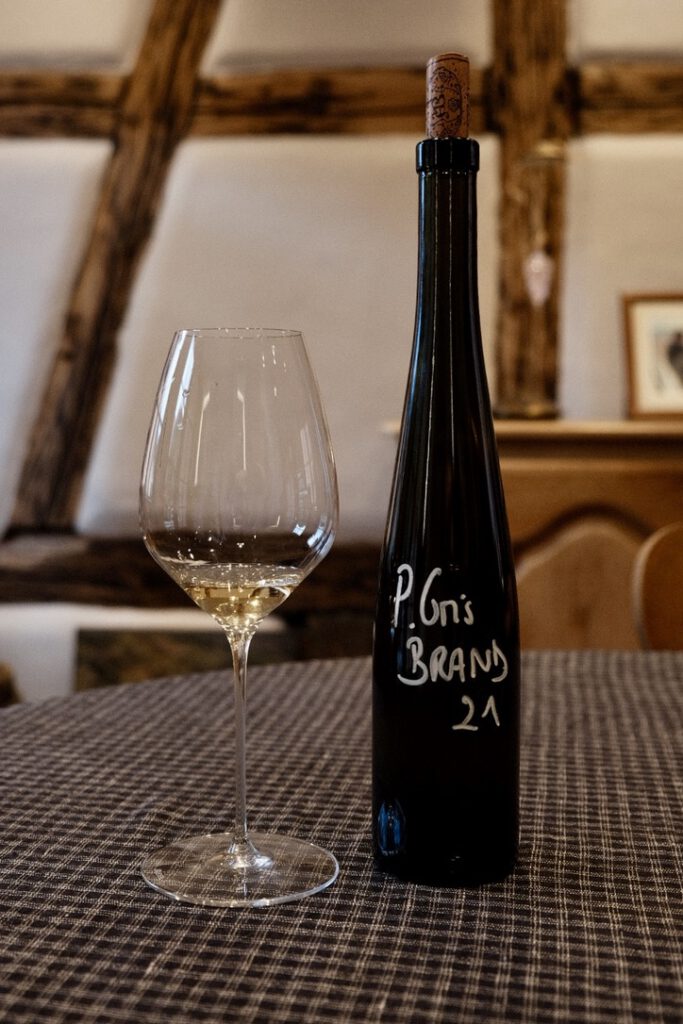
Pinot Gris Brand 2021 Demi-Sec
Pinot Gris Brand 2021 Demi-Sec went in a slightly different stylistic direction. Lightly sweet, but very well balanced, with ripe stone fruit, dense, oily structure, and an almost Auslese-like character, yet carried by lively acidity. Wines like this are a very good reminder that a touch of residual sugar in Alsace is not automatically old-fashioned. When extract, acidity, and ripeness are all in place, it can be magnificent.
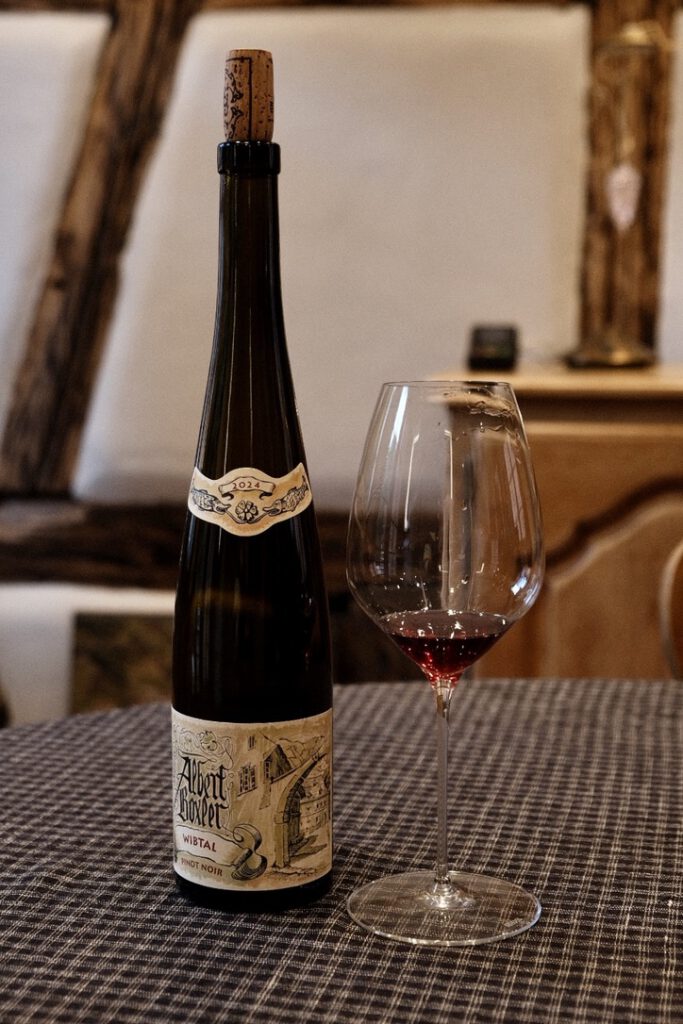
Pinot Noir Wibtal 2024
The Pinot Noir Wibtal 2024 was another fine example of how unvarnished Boxler can be with red wine as well. Light, racy, with very clear, very restrained fruit, lightly drying tannin, pointed acidity, a slender frame, and very delicate structure. It could hardly have been more stony. You could practically lick the granite. Not a flattering Pinot, not a wine built for quick applause, and not especially long either, but full of origin and marked by an almost ascetic honesty. Anyone who reads Pinot Noir primarily through sweetness, oak, and polish will probably be puzzled here. That is exactly what I found so interesting.
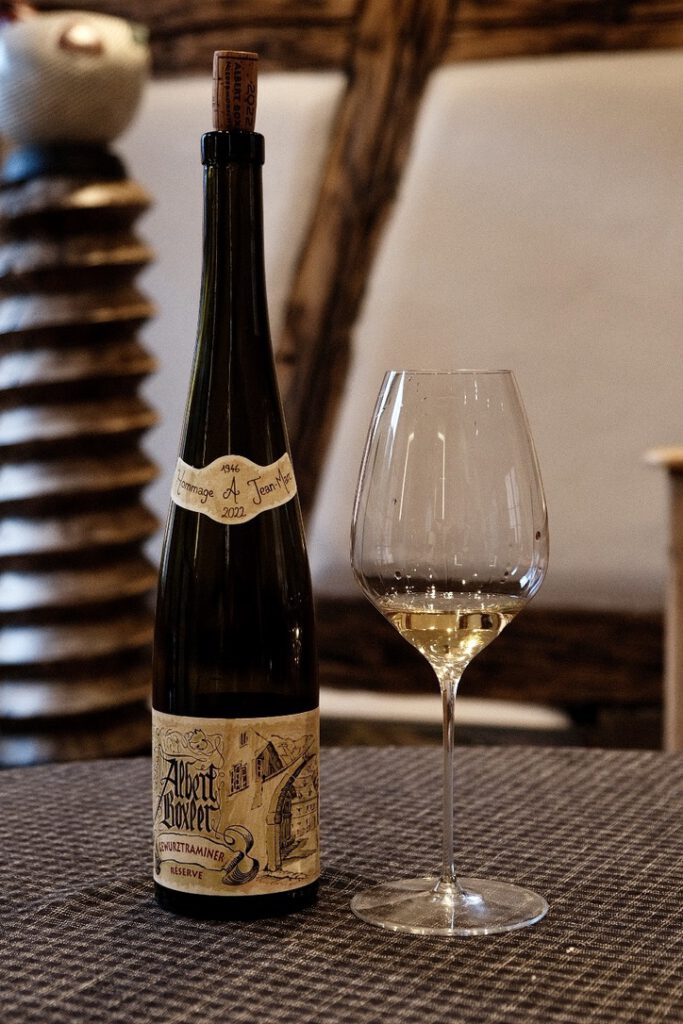
Gewürztraminer Reserve 2022 (Homage a Jean-Marc)
With the Gewürztraminer Réserve 2022, Hommage à Jean-Marc, it became fully clear that even with traditionally more opulent varieties, Boxler never slips into the banal. The wine was powerful, dense, oily in texture, with ripe stone fruit, honey, lychee, exotic notes, and a lightly smoky finish. Distinctive, certainly. But with air it gained momentum, picked up more acidity, became firmer, more gripping, denser. Again, not a wine that explains itself instantly. You have to give it time. Then suddenly it reveals real definition.
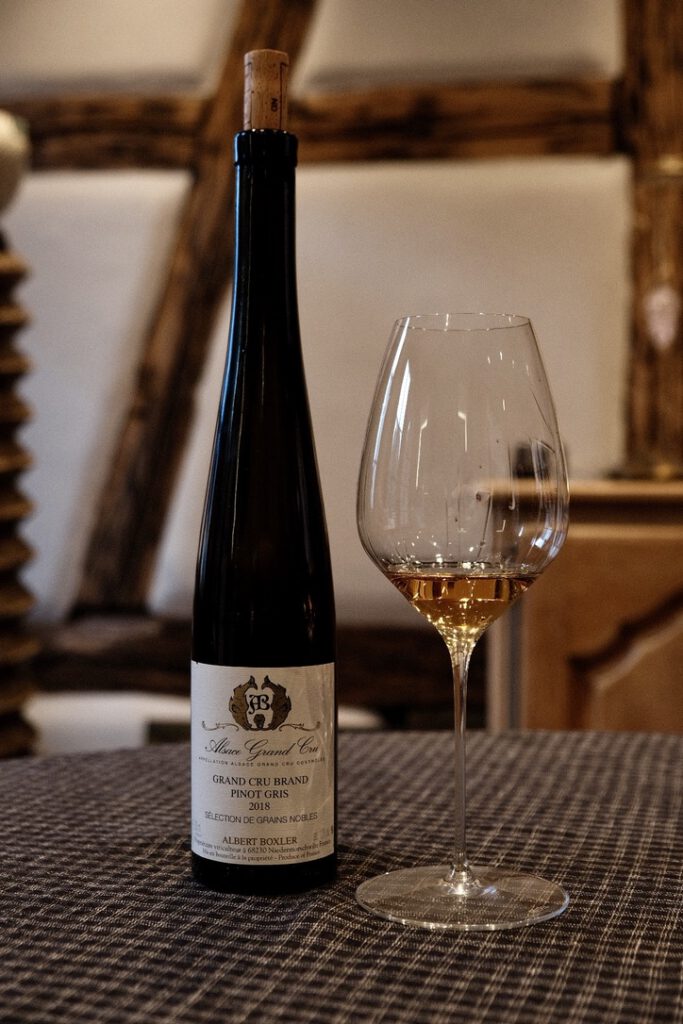
Pinot Gris Brand Grand Cru Selection de Grains Nobles 2018
And finally, at the very end, came the Pinot Gris Brand Grand Cru Sélection de Grains Nobles 2018. Full-bodied, creamy, immensely dense, packed with honey and wildflowers, highly concentrated and yet lifted by electrifying acidity and dancing tension. This was not heavy, not cloying, not obviously sweet. It was a noble-sweet wine with energy, harmony, and a finish that was almost absurdly long. A poem, without ever becoming kitsch. Great sweet wines are only truly great when they fly. This one flew.
What will I take away from this afternoon?
Quite a lot. Above all, the realisation that Albert Boxler is not an estate for quick judgments. These wines do not reveal themselves through label drinking, nor in thirty seconds of glass time. They need concentration. They need context. And they benefit enormously from hearing someone like Jean Boxler talk about them himself. Because then it becomes clear that behind all of this there is no marketing narrative, but a very precise understanding of origin, maturity, and style.
That afternoon also made me understand why Boxler has cult status internationally, and why these wines have long been playing in the very top league in France, England, the United States, and Asia. Not because they are loud. But because they remain so uncompromisingly true to themselves. In a wine world where even top wines increasingly taste of perfect surface, that is almost provocative. Boxler does not make wines for quick effect. Boxler makes wines with backbone. And that is exactly why they deserve to be taken seriously.
With many big names, I leave the estate with a few beautiful glasses in my head. At Boxler, I left and kept thinking. About granite. About maturity. About the differences between German and Alsatian Riesling greatness. About the question of why some wines only become truly great once they stop trying to please.
Since that Saturday, Albert Boxler clearly belongs, for me, in the category of estates you should not merely have tasted. You should have understood them. Or at least made a serious attempt.
Pictures: © The Art of Riesling – Maximilian Kaindl