

If there’s one thing I’ve learned over the past few months, it’s this: the moment you talk publicly about Chardonnay in Germany – especially about the question of a potential VDP Chardonnay GG – the waves get high. Very high. My last article did exactly that. Approval, debate, eye-rolling, pats on the back. The full spectrum. And yes, I’ll admit it: it was reassuring to see that there are people out there who look at this topic with the same mix of criticism, curiosity and ambition as I do.
Max Kaindl, December 08, 2025
Reading time about 4 minutes
Affordable German Chardonnay under the Radar –
my personal shortlist for everyone who still thinks Germany only does Riesling
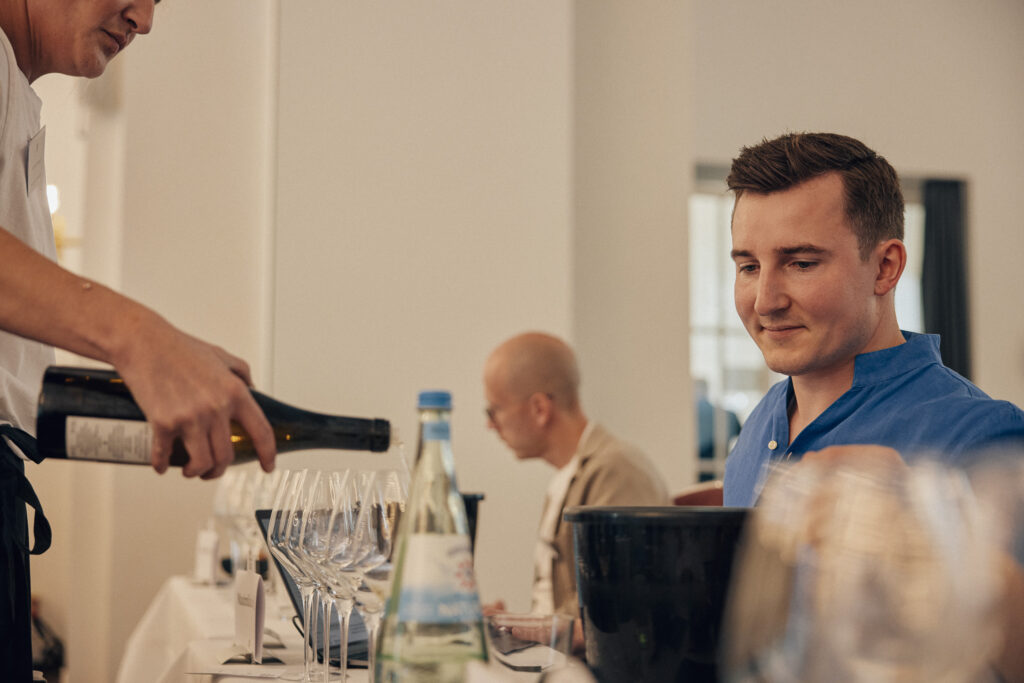
© VDP by Peter Bender
And because it felt like every second person afterwards wanted to know which German Chardonnays I actually rate – here we go. An honest selection of affordable Chardonnays that, for me, fly under the radar but show what this country can do, could do – and still doesn’t quite do. No claim to completeness. So please use the comments to add the wines and producers you think are missing from this list.
The Elegant Ones
clarity, precision, cool understatement
VDP
Franconia
Astheimer, Rudolf Fürst – a masterclass in how delicate freshness can taste when you really take it seriously.
Palatinate
Vielles Vignes, Rings – fine but with substance; reduction as a stylistic device, not a gimmick.
non VDP
Palatinate
Kirchberg, J.J. Berizzi – fine, quiet, balanced and uncompromising in its intent.
Rosengarten, Scheuermann – pure, calm, zero frills.
Franconia
Chardonnay R, Giegerich – finely reductive, with its own distinctive spicy phenolic structure.
Lake Constance (Bavaria)
Seehalde, Seehaldenhof – crystalline, cool, a lake wine with almost alpine precision.
The Reductive Ones
tension, flint, precise nerve
VDP
Baden
Schlossberg GG, Huber – reduction meets oak meets ambition. A wine that wants to be argued over.
non VDP
Rheinhessen
Chardonnay R, Saalwächter – reductive, young, buzzing, a statement in the glass.
Chardonnay, Kissinger – an uncompromising cellar, a clear line, no soft focus.
Palatinate
Kapellenberg, Seckinger – probably the loudest quiet wine in the country. That’s a skill.
The Oak-Driven Ones
structure, warmth, ambition
VDP
Franconia
Chardonnay R, Fürst – powerful, Burgundy-inspired, but unmistakably German.
Palatinate
Chardonnay R, Ökonomierat Rebholz – lots of oak, deliberately set, never smudged.
Schweigen, Jülg – perhaps the most “French” style on this side of the border.
Baden
Klosterwingert GG, Schlumberger-Bernhart – a riper style, but with punch.
Kirchberg GG, Franz Keller – perhaps the most classic understanding of oak in German Chardonnay.
non VDP
Franconia
Krawalter, Felix Walter – oak? Yes. Finely handled? Also yes. Impressive.
Rheinhessen
Lohpfad, Simone Adams – clear, confident oak, yet with striking freshness.
Palatinate
Herzog, Andres – oak plus reduction, so precisely judged that both lock into each other.
Bottom line
Many of the most exciting Chardonnays in the country don’t come from the VDP. That’s not a dig, it’s just reality. Chardonnay in Germany today is being driven by young, wild, independent producers who aren’t waiting for someone to build them a stage.
There actually aren’t thaaaat many strong affordable Chardonnays in Germany at the moment. For a VDP Chardonnay GG, we’d need breadth. Depth. A visible critical mass of wines that can hold their own internationally – not just occasionally, but consistently over many years. We have great approaches. A few genuine highlights. But the base? Not strong enough yet. Emphasis on yet.
Germany is on the right track. Chardonnay here is exciting, ambivalent, sometimes over-ambitious, sometimes underrated – but above all: in motion. And that’s exactly what makes it so much fun for me to write about.
Pictures: © The Art of Riesling – Maximilian Kaindl

