
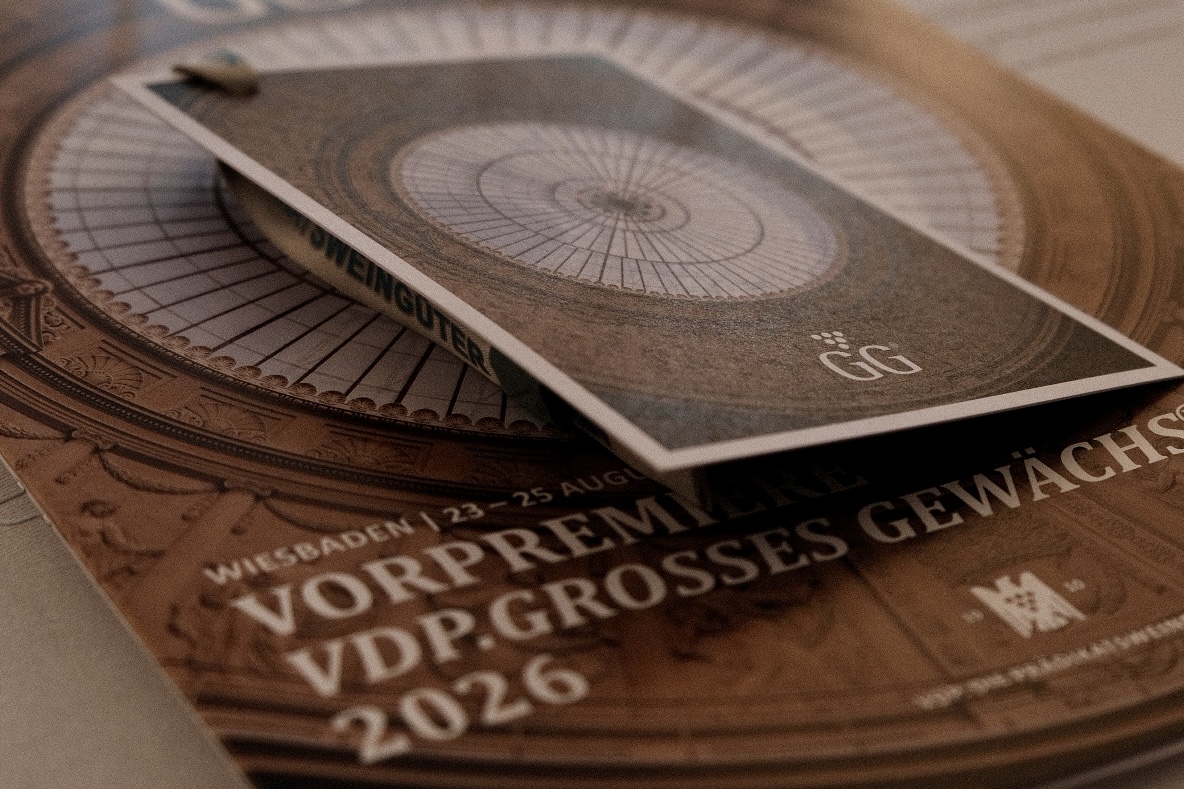
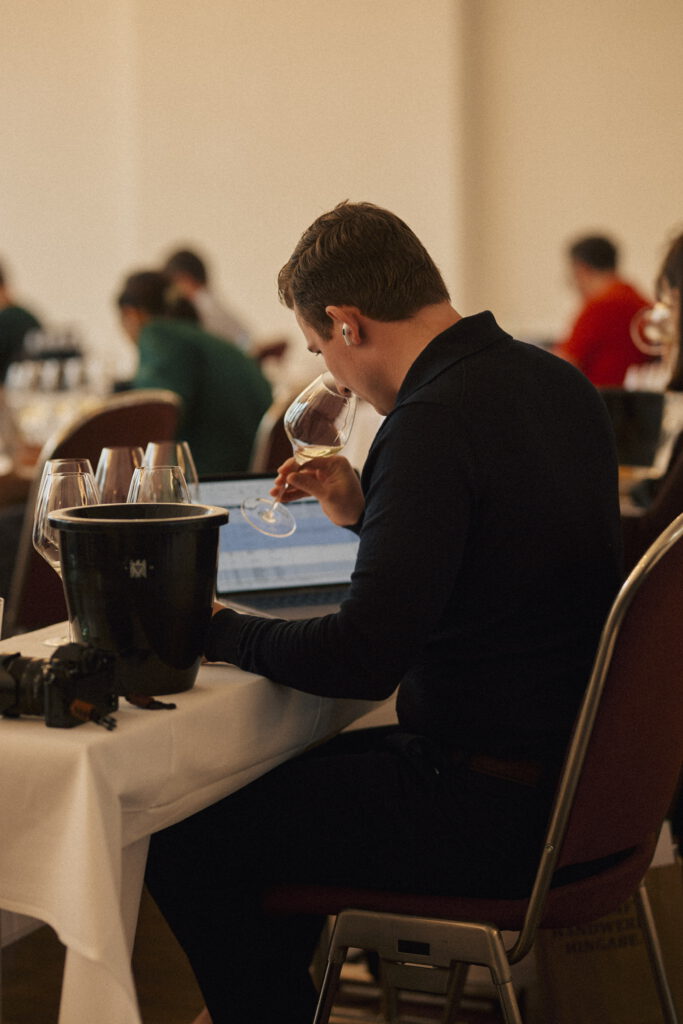
Part 2: From August 23 to 25, it was that time of year again. The VDP invited around 200 of the world’s leading sommeliers, journalists, and wine experts to Wiesbaden to form an opinion on the new vintage of the Grosse Gewächse (GG). This year, due to a personal commitment, I was only able to taste wines on two days. Of the 397 wines presented, I managed to taste 320. In this post, I’ll share my impressions and assessments of the individual regions, as well as my thoughts on the Burgundies and Silvaners presented. You can find my impressions of the Rieslings here.
Max Kaindl, 03. September 2026
Reading time: about 15 minutes
VDP.GROSSES GEWÄCHS®
Preview 2026 —
Burgundy and Silvaner
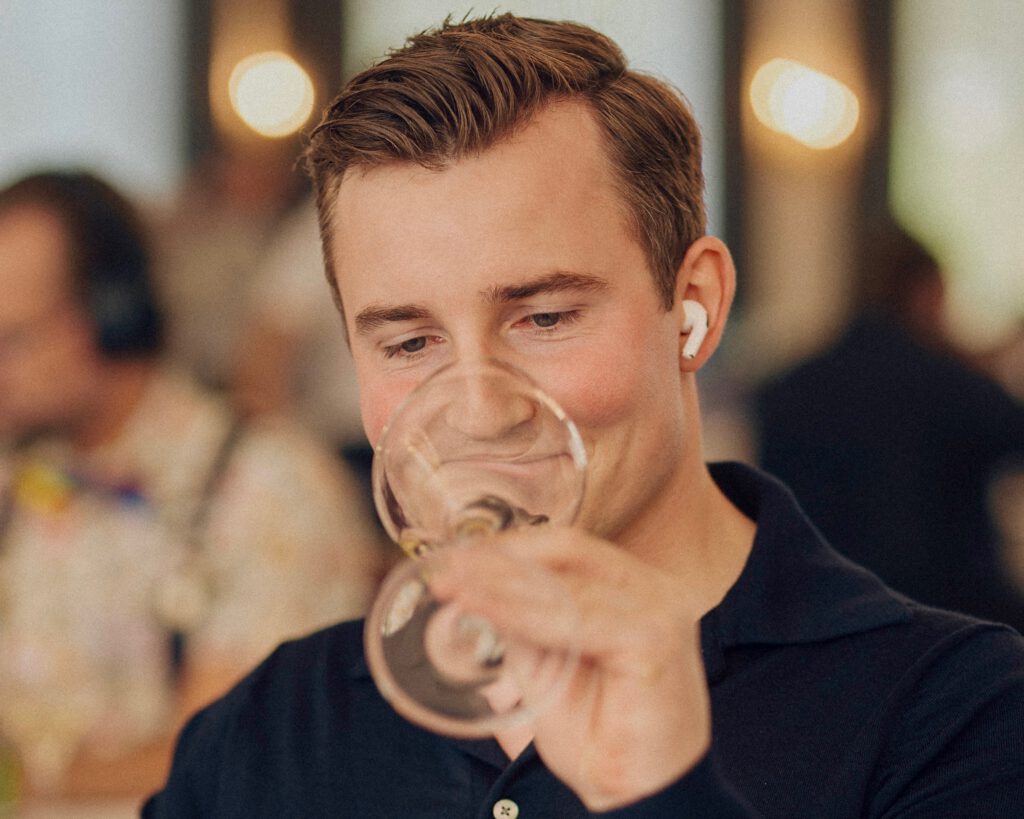
© VDP by Peter Bender
Alongside Riesling, the line-up in Wiesbaden also included Pinot Noir, Chardonnay, Pinot Blanc, Pinot Gris and Silvaner. As I was only able to attend for two days this year, I had to be a little more selective with the Burgundian varieties. Even so, I tried to gain as broad an overall impression as possible across all regions.
Before we begin, a brief note to put my impressions into context. Wherever possible, I tasted blind. I knew only the region, grape variety and flight number, but not the individual wines or producers in each flight. The wines discussed here are not always those with the highest objective scores. What matters to me is also whether a wine moved me personally. Goosebumps? That campfire feeling? Or simply pure joy? These are all factors I considered when selecting the personal highlights listed below.
The impressions recorded here are, of course, only snapshots and should be read as such. Together, they form a broader picture from many individual pieces of the puzzle. In this case, my picture of the 2024 and 2025 vintages for the Burgundian varieties and Silvaner. You can find my thoughts on the 2025 Rieslings here.
A detailed account of all 320 wines I tasted would go far beyond the scope of this blog, so I have focused on the highlights from each region and my overall impression of them. I will make the complete list available to my subscribers on Substack.
One personal note: unlike with Riesling, I do not yet have the same depth of vintage knowledge when it comes to the Burgundian varieties and Silvaner. I will therefore largely refrain from drawing comparisons between vintages. I have no interest in making superficial or invented comparisons merely to create an illusion of expertise.
Pinot Noir
77 Pinot Noir. 2024, unless otherwise noted
For the Reds, I’m starting from north to south again this year.
Ahr
10 Pinot Noirs. All from 2024
Compared with what I found to be the rather heavy 2023 vintage, 2024 was far kinder to the Ahr. That does not mean it was an easy year to farm. Yet the many cool, fresh days helped keep even the heat-retaining slate vineyards in balance. The result is a set of Pinot Noirs with a remarkably cool, juicy character. Unfortunately, only ten wines from three producers were available to taste in Wiesbaden. The quality of this small selection, however, was all the more convincing.
For me, Jean Stodden presented the Ahr’s best collection this year. Noble cherry fruit, precise drive, tightly knit tannin and juicy length ran through every wine. The Rosenthal was the clear leader. Bright and finely drawn on the nose, with the seductive cherry fruit that defines so many of the finest 2024s. Powerful and focused on the palate, with dense, present tannin. Plenty of juice, bright spice and a long finish.
What surprised me was the clearly perceptible reduction across the Meyer-Näkel collection. With the exception of the Kräuterberg, a reductive note that I found difficult to place and rather distracting ran through the wines. On the palate, however, they appeared considerably fresher and more refined.
The Kräuterberg was not only the estate’s best wine, but my favourite from the Ahr as a whole. At last, clarity on the nose: bright red fruit, fresh, inviting and seductive. Delicate creaminess on the palate, noble, finely polished tannin and remarkable balance. It may lack the final degree of drive, but it is light-footed, juicy and immensely fine. A beautiful palate.
Overall, I enjoyed the Ahr considerably more than in 2023. Despite the small selection, the field felt more consistent, while the signature of each estate emerged more clearly. A highly successful opening to this year’s Pinot line-up.
Moselle
Yes, the Mosel has had a Pinot Noir GG since the 2022 vintage. Maximin Grünhaus produces it from the Abtsberg vineyard. If you would like to learn more about that first release, I recommend my article here. Following the devastating frost at the end of April 2024, however, no Grünhaus Pinot Noir GG could be presented this year in Wiesbaden.
A note: Pinot Noir is currently gaining ground at many Mosel estates. Personally, I remain sceptical. In my view, the Mosel should focus more firmly on what makes it truly unique: fine, delicate and playful wines with residual sweetness, from fruity styles to noble sweet wines, combining extract, density and finesse in a way few other regions can. I am familiar with the argument that demand for sweet wine is declining. Yet I also believe that this development is partly a result of how the Mosel markets its wines. I explored these thoughts in greater detail in my article on the Mosel last spring.
Rheingau
4 Pinot Noir. 2024, unless otherwise noted
With only four wines presented, any broader conclusion about the region would be misleading. August Kesseler’s Höllenberg and Berg Schlossberg, along with the 2023 Höllenberg from Krone Assmannshausen, were certainly convincing in terms of quality. Stylistically, however, they were so far removed from what I consider pleasurable drinking that I do not wish to discuss them in greater detail here.
In short: plenty of forest floor, some overripe cherry fruit and a style I think of as “old-school German taste”. Anyone looking for precisely that will find it here.
Franconia
5 Pinot Noirs, all from 2024
The overall standard of the Franconian flight was once again particularly high this year. Admittedly, that was helped by the fact that three of the wines came from Sebastian Fürst alone. There was also a remarkable newcomer from Weingut am Stein in Würzburg.
The wine in question is the Stettener Stein Pinot Noir GG. Marius Rau had already shown it to me from barrel last year and again briefly after bottling. I do not think I am doing the Knoll family, Ludwig and Sandra in particular, any disservice by saying this: Marius has raised the estate’s Pinot Noir to a noticeably higher level of freshness, finesse and precision. The wine opens with a touch of reduction. Behind it, everything is cool, clear and wonderfully inviting. Bright red fruit, dark herbs, delicate creaminess and finely polished tannin. Juicy, precise and light-footed through to the long finish. An impressive debut.
And now to Fürst. I love the unmistakable style of Sebastian Fürst’s Pinot Noirs, shaped by the red sandstone soils of Bürgstadt. Yet this is not simply a matter of personal preference. It is also about the exceptional quality and consistency these wines have shown for years. For me, Fürst therefore belongs to the very small group of contenders for Germany’s finest Pinot Noir collection in virtually every vintage. In 2024, the estate claimed that title in emphatic fashion, followed closely by Friedrich Keller. More on that in the Baden section.
What makes Fürst’s wines so distinctive to me? They do not try to imitate Burgundy. Whether that comes down to the entirely different soils, the estate’s rigorous vision or a combination of both, I cannot say with certainty. What matters is the result in the glass. I have known the wines since 2012 and followed them closely since 2017. Across all those years, allowing for the natural variation between vintages, their quality has almost always ranged from excellent to truly great. I have rarely encountered that degree of consistency over such a period in German Pinot Noir.
All three 2024s showed remarkable precision, density and finely woven structure, while remaining light-footed and defined by the cool fruit that characterises the vintage for me. Unlike in 2023, the Schlossberg, my personal favourite, does not quite match the Hundsrück for length and depth. Instead, it captivates with seductive bright red fruit and an accessibility that is already irresistible in its youth. The Centgrafenberg is the darker wine of the trio: cherry, a touch of forest floor and comparatively more rustic tannin. That is not a judgement of quality, merely a question of stylistic preference.
Rheinhessen
9 Pinot Noirs, all from 2024
For its Grosses Gewächs wines, VDP.Rheinhessen currently concentrates on Riesling and Pinot Noir. That is a sensible decision. While the association’s 19 member estates have long ranked among Germany’s finest producers of dry Riesling, there is still some ground to cover with Pinot Noir. This deliberate focus on just two grape varieties therefore suits the regional association well.
Gutzler remains the leading estate for Rheinhessen Pinot Noir in my view. Morstein and Höllenbrand are precise and finely etched, with the fleshy, slightly bloody character typical of Gutzler. In 2024, the Morstein finishes ahead of the Brunnenhäuschen. The tannin is more delicate, the wine deeper, with a firmer core and a longer finish.
With Hommage à Felix Peters from Zellerweg am Schwarzen Herrgott, Oliver Spanier has produced an impressive Pinot Noir debut in the Zellertal. Darker, denser and more serious than the Kirchenstück, with a firm core, present tannin, plenty of juice and an immensely elegant, persistent finish. A fitting tribute to Felix Peters, who died far too young. Since the stylistic realignment that began with the 2019 vintage, the red wines from the Roter Hang and the vineyards around Hohen-Sülzen have steadily gained in finesse and clarity. An estate previously known above all for its rock-driven Rieslings is increasingly becoming a genuine insider tip for Pinot Noir.
Palatinate
21 Pinot Noir. 2024, unless otherwise noted
This year, the Pfalz produced a number of highly drinkable, structured and refreshingly distinctive Pinot Noirs. For me, Rings once again presented the best collection. In recent years, I have almost preferred the Rings brothers’ Pinot Noirs to their Rieslings. That does not diminish the Rieslings in any way; it simply shows the level the reds have now reached. Year after year, they gain in definition and precision. The question is gradually becoming: how much better can they get? Felsenberg and Saumagen open dark, juicy and savoury, with a fleshy spice. On the palate, they show immense freshness, crystal-clear fruit and the finest tannin. Light-footed, powerful and long. Impressive.
Some way behind, the Christmann wines followed once again. The stylistic shift towards greater finesse and transparency has been clear for several years now. Unlike the 2023s, the 2024s have the density and ripeness I look for in Pinot Noir GGs at the highest level. The Idig finished just ahead of the new Pinot flagship, Schild. The Idig is surprisingly warm and ripe on the nose, tightly woven and fleshy, with fine strawberry fruit. The palate is considerably cooler: crystal-clear fruit, precise tannin, great elegance and an immensely appetising finish. It becomes a little rougher with air, but on the palate it is a force.
Philipp Kuhn’s Kirschgarten surprised with intense red-cherry fruit, a finely structured texture and a juicy finish. Once again, Philipp Kuhn demonstrates how confidently he handles both white and red varieties.
Jülg’s Sonnenberg KT also impressed, albeit at a slightly lower level than in the consistently strong previous vintages. The KB deserves a mention as well. Intense and brilliant on the nose: precise Piedmontese cherry fruit, liquorice and a hint of Christmas baking. Dense and powerful on the palate, with a firm core, beautifully fine tannin and clear, noble fruit. A long, delicately juicy finish. It may not quite possess the brilliance of the 2023, but it remains at a very high level.
Among the more mature Pinot Noirs, Rebholz was the clear leader with the 2021 Im Sonnenschein. Surprisingly warm on the nose for the vintage, then firmer and fresher with air. Cassis and a touch of woodland. Soft tannin on the palate, well-integrated acidity and mellow red fruit. Good balance, length and depth. Not my personal style, but noteworthy in terms of quality.
Baden
16 Pinot Noir. 2024, unless otherwise noted
A remarkable shift has been underway at the Kaiserstuhl for several years. With the 2024 vintage, at the latest, it has become impossible to miss. Attentive wine lovers will hardly have failed to notice that Friedrich Keller’s wines are becoming more precise, refined and brilliant with each passing year. For me, however, the evolution at Dr. Heger is at least as significant. Since 2022, the wines have gained noticeably in freshness and finesse. With the 2024 vintage, this development has reached a level that deserves far more than a passing mention.
Even under Joachim Heger, the estate undoubtedly ranked among Baden’s qualitative elite, and the wines’ more powerful style certainly reflected the tastes of its time. Looking back, however, the 2018 and 2019 vintages in particular now feel somewhat out of step to me. Since Rebecca Heger took over the cellar, the estate has undergone a clear stylistic realignment. The oak now feels more subtle, the reduction delicate and seamlessly integrated. The wines have become brighter, clearer and more polished without sacrificing drive or substance.
It is above all the balance of the 2024s that makes this the most compelling collection from Baden in this vintage for me. At the top is the Winklerberg Wanne Pinot Noir, also known as “Häusleboden”. Warmer, spicier and riper than the Winklen “Rappenecker”, with a fine, fleshy accent. Yet the fruit remains cool and precise, the tannin dense, delicate and finely polished. Tightly knit and almost silky in texture, the wine reminds me of Fürst’s Schlossberg. Immensely juicy and powerful, it carries through to a very long finish.
Dr. Heger is therefore an estate to watch very closely once again. The 2024 vintage offers compelling evidence of just how convincingly this new style is already working.
Friedrich Keller’s wines also deserve special mention. In my view, they too often and quite unjustly stand in the shadow of those made by his close friend Julian Huber. A direct comparison was barely possible this year, however, as Julian presented only the Bienenberg GG on its own. More importantly, Keller’s collection was simply too strong to reduce it to that comparison. His 2024 Pinot Noirs are, in the best possible sense, glou-glou wines at the highest level. The Steinriese GG shone with a cool, dark nose, precise cherry fruit, dark spice and fleshy, bloody nuances. Immensely precise on the palate, with the finest tannin, a firm core and a vertical, light-footed structure. Dense and powerful, yet exceptionally fine through to the elegant finish. A quiet giant. For me, however, the Eichberg remains the best buy. Brighter, more radiant and more open than the Steinriese. Less dense and firmly built, but cool, crystal-clear in its fruit and already far more expressive.
A word on Huber’s 2024s. As quantities were once again extremely small, Julian presented only his Bienenberg Pinot Noir in Wiesbaden. With the exception of Malterdinger Rot, however, all of the red wines were bottled. There will be no single-vineyard white wines from this vintage. Anyone interested in reading more about my impressions of Julian’s 2024s can find them in my report on my visit to the estate last spring. A note for context: at the time, the decision not to bottle the single-vineyard white wines had not yet been made.
In Wiesbaden, Baden emerged as the strongest Pinot Noir region, both in depth and at the top. The winemakers around the Kaiserstuhl in particular now know exactly how to make good Pinot.
Württemberg
10 Pinot Noir. 2024, unless otherwise noted
I had to skip Württemberg this year because I didn’t have enough time.
Silvaner
14 Silvaner. 2025, unless otherwise noted
The 2025 Silvaners formed one of the strongest and most consistent groups of the preview. Many wines combine lively, at times distinctly racy acidity with a firm phenolic framework, cool fruit and a pronounced saline streak. They possess density, but rarely feel heavy. Instead, the vintage is defined by tension, precision and long, often demanding finishes.
Rudolf May was particularly strong. The Himmelspfad is nervy, iodine-inflected and dense, with plenty of drive and a long, saline finish. An outstanding Silvaner for wine geeks. The Rothlauf goes one step further. Darker, spicier and firmer, yet also more balanced, playful and carried by a remarkably noble salinity. Max Müller I’s Ratsherr was equally convincing: quiet and elegant at first, then developing considerable drive, tension and length on the palate. Bürgerspital’s Stein-Harfe combines tautness and power with a finely woven structure.
The three wines from the Escherndorfer Lump, meanwhile, demonstrated just how differently one vineyard can be interpreted. Horst Sauer’s Am Lumpen 1655® has tension, acidity and length, but on the nose it is held back for my taste by candied, unmistakably cool-fermented aromas. Max Müller I is cooler, juicier and more precise by direct comparison; Rainer Sauer’s version is similar at its core, but even more saline.
The clear highlight for me, however, was the Maustal from Zehnthof Luckert. Pale blossoms and white pear flesh meet a delicate, almost weightless structure. The acidity remains lively, the tannin fine, everything flowing together with poise and precision. A Silvaner that dances without losing its inner firmness, fading slowly with a long, juicy and gently herbal finish. This is how Silvaner should be. More of this, please.
Alongside the 2025s, several wines from earlier vintages provided additional context. The 2024 Stettener Stein from Weingut am Stein already shows a little more maturity on the nose, yet remains remarkably cool and serious on the palate. Racy acidity, a firm phenolic framework and plenty of salinity create tension and a long, bracing finish. A powerful yet precisely built Silvaner whose palate feels considerably fresher than the nose initially suggests.
The 2021 Casteller Schlossberg from Fürstlich Castell’sche Domäne, by contrast, is already clearly marked by maturity. Banana, ripe pear and savoury herbal notes shape the intense nose. The palate is denser and firmer than the aromatics might suggest, but in my view the wine has already entered its ideal drinking window. A Silvaner to enjoy now.
Chardonnay
8 Chardonnay. 2024, unless otherwise noted
The exceptionally small 2024 vintage was correspondingly thinly represented in Wiesbaden. Just eight Chardonnays were shown, and the wine from Salwey came from the 2023 vintage. Seven wines are simply not enough to draw reliable conclusions about either the vintage or regional developments. So this is less an overall verdict and more a closer look at the most interesting wines.
Dr. Heger’s Winklerberg Hinter Winklen “Gras im Ofen” led the way for me. Once again, it displays the very fine, bright and strikingly present oak spice that increasingly seems to be becoming a signature of Heger’s new style for white wines. Initially delicate and quiet, with fine reduction, the wine gains considerably in definition with air. It tightens, developing greater drive, salinity and white pepper before ending long, juicy and precise. A distinctly elegant Chardonnay that reveals its power only gradually.
Franz Keller’s Kirchberg, by contrast, is almost demonstratively restrained. Cool, bright and initially very closed, it feels delicate and fine on the palate, perhaps even a little too subdued. With air, more noble oak emerges; the fruit remains bright and the balance coherent. At present, however, it lacks the final degree of drive and some depth. An elegant wine with considerable finesse, although I find its future development difficult to assess.
Salwey’s 2023 Henkenberg Steingrubenberg offered a powerful counterpoint. Dense, deep and built with real firmness, it already shows slightly more developed fruit, yet fresh acidity and gripping phenolics carry it well. The long, saline finish is still mildly drying, but has substance and clear definition. A Chardonnay that needs time and is likely to knit together far more harmoniously with further bottle age.
Pinot Gris
14 Pinot Gris. 2024, unless otherwise noted
Pinot Gris, of all things. It is a grape variety I regularly struggle with. That made it all the more surprising that, as a group, the 2024 Pinot Gris wines in Wiesbaden were my favourite among all the white Burgundian varieties. With only seven wines presented, however, it is impossible to derive a reliable picture of the vintage or say anything meaningful about regional developments. Even so, several wines deserve a closer look.
Franz Keller presented two clearly distinct interpretations. The Bassgeige Kähner is iodine-inflected, bright and almost quiet. Grapefruit, a slender body and slightly pointed acidity give it a remarkably light-footed character. It remains firm at its core and, despite its delicacy, finishes long and finely juicy. The Schlossberg, by contrast, has greater ripeness, density and, above all, significantly more drive. The oak is finely integrated, the acidity fresh and the phenolics gripping. It is already surprisingly open, but its long, firm finish gives it enough substance for several years of bottle age.
For me, the strongest wines came from Dr. Heger. The Schlossberg opens with noticeable but well-integrated new oak and fine reduction. On the palate, it is fresh, compact and resolutely bright in character. White-fleshed fruit, lively acidity and ripe, firm phenolics interlock with precision. The long, gently creamy finish is more reminiscent of a slightly mature Chardonnay than a classic Pinot Gris. A wine that still needs time.
The Vordere Winklerberg was even more convincing. Similar in its use of oak, it feels a little more precise, juicier and more finely balanced. It drives across the palate with remarkable force, yet remains bright, fresh and elegant. White flowers and white peach accompany the long, delicately juicy finish. This wine, too, escapes my usual idea of Pinot Gris—and perhaps that is precisely why I like it so much. More of this, please.
The finest Pinot Gris wines of the preview impressed less through ripeness, breadth and lavish creaminess than through freshness, bright fruit, firm phenolics and precision. That was probably exactly why this grape, of all varieties, became the positive surprise among the white Burgundian grapes for me.
Pinot Blanc
25 Pinot Blanc. 2025, unless otherwise noted
Pinot Blanc was one of the preview’s most disappointing groups for me. Many wines showed sweet-toned fruit, early accessibility and certainly plenty of juiciness, but lacked drive, depth and clear internal structure beneath the surface. Too often, little remained beyond easy drinking. For Grosses Gewächs wines, I found the group too anonymous overall and insufficiently shaped by origin.
The largest group came from the Pfalz. The 2024s in particular often showed noticeable extract sweetness, open fruit and little drive on the finish. Knipser’s Kirschgarten and Theo Minges’s Rosenkranz were lively, but remained just as superficial as Bassermann-Jordan’s Langenmorgen. Münzberg and Mandelberg Am Speyrer Weg had a little more spice, salinity and firmness, without setting themselves decisively apart. Yet the wines from the Pfalz still failed to present a truly coherent picture. More oak, reduction and ripeness, but rarely the necessary precision. Jülg’s Sonnenberg was a welcome exception with its bright, juicy and finely balanced character, although it lost some definition through the mid-palate.
In Baden, the style was less sweet-toned, but at times considerably riper and more strongly shaped by élevage. Dr. Heger’s Winklerberg Winklen showed apple, apple skin and phenolics that were already beginning to soften, yet its firm structure and good balance kept it coherent. Schlumberger-Bernhart’s Altenberg Weingarten, by contrast, felt overconcentrated and coarse, with fruit, acidity and phenolics failing to come together harmoniously. The two 2023s from Salwey and Staatsweingut Freiburg did little to brighten the overall picture.
Three wines nevertheless stood apart for me. Ökonomierat Rebholz’s Mandelberg was among the most precise Pinot Blancs of the tasting. Iodine-inflected, lightly green and savoury, with considerably more drive than many of its neighbours. Kranz’s Kalmit was even more difficult to assess, but showed considerable potential. Reduction and new oak currently obscure large parts of the wine, yet beneath them lie remarkable compactness, drive and plenty of salinity. A polarising Pinot Blanc whose development should be fascinating to follow.
For me, the strongest representative from Baden was Dr. Heger’s Winklerberg Hinter Winklen. Fine reduction, noble oak and bright, clear fruit shape a delicate, precisely built wine. It has good balance, gentle creaminess and sufficient drive, but places greater emphasis on elegance than power. Even so, a little more inner depth would have served it well.
These three wines showed what might have been possible. Overall, however, Pinot Blanc in Wiesbaden was too often sweet-toned, shapeless and surprisingly vague in structure. At GG level in particular, that was simply not enough.
Conclusion
Overall impression
Unlike many fellow tasters I spoke with in Wiesbaden, I found the 2024 Pinot Noirs neither predominantly warm nor “cooked”. There were, of course, individual exceptions. My prevailing impression, however, was quite different. Many wines possess a cool, beautifully juicy core, fine tannin and lively acidity. This is joined by clear, often seductive cherry fruit that already gives the wines considerable charm and drinkability in their youth.
Whether 2024 is the deepest, most ageworthy or objectively greatest Pinot Noir vintage of recent years is something I cannot and do not wish to judge at this stage. For my personal relationship with Pinot Noir, that is not the decisive question anyway. I tend to drink Pinot Noir younger rather than older and love that immediate drinkability created when fine tannin, fresh acidity and precise fruit come together with an almost weightless ease. A wine does not always need to be as dense, substantial or powerful as possible. Instead, 2024 offers a remarkable amount of juice, elegance and glou-glou appeal at the highest level.
Pinot Noir
On a regional level, Baden was the most convincing, both in depth and at the top. The evolution at Dr. Heger and Franz Keller ranks among the most important insights of this preview for me. Both estates demonstrate just how precise, bright and refined Pinot Noir from the Kaiserstuhl can now be. Even so, my finest collection overall came from Franconia. With his unmistakable style and impressive consistency, Sebastian Fürst remains the benchmark for German Pinot Noir. Heger and Keller followed closely behind. The Pfalz also impressed with distinctive, highly drinkable wines, led by Rings. The Ahr showed considerably greater freshness and consistency than the previous year, while Rheinhessen continues to gain definition.
White Burgundies
The picture among the white Burgundian varieties was considerably less consistent. Small quantities and, in some cases, different vintages make it difficult to draw any reliable conclusions about 2024 as a whole. Chardonnay offered several convincing wines, but the broader picture remained elusive. Pinot Blanc was the greatest disappointment for me: too often sweet-toned in its fruit, structurally noncommittal and lacking the depth or sense of origin I expect from a Grosses Gewächs.
Pinot Gris, of all varieties, was my favourite among the white Burgundian grapes. The wines from Dr. Heger and Franz Keller in particular moved refreshingly far away from my idea of a classic, broad and ripe Pinot Gris. Bright fruit, fresh acidity, firm phenolics and precise oak spice instead gave them the feel of finely built Chardonnay. Perhaps that is exactly why I enjoyed them so much.
Silvaner
The 2025 Silvaners occupied a category of their own. They ranked among the most compelling white wines of the entire preview. Many possess tension, racy acidity, a firm phenolic framework and a pronounced saline streak. Rudolf May presented a particularly strong collection, while the Maustal from Zehnthof Luckert was the qualitative highlight for me. Delicate and almost weightless, yet firm, juicy and long. A Silvaner that demonstrates impressively just how much finesse this variety can possess.
This leaves me with a conclusion in two parts. Among the Pinot Noirs, 2024 brought considerable pleasure through its cool juiciness, elegance and early accessibility. With the white Burgundian varieties, light and shade were far more closely intertwined. Finally, the 2025 Silvaners showed exactly what many of the Pinot Blancs lacked: tension, internal structure and a clear, unmistakable profile.
What Needs to Be Said
Unfortunately, a trend is becoming increasingly apparent in Wiesbaden: more producers are presenting only part of their collections or staying away from the event altogether. This is regrettable, because it makes it increasingly difficult to form a reliable overall impression of individual regions—and ultimately of Germany as a whole.
It would be easy to demand that the VDP simply require its members to participate. That, however, would be too simplistic and would ignore the possible reasons behind their absence. My impression is that some producers have the entirely understandable feeling that their wines have received too little attention in Wiesbaden in recent years.
Of course, no estate is automatically entitled to a mention simply because it submits its wines. At the same time, it is equally understandable for a producer to wonder why they should go to the considerable expense and effort of sending their finest bottles to Wiesbaden if a large proportion of the tasters rarely, if ever, put them in their glasses.
If the VDP wants more estates to present their complete collections at the preview again in the medium term, it will therefore also need to examine the composition and working practices of its tasting panel. Like the guys at Prädikatsmemes, I have a few ideas on the subject. @VDP: Feel free to get in touch if you are interested.
Merci
In closing, I’d like to extend a big thank you to the VDP and the entire organizing team led by Theresa Olkus and Hilke Nagel in Wiesbaden. Thank you for inviting me to this extraordinary and perfectly organized event. It was a true pleasure and honor to be there!
One more note:
You can read my impressions of the Rieslings here.
That’s a wrap on my impressions from this year’s VDP GG preview in Wiesbaden. Over and out.
VDP GG 2026, VDP GG 2026, VDP GG 2026, VDP GG 2026, VDP GG 2026, VDP GG 2026, VDP GG 2026, VDP GG 2026, VDP GG 2026, VDP GG 2026, VDP GG 2026, VDP GG 2026, VDP GG 2026, VDP GG 2026, VDP GG 2026
That’s a wrap on my impressions from this year’s VDP GG preview in Wiesbaden. Over and out.
VDP GG Vorpremiere, VDP GG Vorpremiere, VDP GG Vorpremiere, VDP GG Vorpremiere, VDP GG Vorpremiere, VDP GG Vorpremiere, VDP GG Vorpremiere, VDP GG Vorpremiere, VDP GG Vorpremiere, VDP GG Vorpremiere, VDP GG Vorpremiere, VDP GG Vorpremiere, VDP GG Vorpremiere, VDP GG Vorpremiere, VDP GG Vorpremiere
© VDP by Peter Bender

