
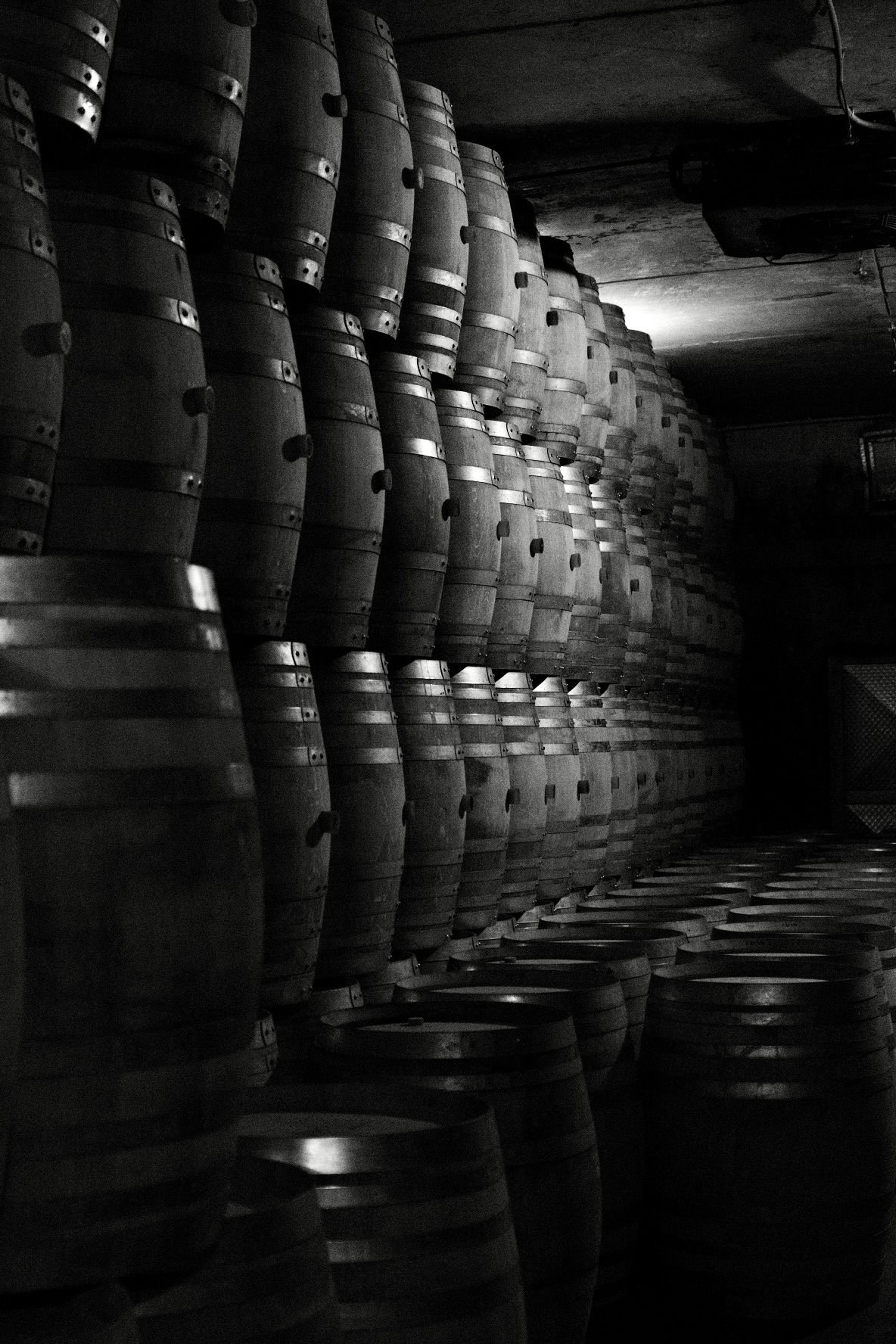
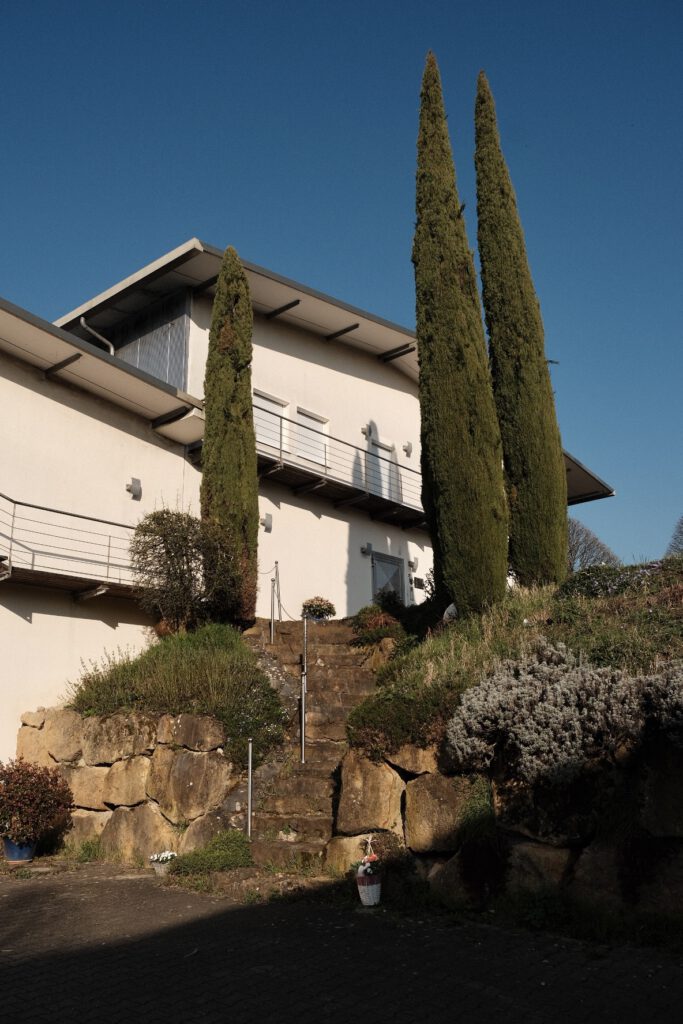
It had been quite a while since I had last visited Julian Huber in Malterdingen. So when I finally made my way back to Baden in spring, the anticipation was all the greater. Because if there is one estate in Germany that has had a decisive influence on the development of Pinot over the past fifteen years, it is Bernhard Huber. And by now, just as much, his son Julian.
Max Kaindl, June 07, 2026
Reading time about 9 minutes
Visiting Julian Huber – 2024 Between Precision, Finesse and a New Sense of Balance
Huber. A moment of orientation.
Anyone who deals with German Pinot Noir today inevitably comes across one name: Huber. The estate in Malterdingen has shaped German Pinot over the past three decades like few others. What Bernhard Huber built here was far more than a successful family estate. In many ways, it was proof that German Pinot Noir could belong among the international elite.
Long before Pinot Noir from Germany was taken seriously on the world stage, Bernhard Huber looked uncompromisingly to the great models of Burgundy. Not by copying them, but by understanding that great wines are born in the vineyard. Low yields, selective hand-picking, organically minded viticulture and an almost obsessive focus on quality had long been standard practice in Malterdingen when much of this was still considered rather exotic elsewhere.
The conditions here are exceptional. Winegrowing in Malterdingen dates back more than 700 years. Even the Cistercian monks recognised the similarity between the local Muschelkalk soils and those of their Burgundian homeland, and planted Pinot Noir here. To this day, old ampelographic books occasionally refer to Spätburgunder as “Malterdinger” – a telling reminder of the reputation this region once enjoyed.
After Bernhard Huber’s untimely death in 2014, his son took over responsibility. It is hard to imagine a greater task. Because an inheritance like this is not simply carried forward. It has to be lived up to.
Today, one can safely say: Julian has long since stepped out of his father’s shadow.
He has taken on the estate’s uncompromising philosophy of quality while developing a signature of his own. Especially with the white Burgundy varieties, he has set new benchmarks over the past ten years. His Chardonnays are now among the very best in Germany and are increasingly regarded as international reference points.
What impresses me most about Julian, though, is something else: despite the enormous success, everything feels remarkably calm. No grand staging. No marketing noise. Instead, absolute focus on vineyard and cellar.
Perhaps that is one of the reasons why the wines feel so precise today. They do not need to prove anything. They simply do.
Out into the Schlossberg
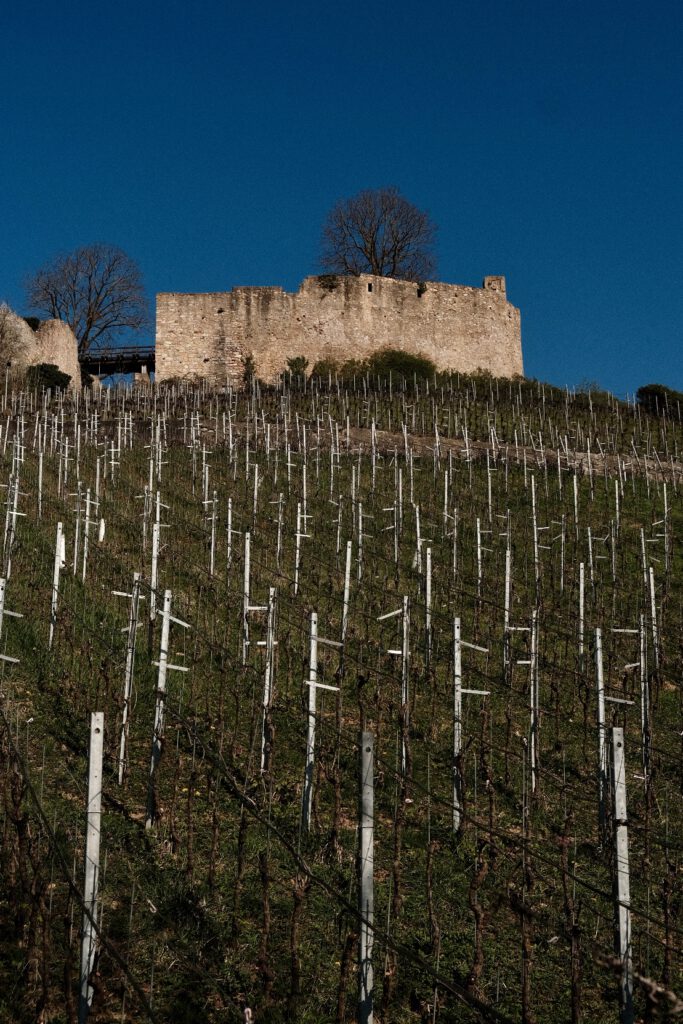
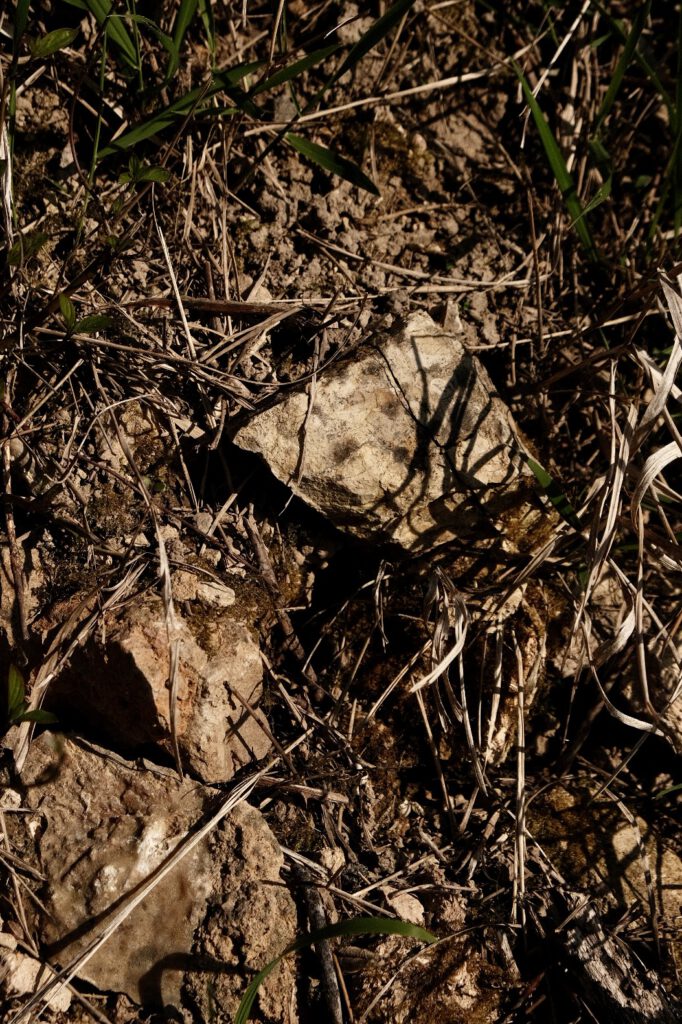
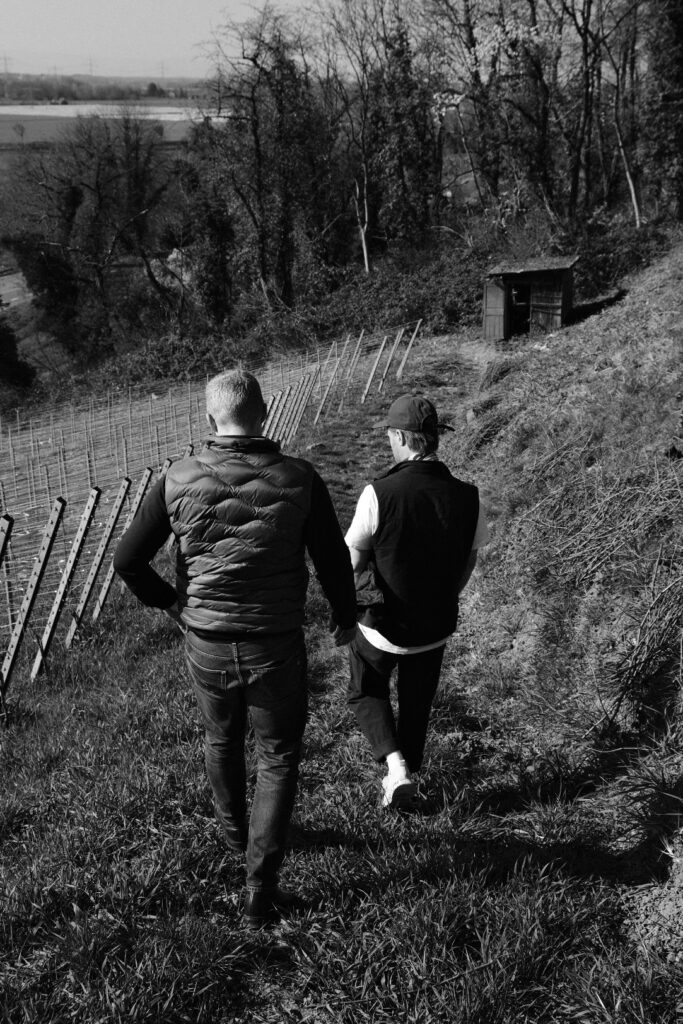
Before we got down to the real work in the glass, we drove out to the Hecklinger Schlossberg. A site that has become one of Germany’s great reference points for both Pinot Noir and Chardonnay. Above us, the ruins of Lichteneck Castle. Below us, steep Muschelkalk slopes, their pale, stony soils calling to mind Burgundy more than the classic image of Baden.
Julian showed me old parcels of vines, spoke about the challenges of these extreme steep slopes, and then took me to a newly planted young vineyard with high-density planting. More than 13,000 vines per hectare. Tiny yields. Maximum competition between the vines. Anyone who knows Julian knows that decisions like this are never made by chance.
Back at the estate
Then came the main attraction of the day: the tasting of the 2024 collection. And it was quite something.
In terms of quantity, 2024 is a dramatically small vintage. Perhaps even smaller than 2021. Frost damage and tiny yields mean that many wines will only be available in almost homeopathic quantities. The quality, however, stands in remarkable contrast to that scarcity.
Side note: all wines had been drawn from barrel by Julian the day before.
My tasting notes
The white Burgundy varieties – for me, the surprise of the vintage
For many years at Huber, I was firmly Team Red. Not because the Chardonnays were weaker in quality. Quite the opposite. They were often brilliant. But the very pronounced reduction, which Julian had turned into something of a trademark especially from the mid-2010s onwards, often felt a little too obvious to me personally. Too often, style stood in front of origin.
In 2024, I experienced this differently for the first time. The reduction is still there. But it feels finer. More integrated. More natural. The wines speak more clearly of where they come from again.
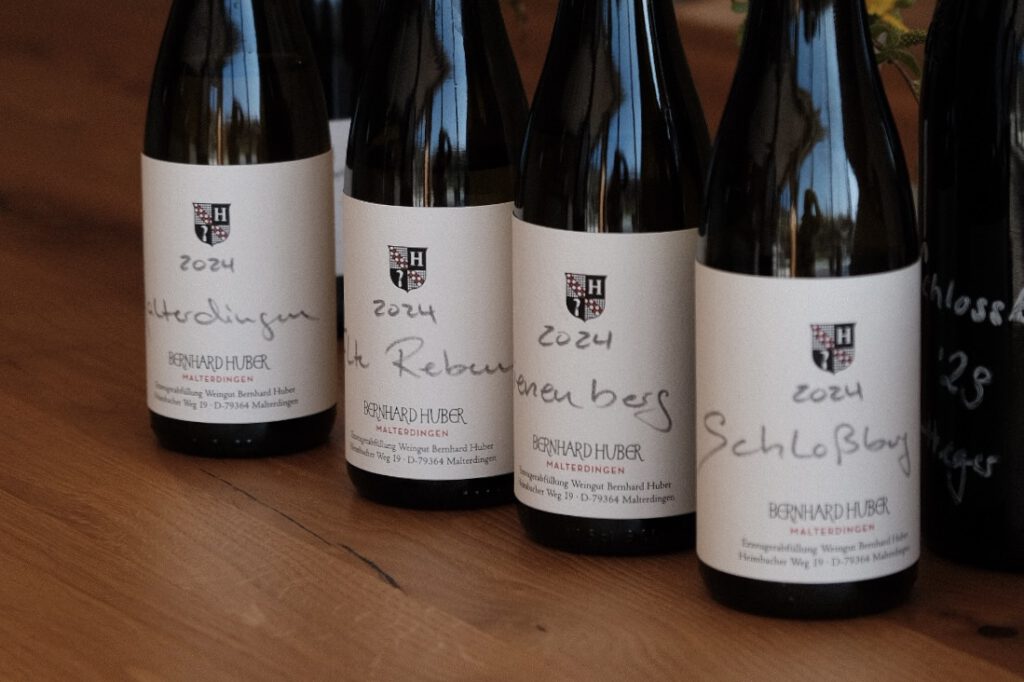
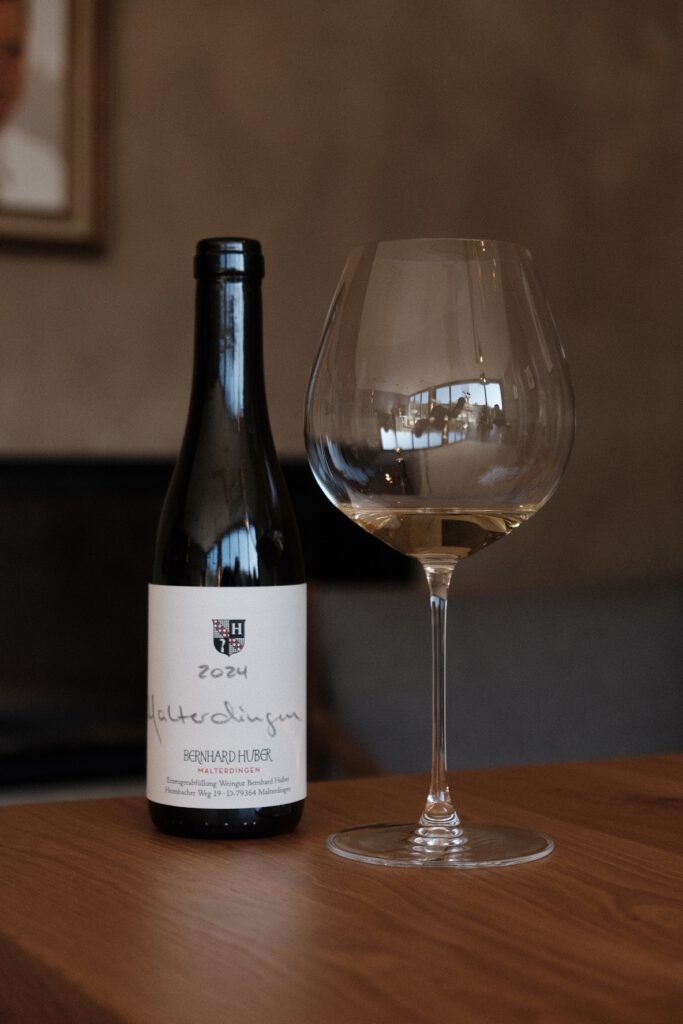
Malteringer Chardonnay, 2024
The Malterdinger Chardonnay already shows this impressively.
Taut, juicy and surprisingly powerful for a vintage that lives more from finesse than from concentration. The reduction remains discreetly in the background, giving the wine structure without dominating it.
Chardonnay Alte Reben, 2024
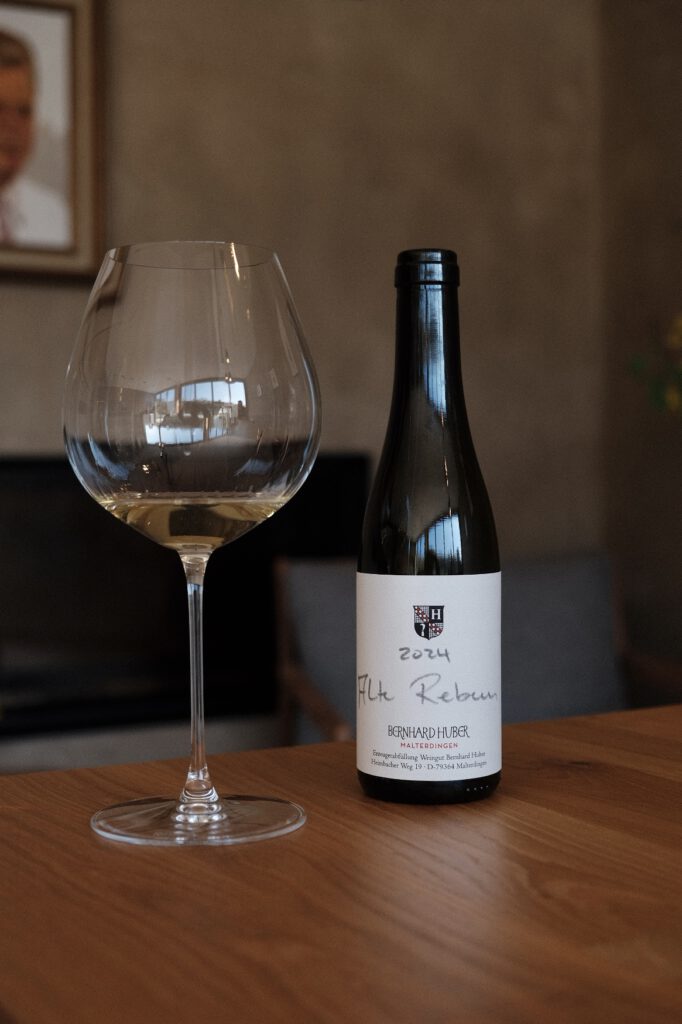
Things become even more exciting with the Chardonnay Alte Reben, from vines planted in the 1950s.
Here, there is noticeably more depth. More yellow fruit, more extract, more drive. At the same time, the wine has a beautifully gripping acid structure and a length that reaches far beyond its supposed weight class.
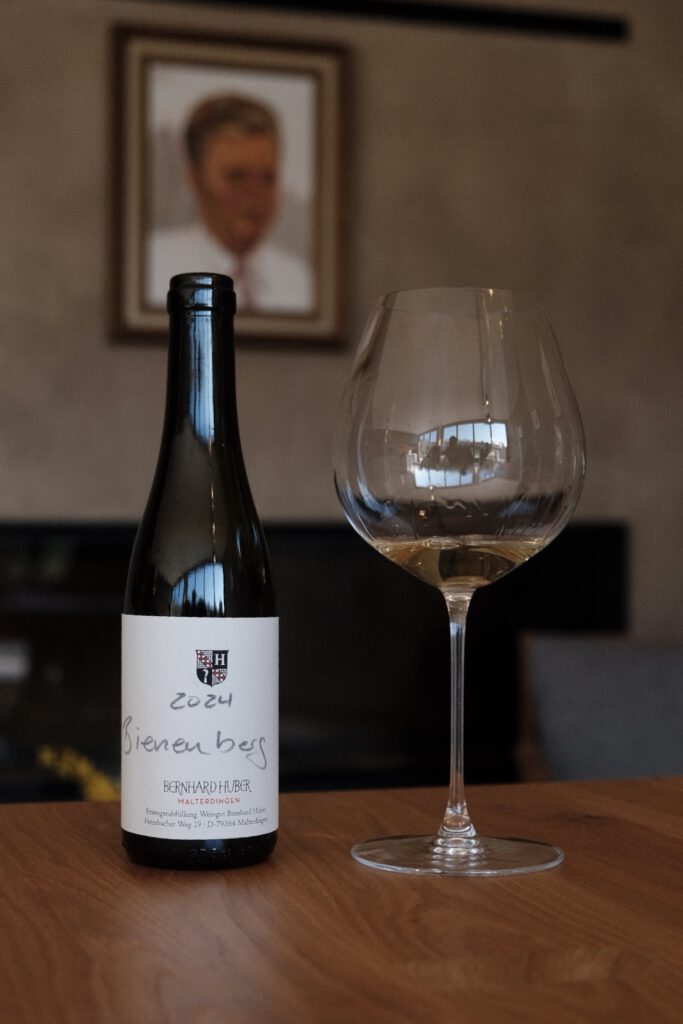
Bienenberg Chardonnay GG, 2024
The Bienenberg Chardonnay GG, by contrast, is still much more closed.
Salt, pressure, structure. Plenty of tension. Plenty of future. A wine that, at this stage, hints at its potential rather than revealing it.
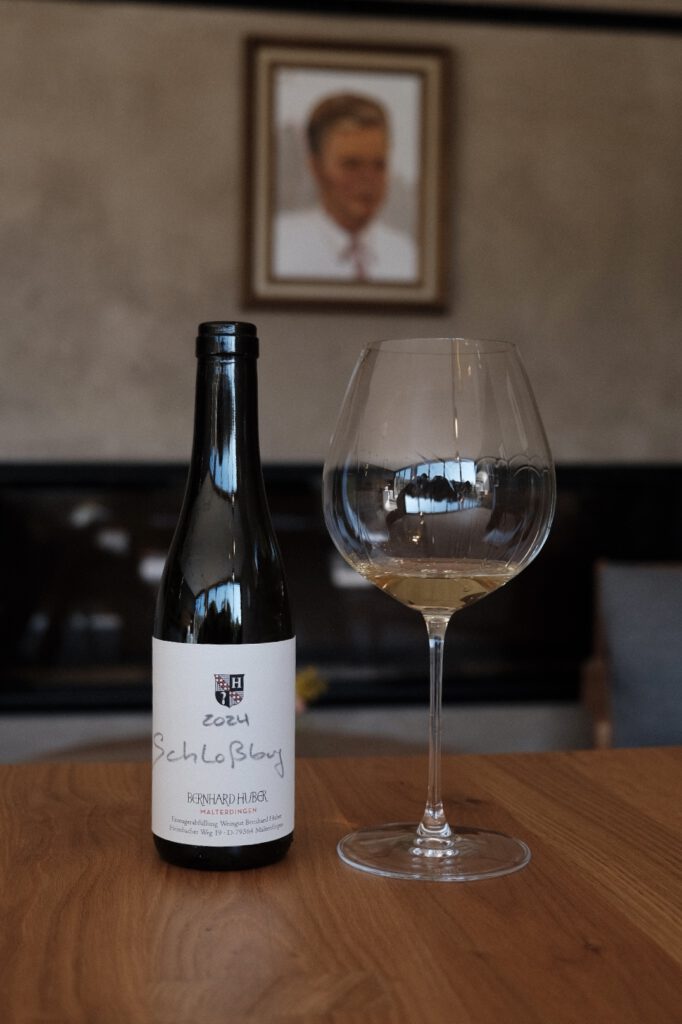
Schlossberg Chardonnay GG, 2024
The Schlossberg Chardonnay GG goes one step further.
Darker, spicier, more saline. Extremely tightly wound. A wine like a steel cable. Almost unapproachable at the moment. But these are often exactly the wines that develop the greatest magic later on.
And yes, the wine does carry a relatively pronounced level of reduction overall. In 2024, however, I find it considerably more harmonious and better integrated than in previous years.
The reds – Huber remains Huber
With the Pinot Noirs, another change struck me immediately. In the 2024 vintage, Julian has decided to use no new oak at all. It is a decision that clearly benefits the wines. The fruit comes to the fore more clearly. The sense of origin feels more precise. Nothing is masked. In 2024, the wines are defined less by the immense depth and pressure of previous years, and more by their beautifully fine, clear fruit and juiciness.
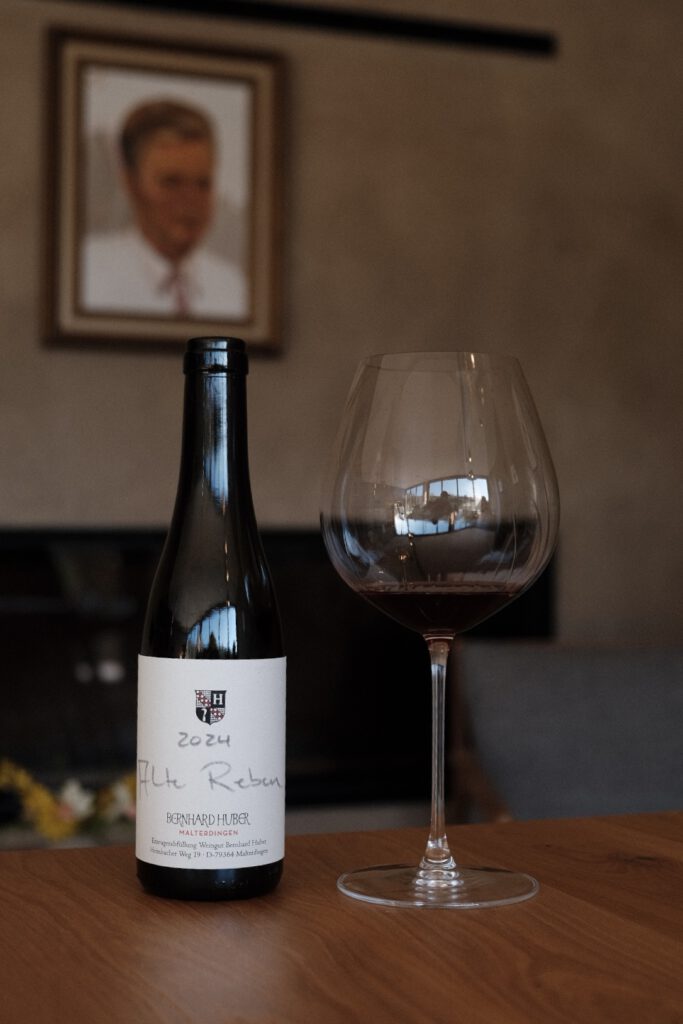
Spätburgunder Alte Reben, 2024
The Alte Reben Spätburgunder already shows much of what defines the vintage.
Fresh cherry, vibrant acidity, juicy structure and a slightly rugged tannic edge that will surely harmonise with further time in barrel.
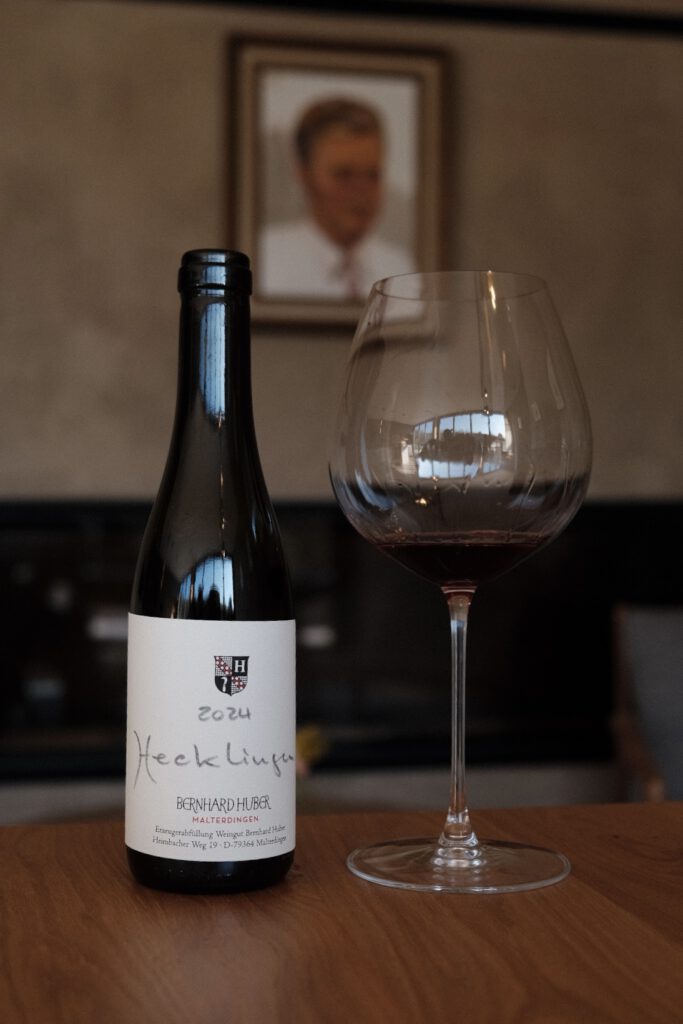
Hecklinger Spätburgunder, 2024
The Hecklinger Spätburgunder appealed to me even more.
Brighter, silkier and far more dancing. A wine full of energy and elegance.
Bienenberg Spätburgunder GG, 2024
The Bienenberg GG feels a touch more complete.
The tannins are already astonishingly fine, the balance impressive. Red-fruited, open and carried by a length that clearly marks it out as a Grosses Gewächs candidate.
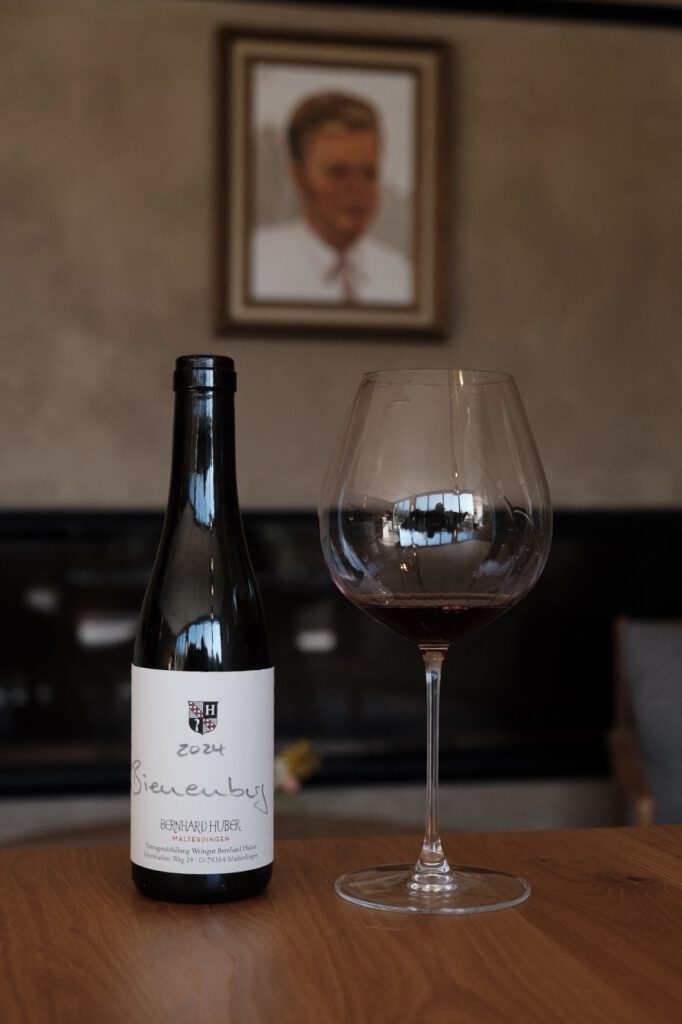
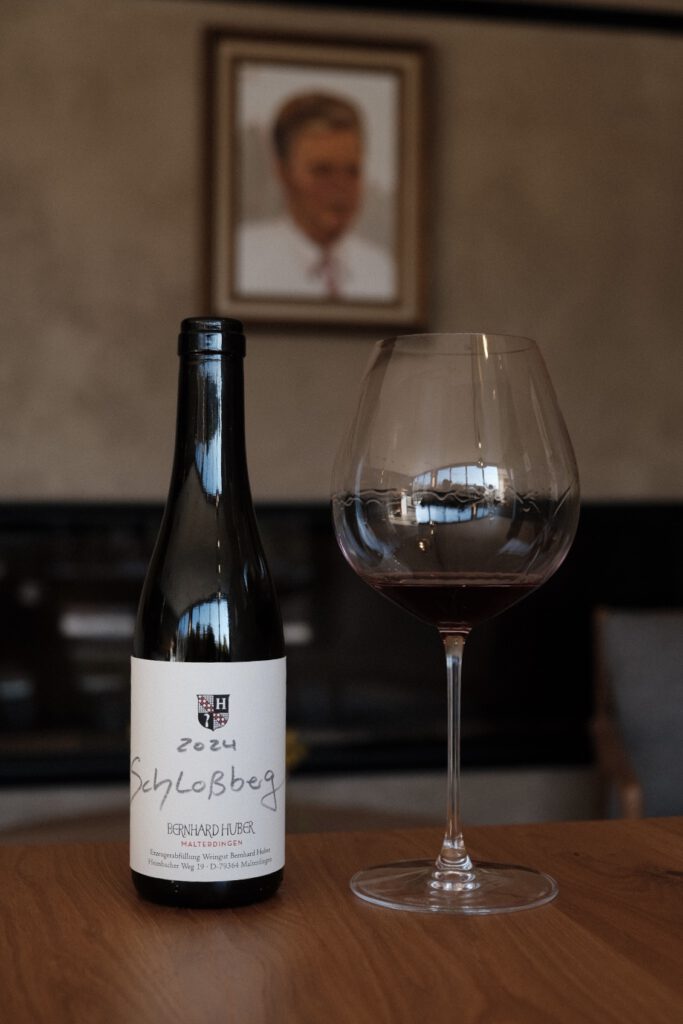
Schlossberg Spätburgunder GG, 2024
The real highlight for me, however, was the Schlossberg. What Julian had in barrel here was simply impressive.
Crystal-clear. Incredibly fine. Elegant. Densely woven and yet completely weightless. A wine with that rare combination of power and lightness that defines great Pinot Noir.
If everything continues in the direction it currently suggests, this could become one of the great German Pinots of the vintage.
One signature, not many styles
I also found Julian’s approach increasingly fascinating: letting the individual sites speak more and more through origin rather than cellar style. Unlike his father, he now aims to vinify all Chardonnays largely in the same way. The same applies to the Pinot Noirs. The differences should come from vintage and site, not from different cellar techniques. To me, this makes absolute sense. Because when you taste the 2024s side by side, exactly that becomes visible. The signature remains constant. The origin of each individual site takes centre stage.
And then there was the sparkling wine (Sekt)
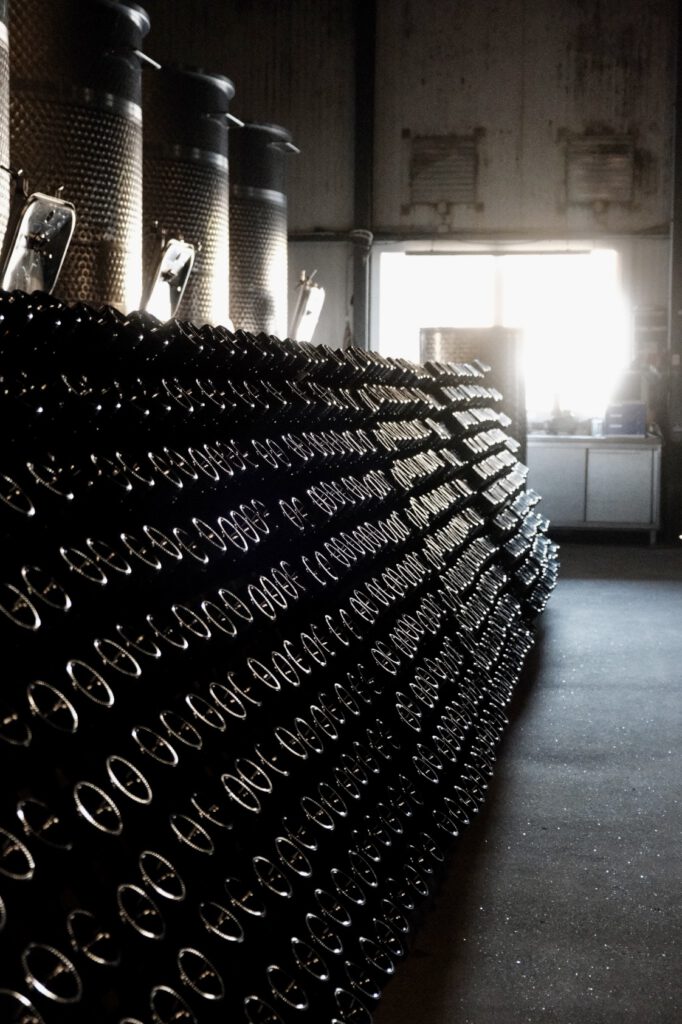
Almost in passing, somewhere between Chardonnay and Pinot Noir, there was also a Blanc de Noirs Brut Nature 2017 on the table that afternoon. And it reminded me that with Huber, one sometimes forgets just how good they are at sparkling wine too.
After all, this is not some entirely new discipline the family has only recently discovered. Bernhard Huber himself had already worked intensively with traditional-method sparkling wine. In recent years, however, the great Chardonnays and Pinot Noirs have attracted so much attention that the sparkling wines have slipped somewhat out of the spotlight. Unjustly so.
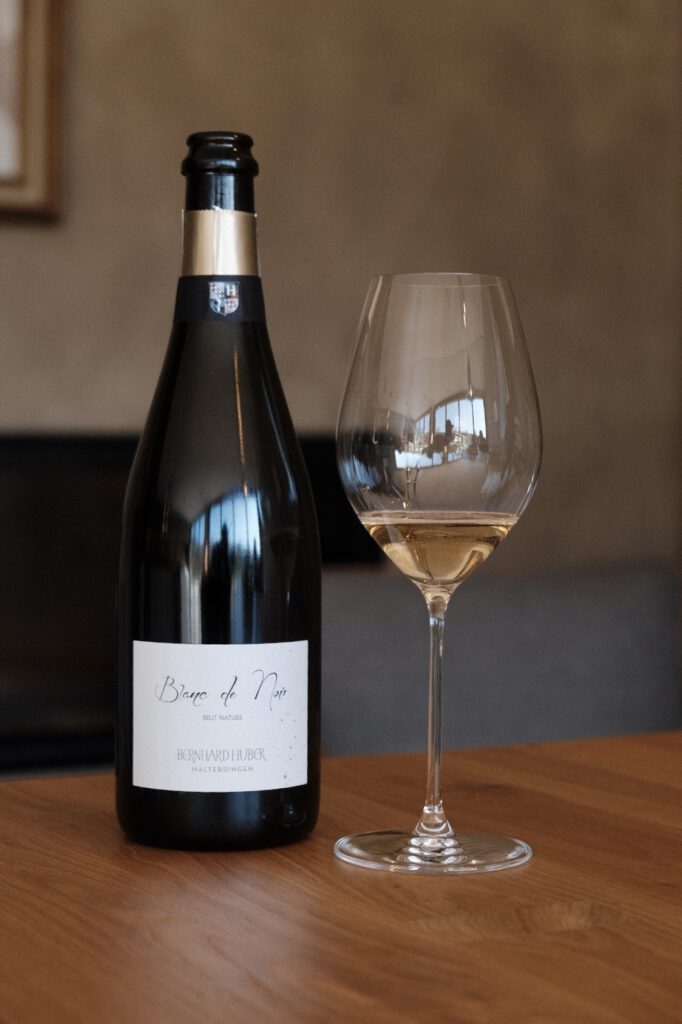
Blanc de Noirs Sekt, 2017
The Blanc de Noirs 2017 showed itself as savoury, slightly smoky and gently mature. Nothing loud, nothing obvious. Instead, plenty of calm, fine autolysis, precise structure and exactly that balance between freshness and maturity that defines serious sparkling wine.
This is not a Sekt trying to impress. It is one that reveals more substance with every sip. Above all, it fits perfectly with the estate’s signature: taut, precise, clearly defined and completely free of showmanship.
When you see how naturally Julian Huber now works with Chardonnay, and how precise the base wines from these limestone and Muschelkalk sites can be, this should not really come as a surprise. The conditions for great sparkling wines have been present in Malterdingen for years. And if the development of recent years is any indication, this chapter could become far more exciting in the future than many currently have on their radar.
A new project with plenty of potential
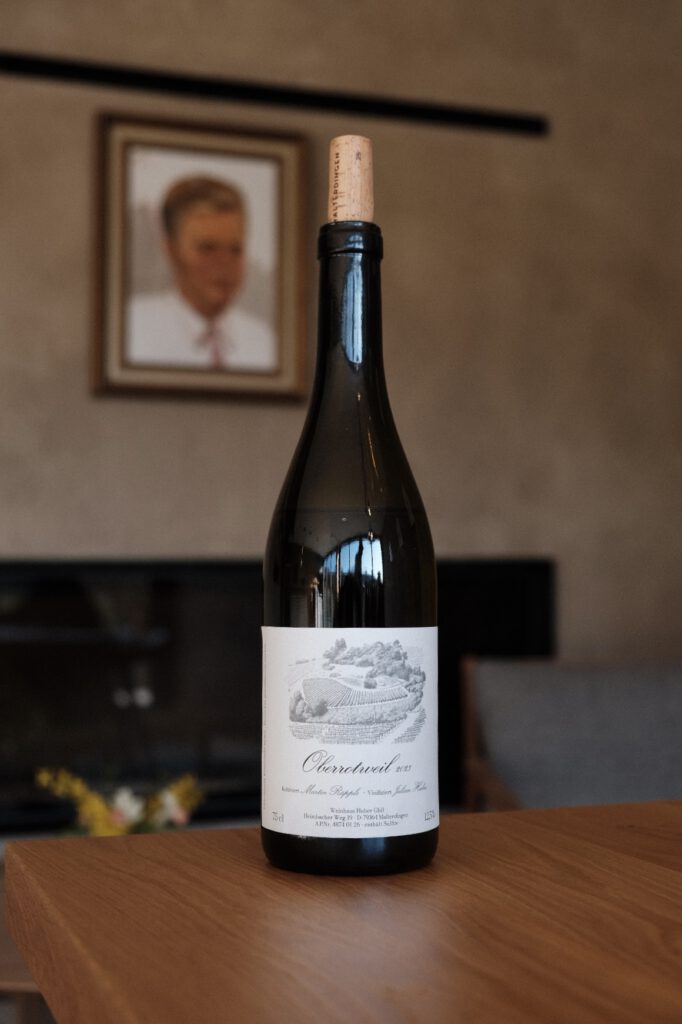
To finish, Julian showed me another project that he has developed together with his long-time friend Martin Räpple. Martin owns a small, densely planted Chardonnay parcel in the Kaiserstuhl, whose grapes he had previously delivered to the local cooperative. Pure volcanic soil. Around 11,000 vines per hectare. In 2023, the two of them joined forces and bought the grapes back from the cooperative in order to vinify their own wine. The resulting Oberrottweiler Chardonnay 2023 already gives a beautiful sense of where this could be heading.
Oberrottweiler Chardonnay, 2023
The fruit is more yellow-toned than in the Malterdingen wines. A little warmer. A little more generous. At the same time, it is clearly structured and shows good length.
It does not yet have the depth and precision of the great Huber Chardonnays. But that is exactly what makes projects like this exciting. You can follow their development from the very beginning.
In 2023, Julian felt the yield was a little too high, so he deliberately declassified the wine to village level. From the 2024 vintage onwards, the vineyard name will appear on the label.
What remains after this day?
Before the visit, I would not have expected to say that the white Burgundy varieties at Weingut Bernhard Huber impressed me at least as much as the reds. But 2024 is exactly that kind of year. The red wines show much of what one expects from Julian Huber: precision and freshness.
For me, however, the real surprise is the Chardonnays. Finer. Clearer. Less stylistically charged. More origin, more calm, more balance. For the first time in a long while, I did not feel the need to choose between red and white at Weingut Bernhard Huber. In 2024, both stand on equal footing for me. Perhaps I even see the whites a touch ahead. Not because they are greater. But because, to me, they tell the most exciting story of the entire vintage.
Pictures: © The Art of Riesling – Maximilian Kaindl

