
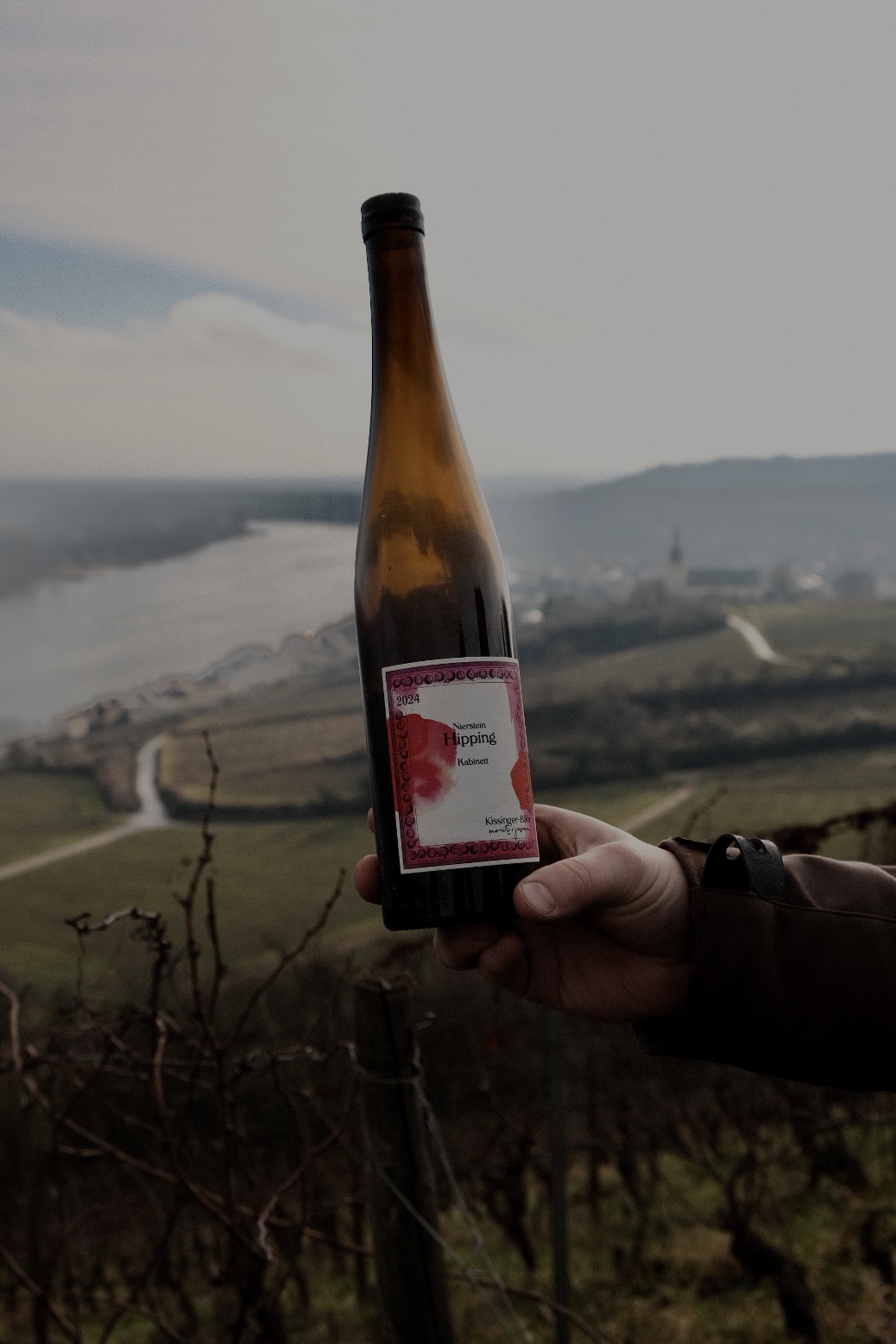
There are wineries you respect. And there are wineries that, at some point, genuinely move you. With Kissinger–Bähr, that moment was the transition. And it arrived with the 2024 vintage.
Max Kaindl, February 22, 2026
Reading time about 8 minutes
Kissinger–Bähr
–
Between the Roter Hang, the Rhine plain, and a new sense of certainty
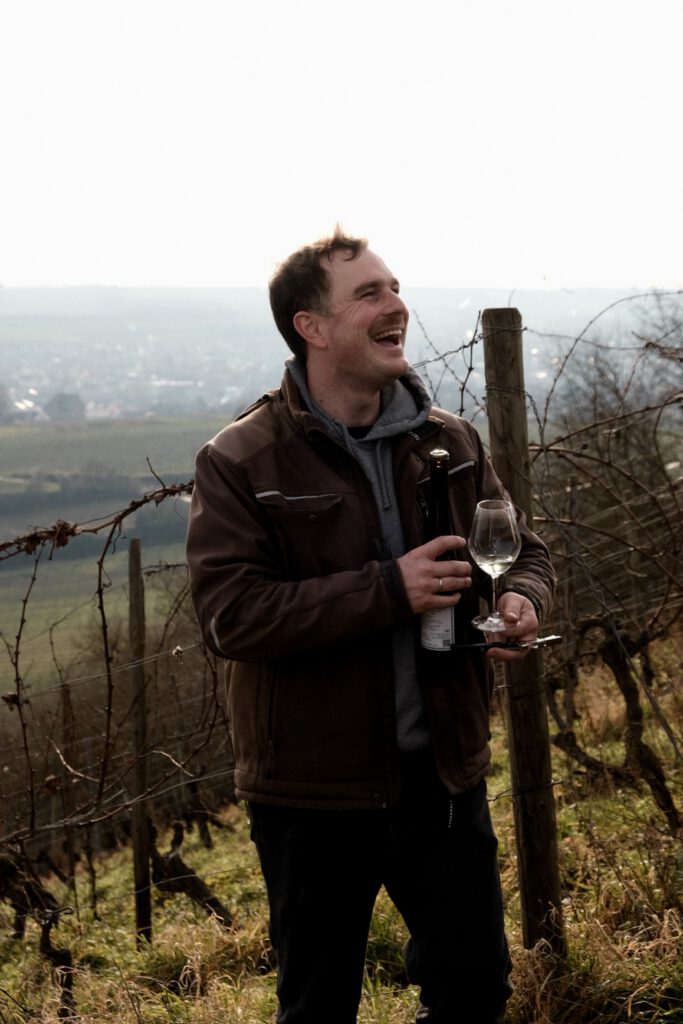
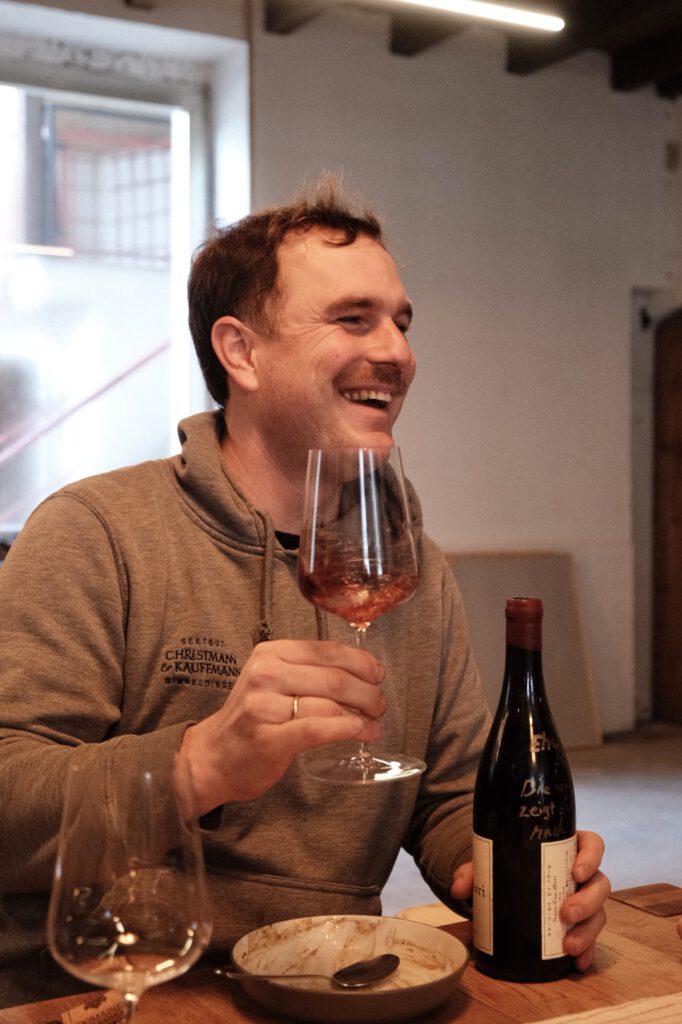
I’ve known Moritz’s wines since his first independent bottlings in 2018, even though we only met later. Back then it was obvious: someone here thinks differently. This wasn’t about simply carrying on the family estate. This was a reset. Moritz came out of Geisenheim, trained with Wagner-Stempel, Raumland, and Gutzler, spent time in Champagne with Cédric Moussé, had Burgundy on his mind, Jura in his heart, and Rheinhessen in his blood. Not exactly a common mix.
And still, I’ll be honest: as much as I admired the early vintages on a technical level, they didn’t always grab me emotionally. They felt ambitious, brave, texture-driven, with deliberate oxygen, malo, tannin, an oxidative edge. Strong, yes. But sometimes still a little in search mode.
2024 is different.
A new chapter, even in the name
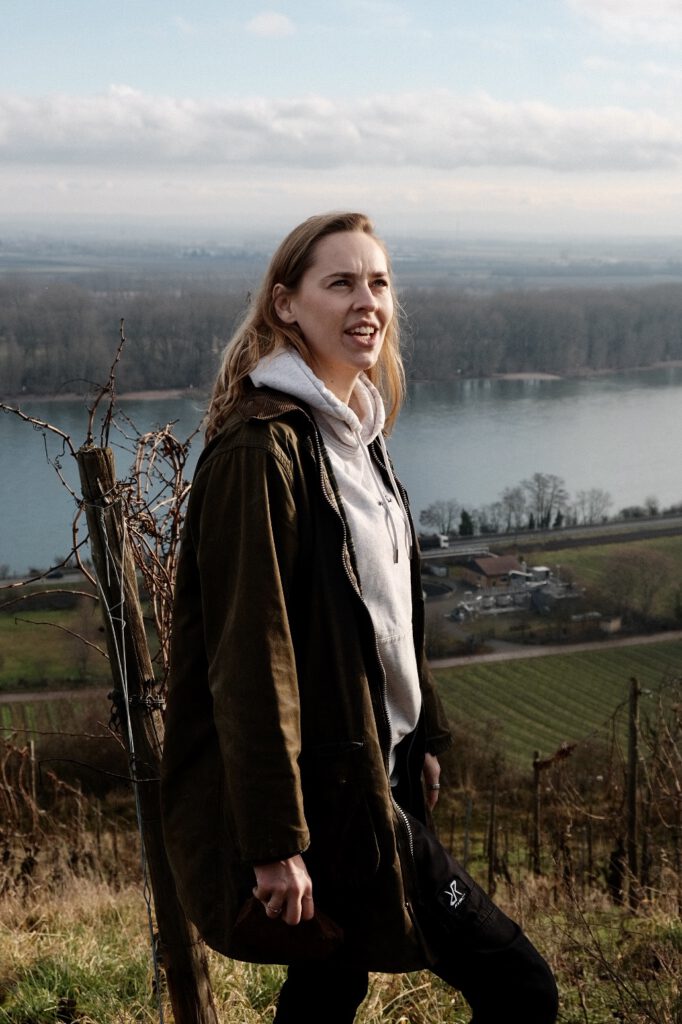
Starting with the 2024 vintage, Moritz and his wife Jasmin officially work under the name Kissinger–Bähr. You can feel that it’s not just a hyphen added, but a new dynamic.
Jasmin, trained in Dijon in wine management, brings structure, clarity, perspective, and at the same time a serious enthusiasm for origin. Outwardly, the two of them carry themselves with an almost French ease. Bon vivants. People who don’t just consume good food and wine, but celebrate it with a rare lightness. And maybe that’s the key. Their wines aren’t made in isolation. They’re made within a broader understanding of culture.
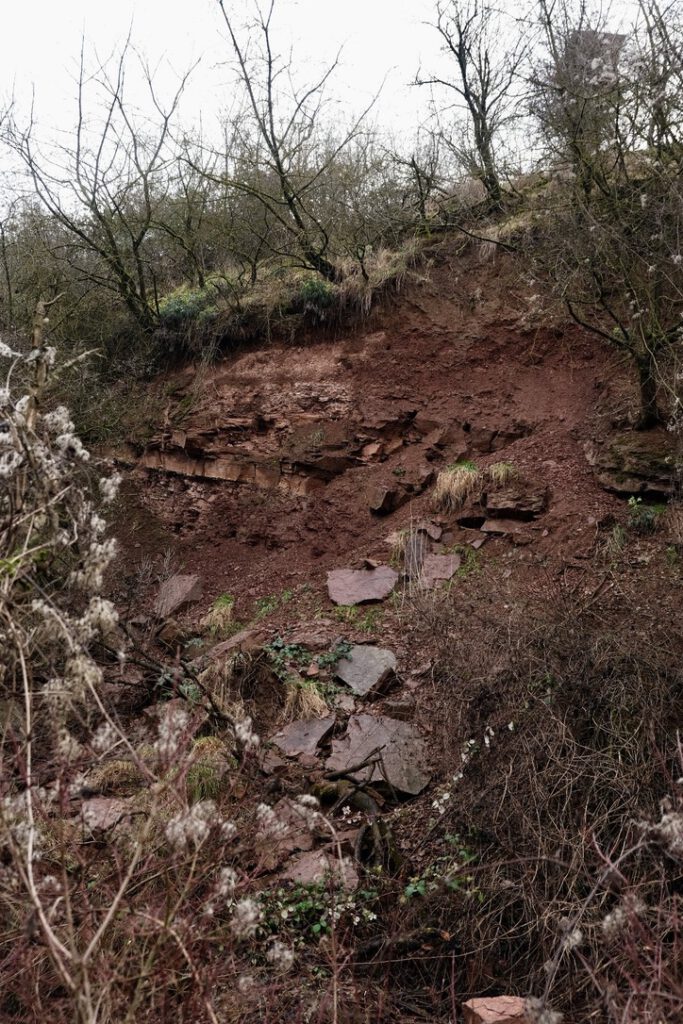
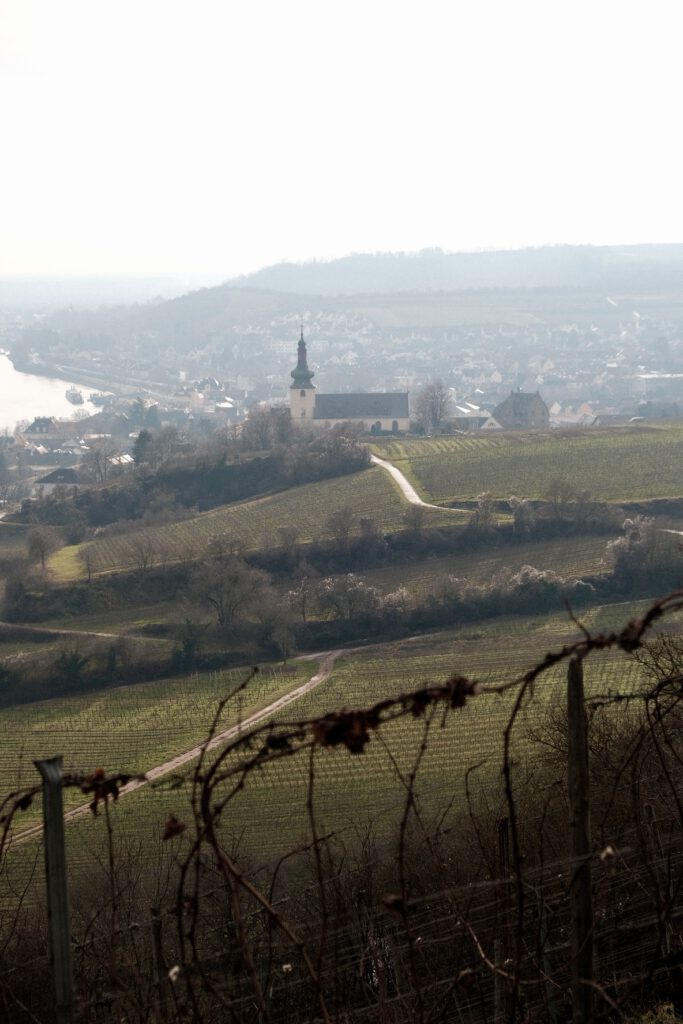
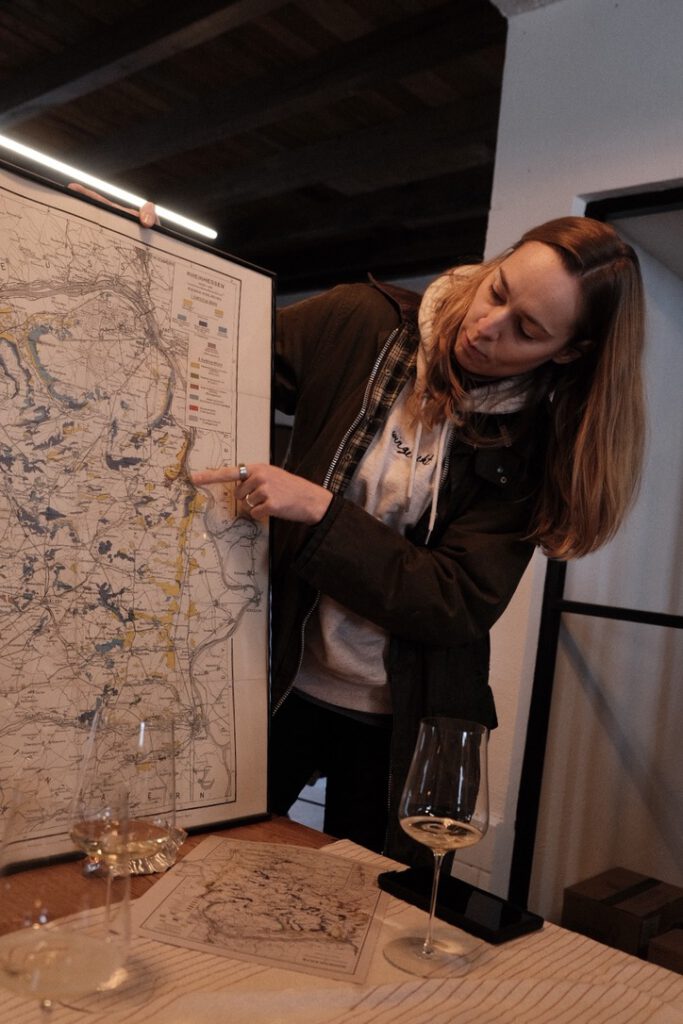
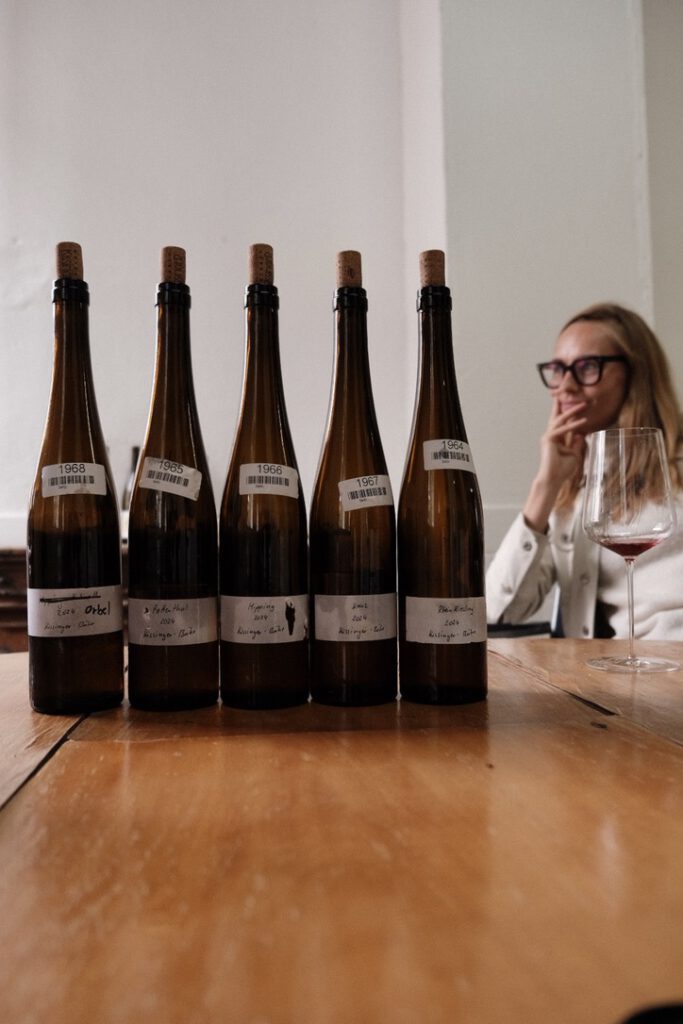
Up to 2023, Riesling was essentially a solo act in Moritz’s portfolio. Since 2024, Moritz and Jasmin have been farming their own parcels on the Roter Hang: Hipping, Pettenthal, Orbel, plus Dienheimer Kreuz, Tafelstein, and Oppenheimer Herrenberg. That expands the range not just in quantity, but significantly in quality and stylistic depth.
From a single Riesling to a differentiated site portfolio. That’s a bold move. What impresses me most: these new sites aren’t being forced into an existing template. They’re allowed to speak for themselves.
Uelversheim: not a myth, but an opportunity
Uelversheim. Moritz’s home. It’s not in the epicenter of the German wine hype. No iconic village name. No postcard reputation. And yet it’s close to the Roter Hang, right in the Rhine plain, with old vines from the family’s fourth-generation holdings.
From the start, Moritz had the freedom, and the courage, to reread this supposedly unassuming terroir. Biodynamically, with a focus on soil life, diversity, long-term vitality instead of short-term corrections. No reflex interventions, but building resilience.
In the cellar, the two work with spontaneous fermentation, minimal intervention, malolactic fermentation for stability, long lees aging, bottling unfiltered, and low sulfur.
2024: the vintage that truly won me over
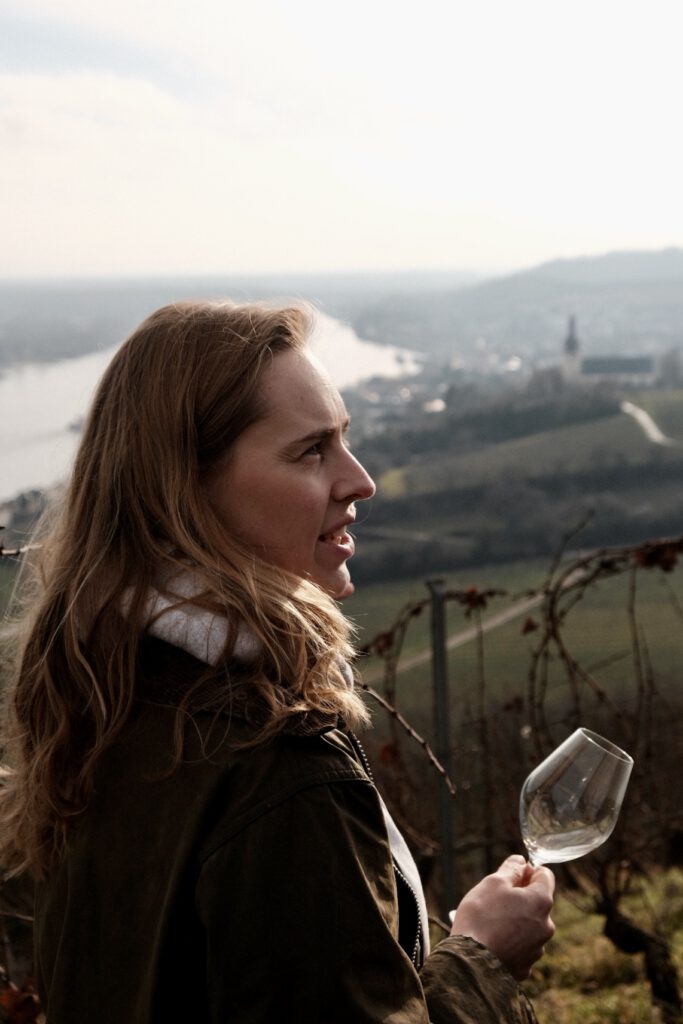
I’ve had the 2024 Rieslings in my glass multiple times over the past year. Blind, open, side by side. And I was honestly surprised by how deeply this new collection resonated with me.
What changed?
To me, the wines feel clearer. More focused. More grown-up.
The texture is still there, that typical Kissinger creaminess from malo and long lees aging. But it’s no longer the headline. Origin is articulated more precisely.
With the newly acquired parcels on the Roter Hang and in Dienheim, the 2024 portfolio gains an entirely new dimension.
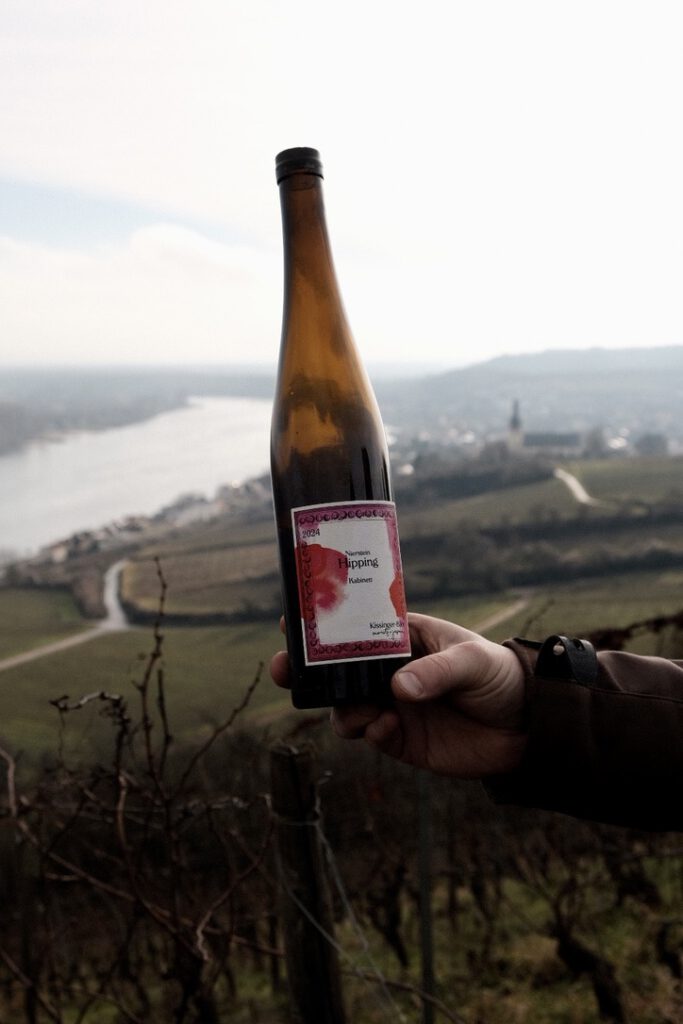
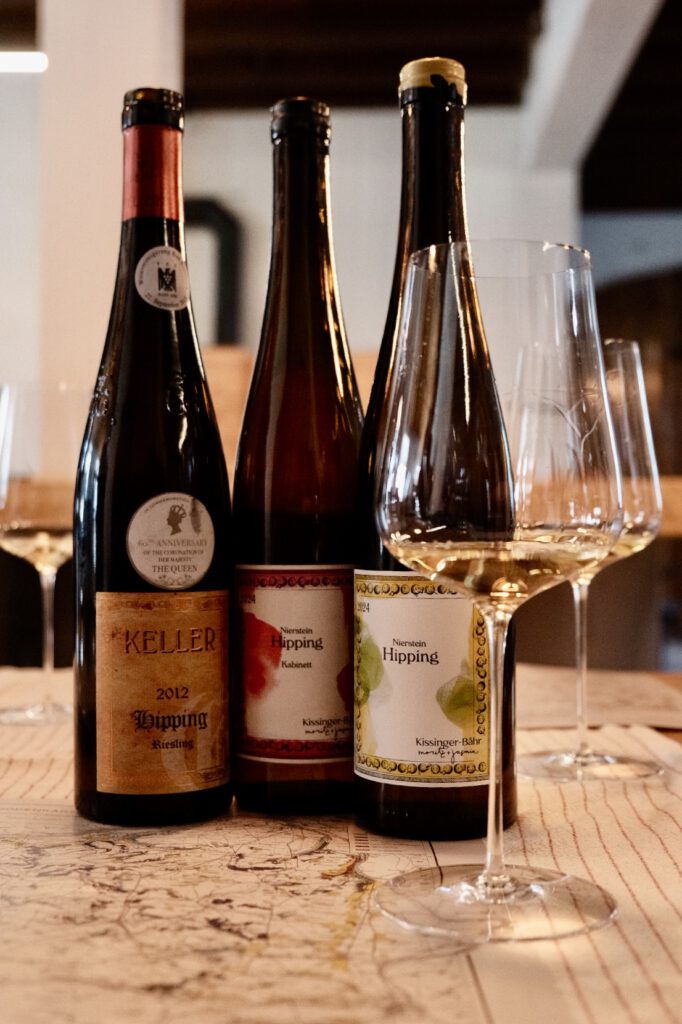
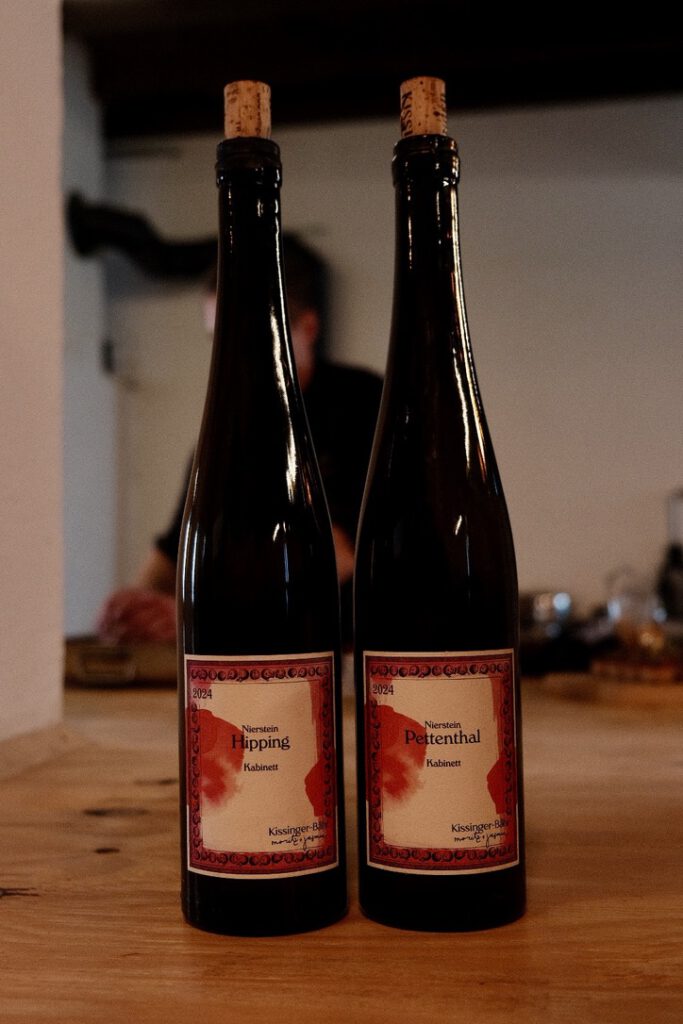
Note: In my tasting notes, I’ll focus in detail only on the dry wines. Jasmin and Moritz did release two Kabinetts for the first time in 2024, but the quantities were so tiny that they’re already sold out again. If you do manage to get lucky and track down a bottle or two of Pettenthal or Hipping Kabinett, you’re in for one of the most convincing Kabinett wines in all of Rheinhessen. I was completely blown away the first time I tasted them and I’m still a huge fan of that fine, precise, crystalline, almost dancing style.
My tasting notes
2024 dry Rieslings
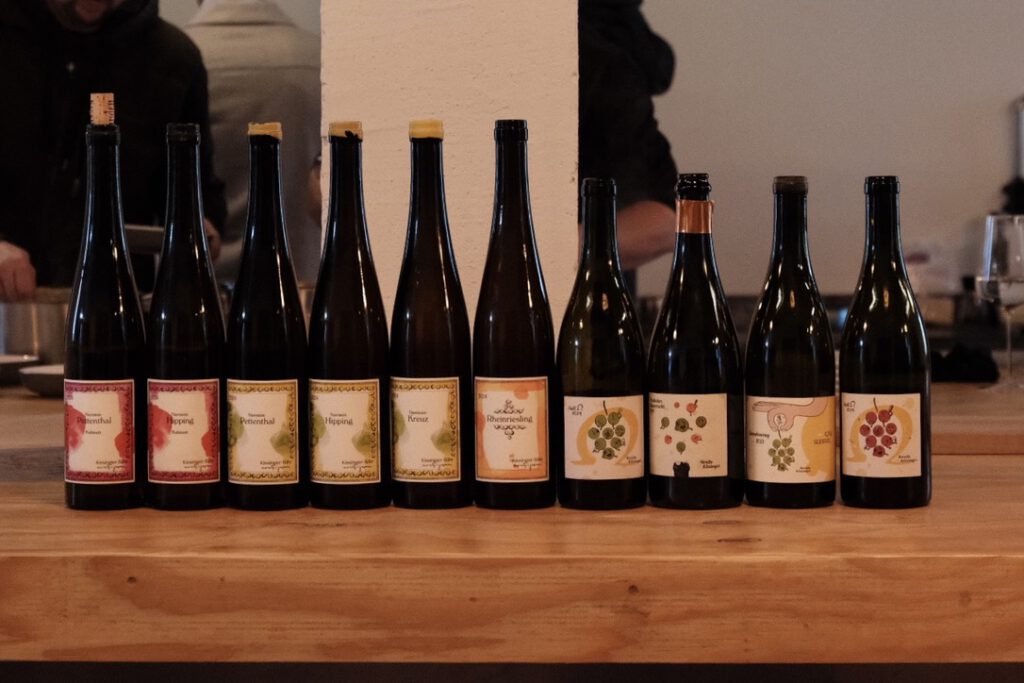
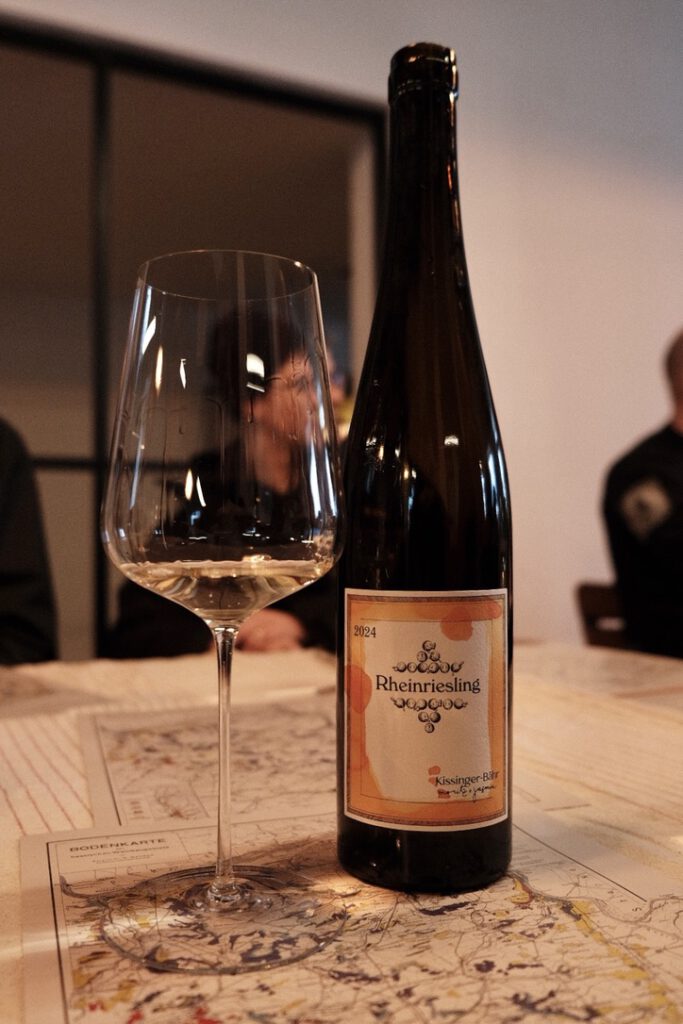
Rheinriesling 2024
The entry point into Kissinger–Bähr’s new Riesling world. A border-crosser between loess, calcareous marl, and the Rhine’s influence. Grapefruit, orange blossom, green mandarin, lemon balm. On the palate, juicy and dancing, with supple, finely integrated acidity. The wine goes through malo, which makes it rounder, but never soft. It’s that nonchalant balance between oxidative spice and vibrating freshness that Jasmin and Moritz now hit with real mastery. A wine that’s fun, but still demands to be taken seriously.
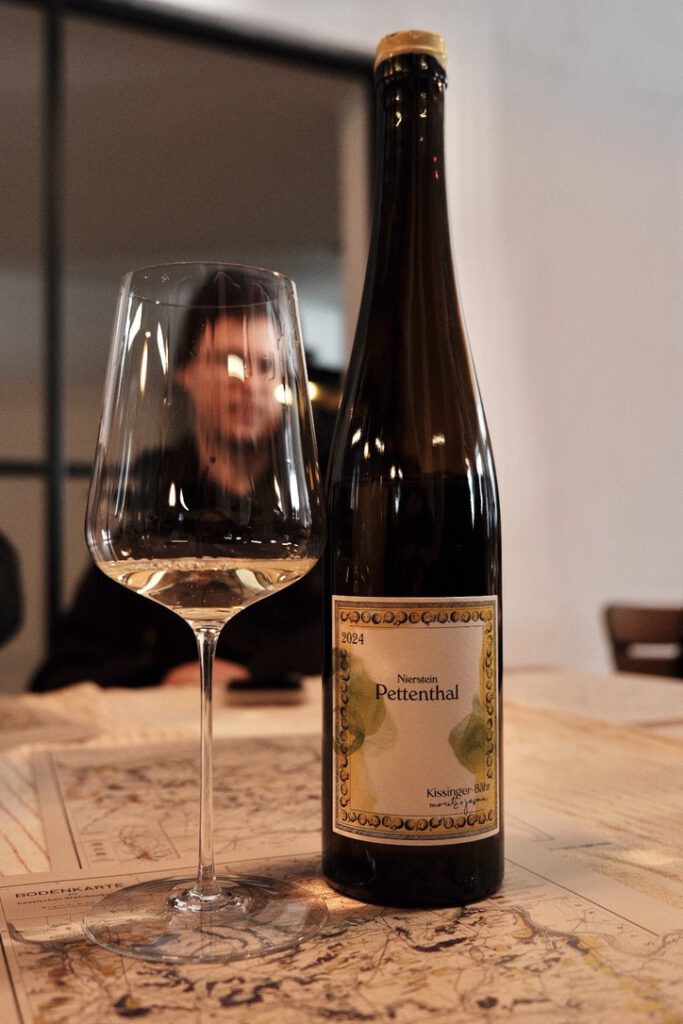
Pettenthal 2024
For me, the most complex wine in the lineup. Dark spice, warm apple tart, clove, lemongrass. On the palate, an enormous salty bite, taut drive, deep structure. Not a loud statement, but a structural wine with substance. This is Roter Hang with clarity, not weight.
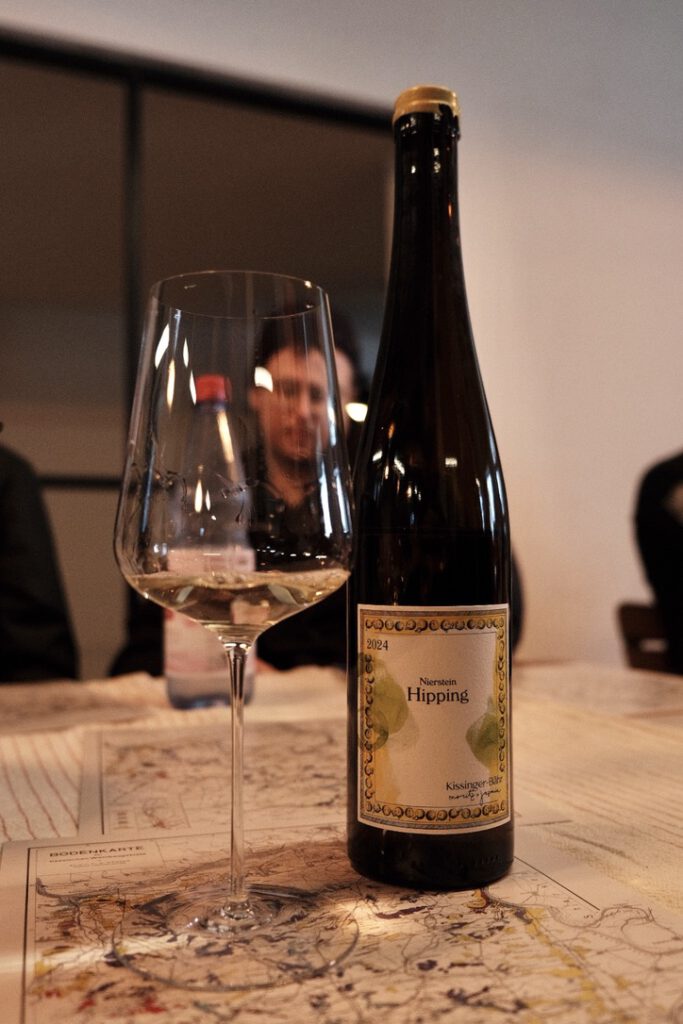
Hipping 2024
Finer, brighter, more elegant than the Pettenthal. Nectarine, orange zest, red vineyard peach, a hint of anise. The often Mediterranean note of Hipping is clearly dialed back in the cooler 2024. Instead of opulence: tension. Instead of breadth: a crystalline line, precise to the last millimeter.
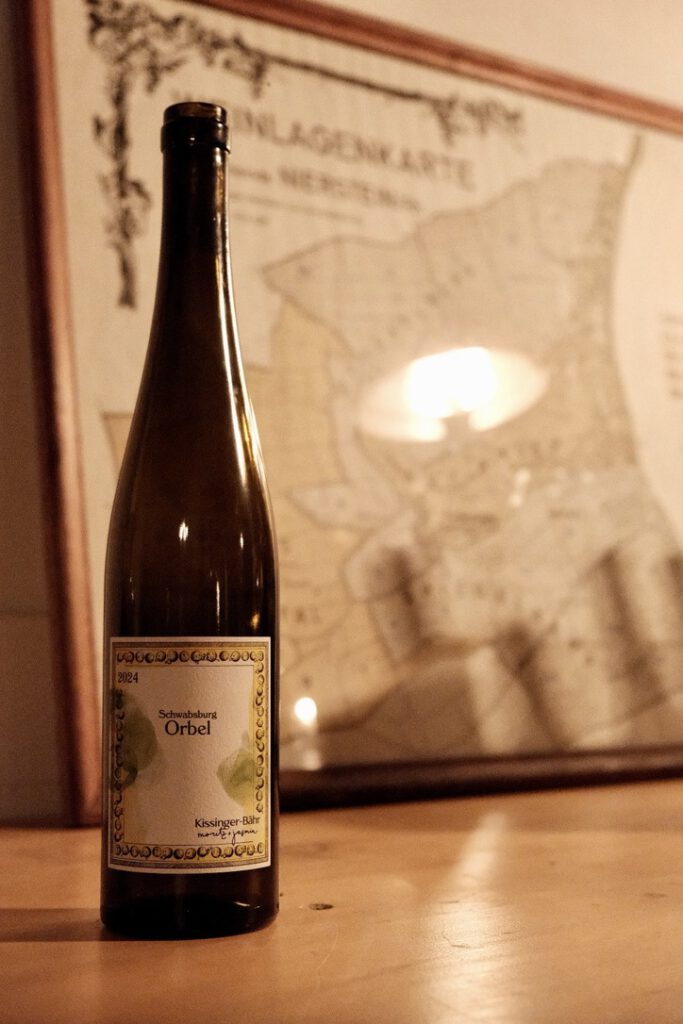
Orbel 2024
Here it shifts. Creamier, more melt. Quince, yellow stone fruit, fine smokiness. The élevage in small oak adds another dimension. Moritz himself said they worked differently here. For my personal taste, the wine is too creamy, too polished. But you can feel them learning the site. They’re feeling their way in. And that awareness is exactly what makes it so interesting.
Kreuz 2024
Pure limestone. Cool, stony, citrus zest, peppermint, crushed seashell. A very tight opening, then a juicy, mineral buffer through the mid-palate. Classic northern Rheinhessen, but with that signature Kissinger texture that never lets the wine feel austere.
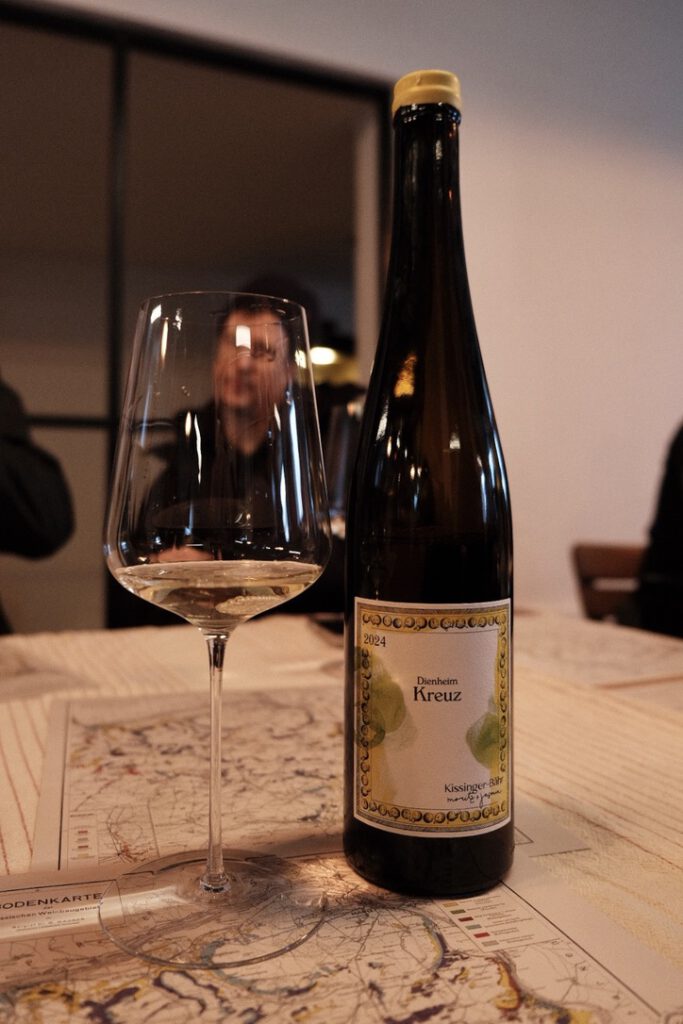
The rest of the 2024 collection
What often gets underestimated with Kissinger–Bähr is the spectrum.
Note: I haven’t had the Weissburgunder and Sauvignon Blanc in my glass recently, so I’m not including current notes on those two here.
Deutsche Winzersekt Extra Brut Nr. 4
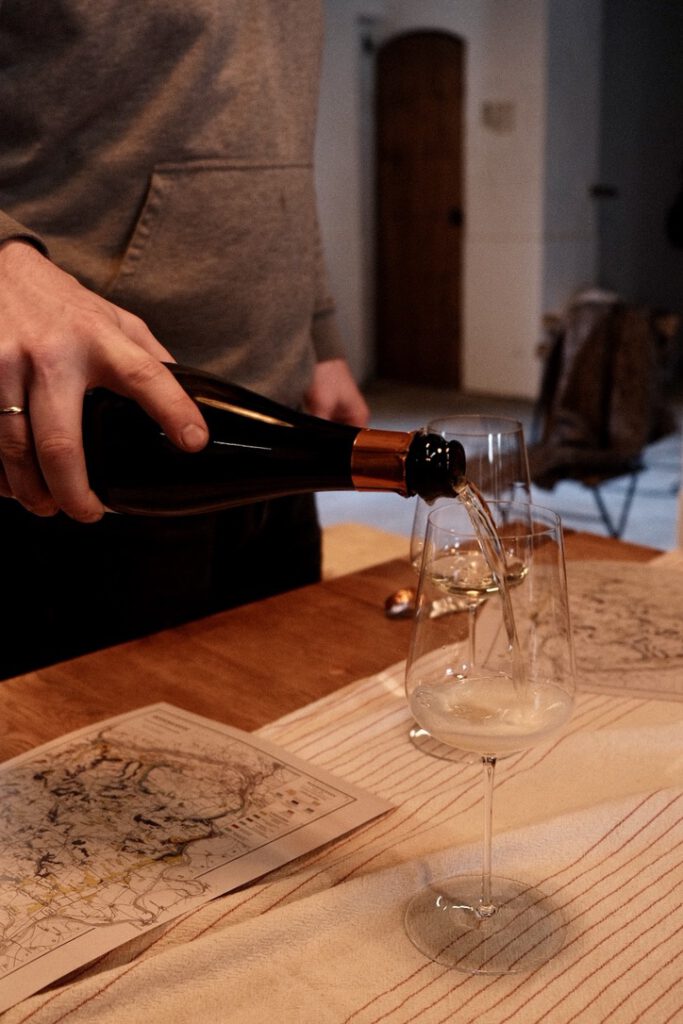
Weissburgunder, Chardonnay, Pinot Noir. Base wines raised in small and medium wood. On the nose: white pear, fresh ginger, fennel seed, white peach. On the palate: intensely piquant, salty, structured. The mousse carries the tension, but the core is compact and vinous. Stylistically, it reminds me a little of Emmanuel Brochet. Maybe not quite as fine yet, but with enormous energy. A sparkling wine for freaks, meant as a compliment.
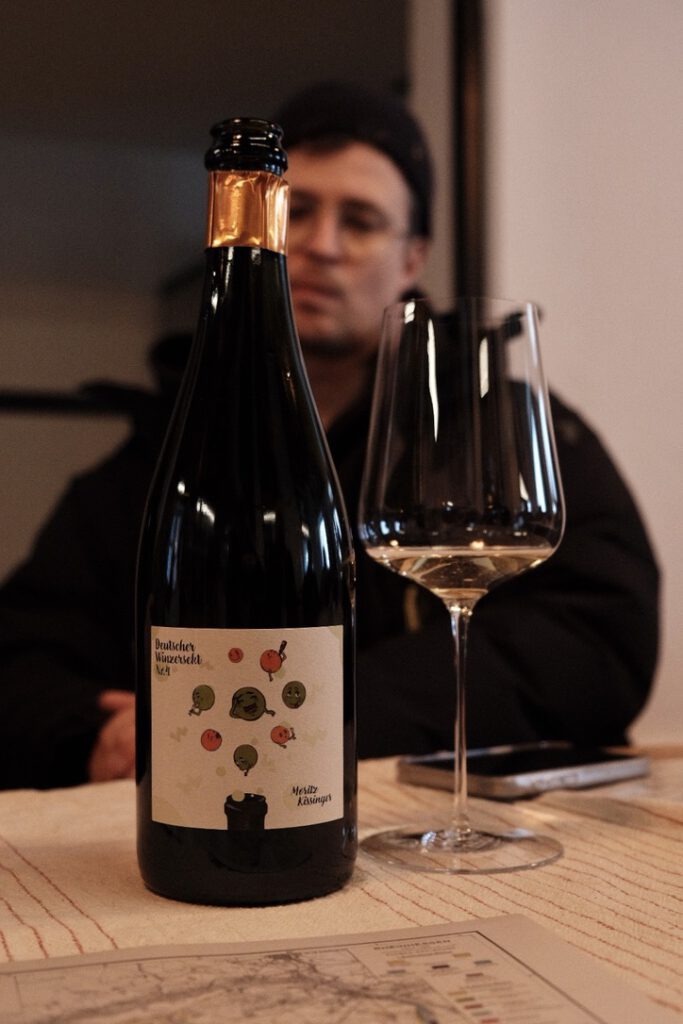
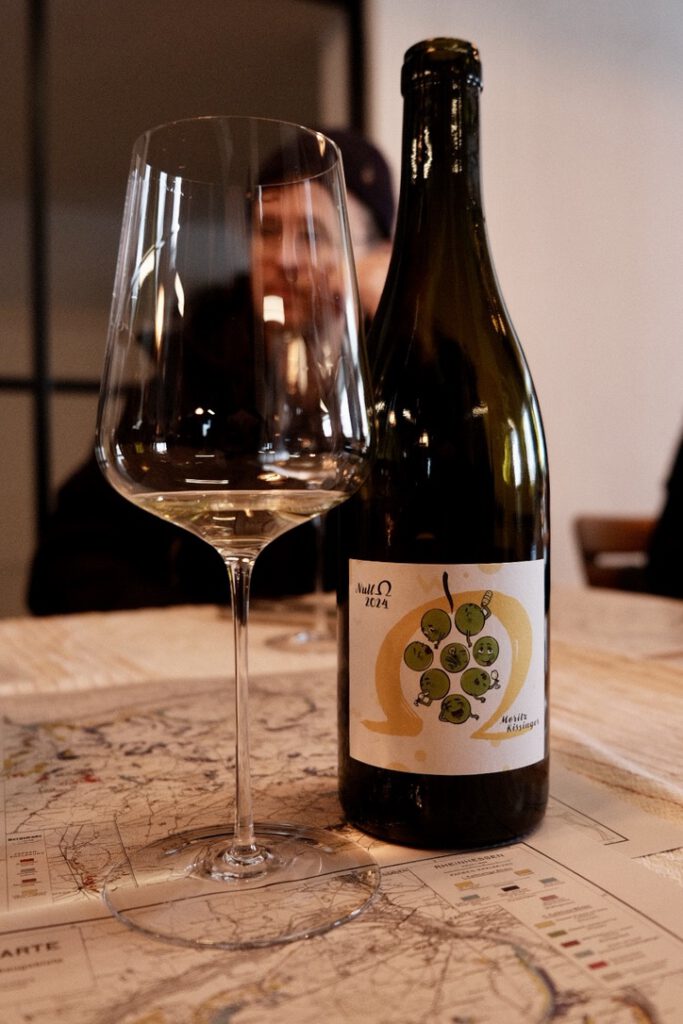
0 Ohm Weiß 2024
Chardonnay and Weissburgunder from loess, limestone, Rotliegend. Chalky spice, reductive tension, a minimal oxidative touch. Summer apple, lime juice, dill, flint. Tight on entry, underlined by salt, lots of drive. Underneath, that creamy texture from long lees aging. A wine somewhere between Chablis and Jura, but with Rheinhessen’s juiciness. Lean, playful, distinctive, and absurdly drinkable.
Chardonnay 2023
Smoky-reductive, the highest-tension white in the portfolio. Herbs, struck match, green pear, lime zest. The acidity runs through the wine like a laser beam. Fine nutty oxidation, low sulfur, a certain wildness. Pure limestone. Not a crowd-pleasing Chardonnay, but a character wine with grip and length.
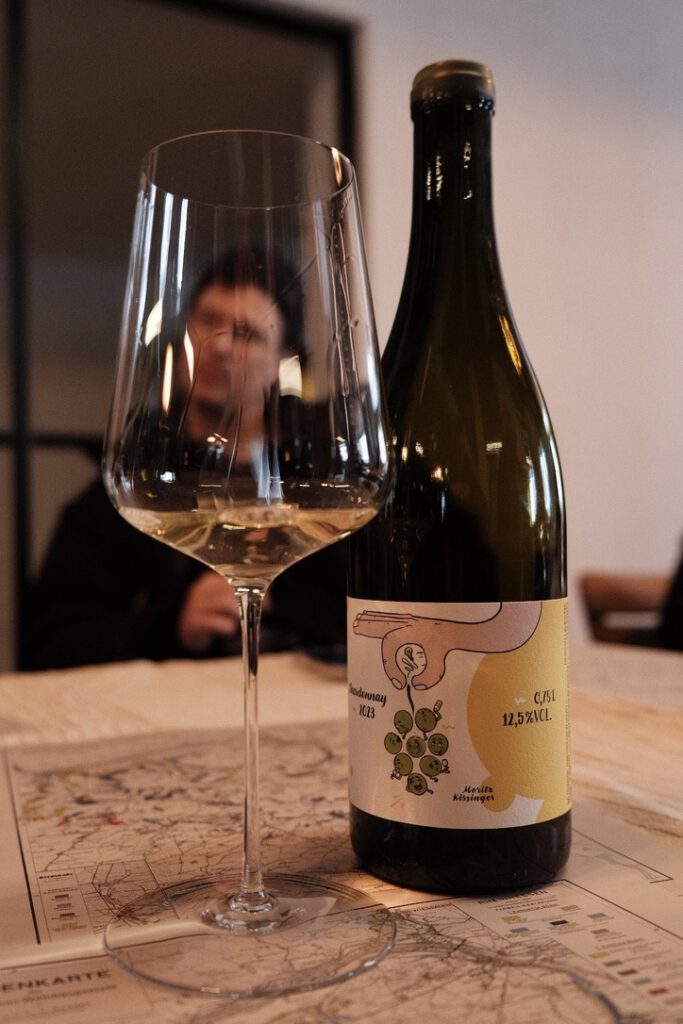
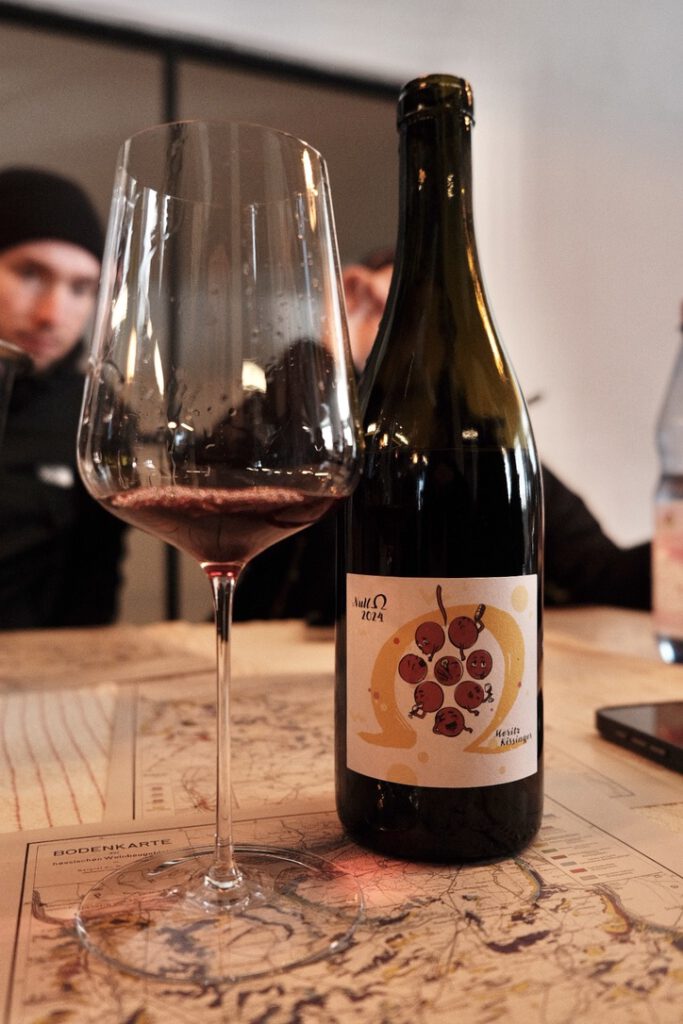
Pinot Noir 0 Ohm 2024
Juicy dark cherry, elderberry, a pinch of cinnamon. Underneath, a stony coolness, almost like volcanic rock. In the mouth: snappy, like a just-barely-ripe blueberry. Feather-light tannins, lots of freshness, huge drinkability. A Pinot with a Beaujolais vibe. Juicy, precise, crystal clear. A wine that disappears from the glass because you simply drink it far too fast.
More French than German?
Sometimes I feel Moritz and Jasmin think more like winemakers from Burgundy or Champagne than like classic Rheinhessen estates. Not stylistically, but in mindset. It’s not about loudness. Not about quick effects. It’s about patience, texture, balance between acidity, structure, and fruit. Not fear of oxygen, but trust in stability.
And still, the 2024s feel less like a “statement” than earlier vintages. They come across more assured. More settled, with a new self-confidence. No longer searching for distinction, but arriving in an unmistakable signature.
Why I believe something lasting is being built here
Over the past years, I’ve followed many young estates. Seen many beginnings. Many first waves of hype. But rarely have I witnessed a development that feels as organic, as logical, and at the same time as consistent as Kissinger–Bähr.
There was no radical stylistic break. No loud “from now on we do everything differently.” No calculated rebrand. Instead, a quiet but unmistakable growing-up. The early years were shaped by experimentation, deliberate friction, texture and oxidation as a statement. That was exciting, and it mattered. In 2024, it no longer feels like an exclamation point. It feels like a period. A set, self-assured period. What impresses me most: the wines don’t feel like an idea being executed anymore. They feel like an idea that’s been understood.
The balance between malo, texture, acidity, and origin is more precise. The tannins are more finely integrated. Oxidation is no longer a stylistic badge, but a tool. The use of wood feels more natural. Nothing is shouting for attention, and that’s exactly why it gets it.
The Rieslings from the Roter Hang, especially, show me where this can go. If Jasmin and Moritz manage to articulate the differences between Hipping, Pettenthal, and Orbel even more clearly over the coming years, a real site signature will emerge. One that doesn’t copy, but interprets.
Long term, I see their potential precisely in this combination:
- (biodynamic) consistency in the vineyard
- minimalism in the cellar, backed by experience
- texture as a trademark
- and an ever clearer definition of origin
If they keep walking this path with the same discipline, and at the same time with that ease they naturally radiate, then their place at Germany’s top isn’t just possible. It’s likely. Not as a loud shooting star, but as a serious, style-shaping voice from Rheinhessen. Because this isn’t just wine being made here. This is identity taking shape.
Pictures: © The Art of Riesling – Maximilian Kaindl

